


Table of Contents
- Why Personalized Bar Signs Make the Best Gifts: More Than Just Decor
- The Psychology of Personalization: Why a Custom Touch Wins Every Time
- Custom Metal Signs for Home Bar: Style, Durability, and Versatility
- How to Design a Custom Bar Sign: A Simple Guide to Getting It Right
- Unique Housewarming Gifts for Bar Owners: Beyond the Bottle Opener
- Where to Hang It: From Home Bars to Patios and Game Rooms
- Budget-Friendly vs. Heirloom Quality: Finding the Right Balance
- Conclusion: Give a Gift That Tells Their Story
- Frequently Asked Questions
Last Updated: September 5, 2026
Why Personalized Bar Signs Make the Best Gifts: More Than Just Decor
A gift with someone's name on it lands differently. It says you paid attention, you planned ahead, and you see the person behind the hobby. That's why personalized bar signs make the best gifts for the home bartender, the grill master, or the friend who finally finished their basement.

This guide covers the psychology behind personalized gifts, how to design one, and where to hang it.
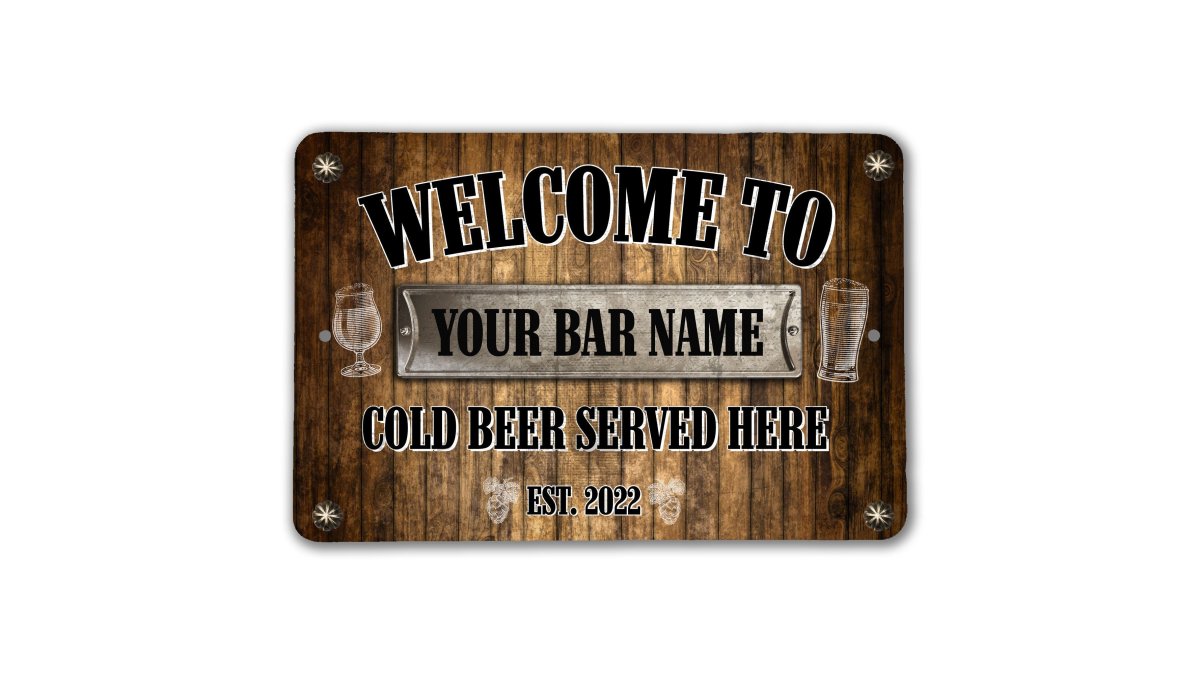
The Psychology of Personalization: Why a Custom Touch Wins Every Time
Personalized gifts trigger a stronger emotional response than generic ones because they signal effort and thoughtfulness. Research suggests they strengthen social bonds by demonstrating attentiveness to the recipient's tastes.
That emotional connection separates a sign from decor, it becomes a conversation piece, a point of pride, and often the anchor of a room's design.
Custom Metal Signs for Home Bar: Style, Durability, and Versatility
For a home bar, durability matters as much as looks. Custom metal signs are typically crafted from aluminum, which resists rust, fading, and warping, a practical choice for spaces with moisture, temperature swings, or years of regular use. Aluminum also offers design flexibility other materials can't match, from rustic wood finishes to sleek modern typography. The sublimation printing process used on many high-end signs embeds ink into the material, keeping colors vibrant and edges sharp.
| Material | Best For | Durability | Style Range |
|---|---|---|---|
| Aluminum | Indoor and outdoor bars | Rust-resistant, fade-resistant | Rustic, modern, vintage |
| Wood | Indoor spaces only | Prone to moisture damage | Farmhouse, traditional |
| Acrylic | Indoor accent walls | Scratch-prone | Contemporary, minimalist |
| LED Neon | Game rooms, mood lighting | Fragile components | Modern, playful |
Real Cool Signs crafts its personalized bar signs from durable aluminum with extra UV protection, so they hold up on a covered patio just as well as in a basement bar. The 0.32mm thickness feels sturdy without being heavy, and pre-drilled holes make mounting simple.
How to Design a Custom Bar Sign: A Simple Guide to Getting It Right
Designing a custom bar sign starts with one question: what text matters most? The bar's name, the owner's name, or a meaningful date usually takes center stage. Keep the message short, large bold text reads better from across the room. The difference between a professional-looking sign and a template comes down to typography, layout, and contrast, not artistic talent.
Typography: Choose Legibility Over Decoration
Script fonts look elegant in a catalog but become unreadable from across a room. For a sign above a bar where guests stand 6 to 10 feet away, prioritize legibility. Sans-serif fonts like Helvetica or Montserrat suit modern spaces; slab serifs like Roboto Slab carry a vintage pub feel without sacrificing readability. Pair one bold display font with one simpler font, limit yourself to two typefaces maximum.
Layout: Work With the Sign's Proportions
Standard sizes like 8" x 12" and 12" x 18" have different aspect ratios, and your layout should adapt. On an 8" x 12" portrait sign, a stacked layout works best: name on top, date below, with a thin divider. On a 12" x 18" landscape sign, a horizontal layout with the name centered and the date flanking either side looks more balanced. Leave at least 15-20% of the surface as empty margin space, signs that fill every inch feel cluttered and cheap.
Color and Contrast: Think About the Wall Behind It
A dark wood-paneled wall will swallow a dark sign; a white wall makes pastels wash out. Before finalizing colors, consider the wall surface. High-contrast combinations, white text on dark or dark text on light, perform best. To match existing decor, pull one accent color from the room and use it for secondary text or a border element.
Material-Specific Design Constraints
Each material changes what's possible:
- Aluminum (sublimation printing): Full-color gradients, photographic backgrounds, and intricate details reproduce well. You're limited only by resolution, not by the printing process.
- Wood (engraving or vinyl): Engraving works best with bold, thick strokes. Thin serifs can lose detail in the grain. Vinyl lettering on wood offers more font flexibility but less durability over time.
- Acrylic (UV printing): Vibrant colors pop on acrylic, but white text on clear acrylic requires a backing layer to remain readable.
- LED neon: You're limited to single-line text or simple shapes. Curved scripts are difficult to reproduce in neon tubing; block letters and geometric shapes work far better.
The Design Process, Step by Step
Here's the simple process to follow:
- Choose the text: name, date, or short slogan, keep it under 20 characters for the primary line
- Select the font pairing: one display font + one simple font, both legible at a distance
- Pick the right size for your wall space: measure first, then choose between 8" x 12" for accent spots or 12" x 18" for statement pieces
- Select a color palette that contrasts with the wall: test the colors against a photo of the room if possible
- Double-check spelling and spacing before ordering: review the personalization box carefully, ideally with a second pair of eyes
A Note on Readability Distances
For a sign mounted at eye level (typically 60-66 inches from the floor), text height determines maximum readable distance. As a general guideline, 1-inch-tall letters are readable from about 10 feet away, and 2-inch letters from about 20 feet. For most home bars where guests stand 3 to 6 feet from the wall, 1.5-inch minimum letter height ensures comfortable reading. If the sign will hang above a bar where people sit on stools, factor in the seated eye level, which is roughly 44-48 inches, mount the sign lower or angle it downward slightly.
Unique Housewarming Gifts for Bar Owners: Beyond the Bottle Opener
Most housewarming gifts for someone with a bar end up in a drawer. A bottle opener or glasses are useful, but they don't define the space. A personalized sign fills wall space, adds character, and shows the new homeowner you recognize the effort they put into their entertainment area. Whether it's a custom beer sign for the garage bar or a tiki-themed sign for the patio, a custom sign works for nearly every occasion: weddings, housewarmings, birthdays, Father's Day, retirements, and groomsmen gifts.

Where to Hang It: From Home Bars to Patios and Game Rooms
Placement determines whether a sign becomes a focal point or fades into the background. The classic spot is directly above the bar at eye level, where guests naturally look while waiting for a drink. Game rooms benefit from a sign above the pool table; garages work well above a workbench or mini-fridge. Covered patios and outdoor bars can handle weather-resistant aluminum signs. For renters, pre-drilled corner holes work with removable adhesive strips, just ensure the surface is clean and the adhesive is rated for the sign's weight.
Budget-Friendly vs. Heirloom Quality: Finding the Right Balance
Not all personalized signs are created equal, and the price difference reflects real manufacturing decisions. Understanding what you're paying for helps you choose the right gift.
What Separates a $15 Sign From a $50 Sign
The gap between budget decor and heirloom-quality signage comes down to four factors: substrate thickness, printing method, edge finishing, and protective coating.
Substrate thickness. Budget signs often use 0.02-inch (0.5mm) aluminum, roughly the thickness of a disposable baking sheet. They flex, dent, and can bend permanently on uneven surfaces. Heirloom-quality signs typically use 0.032-inch (0.8mm) to 0.040-inch (1.0mm) aluminum. The thicker material feels substantial and resists warping in temperature swings, which matters in garages, patios, and basements.
Printing method. Screen printing lays ink on the surface; it can chip, scratch, and fade in direct sun. Dye-sublimation infuses ink into a polymer coating, making the image part of the material itself. Sublimated signs resist scratches, don't peel, and hold color significantly longer outdoors. Most budget signs are screen-printed; most heirloom-quality signs use sublimation.
Edge finishing. A cheap sign often has raw, sharp edges that catch on clothing. Higher-end signs go through deburring and edge-rolling for a smooth, safe perimeter, important in high-traffic areas.
Protective coating. Outdoor-rated signs need a UV-stabilized clear coat. Without it, colors fade noticeably within 12-18 months of direct sun; with it, the same sign holds vibrancy for 5-10 years. For covered patios, sunrooms, or windows with direct light, UV protection isn't optional, it's the difference between a keepsake and a disposable decoration.
How to Inspect Quality Before You Buy
Whether you're shopping online or in a store, use these checks:
- Ask about the aluminum gauge. If the listing doesn't specify thickness, ask the seller directly. A vague answer is a red flag.
- Look for the printing method. "Sublimation" or "dye-sublimation" in the product description signals higher durability. "Printed" or "inkjet" without qualification often means surface printing.
- Check the edges. Photos that show the sign's profile can reveal whether edges are rolled or raw.
- Read for outdoor claims. If the listing says "indoor use only," don't plan to hang it on a patio.
- Examine the mounting hardware. Pre-drilled holes with countersunk edges indicate thoughtful manufacturing. Signs that require you to drill your own holes are more likely to crack or bend during installation.
The Cost-Per-Year Calculation
A sign that lasts a decade costs less per year than a cheap one you replace every few seasons. For a gift meant to mark a special occasion, a wedding, a retirement, a first home, the investment in quality is usually worth it.
Budget signs have their place. For a gag gift, a temporary dorm room decoration, or a themed party where the sign won't outlive the event, a thinner, screen-printed option is perfectly adequate.
The Environmental Angle: Quality as Sustainability
There's an overlooked sustainability argument for heirloom-quality signs: a sign that lasts 15 years doesn't end up in a landfill. A thicker, sublimated aluminum sign is a one-time purchase that avoids the repeated manufacturing and shipping emissions of replacing cheap decor. Aluminum is infinitely recyclable, and sublimation uses no volatile organic compounds (VOCs) compared to some solvent-based screen printing inks. Choosing durable isn't just quality, it's a consumption decision.
A Practical Decision Framework
Use this guide to match the sign to the occasion:
| Occasion | Recommended Quality Level | Why |
|---|---|---|
| Wedding gift, milestone birthday, retirement | Heirloom quality (0.032"+ aluminum, sublimated) | The gift should last as long as the marriage or the memory |
| Housewarming for a close friend | Mid-range (0.032" aluminum, either printing method) | Balances durability with budget |
| Gag gift, white elephant, party decor | Budget (thinner material, screen-printed) | Longevity isn't the point |
| Outdoor patio or garage bar | Heirloom quality with UV coating | Weather exposure demands maximum protection |
Ready to make your space stand out? Explore unique, conversation-starting signs at RealCoolSigns.com and find the perfect piece for your home, office, garage, or gift.
Conclusion: Give a Gift That Tells Their Story
The best gifts aren't the most expensive ones, they're the ones that show you understand the person receiving them. A personalized bar sign turns a shared hobby, a family name, or a favorite saying into a permanent part of their space. Whether for a wedding, a housewarming, or just because, custom signage offers the rare combination of practical decor and deep meaning.
Ready to make your space stand out? Explore unique, conversation-starting signs at RealCoolSigns.com and find the perfect piece for your home, office, garage, or gift.
Frequently Asked Questions
Why is personalized decor better than generic gifts?
Personalized decor shows the giver invested time and thought. A custom bar sign with a name, date, or inside joke creates an emotional connection that a generic gift can't match. It becomes a permanent part of the recipient's space, reminding them of the occasion and the person who gave it every time they see it.
Can custom bar signs be used in spaces other than a home bar?
Absolutely. While personalized bar signs are perfect for home bars and man caves, they also work well in garages, game rooms, patios, and home offices. A personalized tiki bar sign adds island vibes to a pool house, while a custom beer sign can be a statement piece in a basement entertainment area.
What makes personalized bar signs durable enough for outdoor use?
Quality personalized bar signs are made from rust-resistant aluminum with fade-resistant printing. Look for signs with extra UV protection, which prevents colors from fading in direct sunlight. Weather-resistant coatings allow these signs to hold up on patios year-round without warping or rusting.
How do you choose the right style for a custom bar sign?
Start with the recipient's taste and the room's existing decor. Rustic wood finishes suit traditional spaces, while sleek metal looks fit modern interiors. Consider the theme of the space: a retro cola sign for a vintage-style bar, a tropical design for a tiki setup, or a simple name sign for a clean, classic look.