


Table of Contents
- Why a Memorial Garden Plaque Helps You Heal
- Choosing Materials for Memorial Garden Plaques
- Custom Engraving Options and Photo Tiles
- Durable Outdoor Pet Memorial Markers That Last
- How to Install Metal Signs on Brick (and Other Surfaces)
- DIY Memorial Garden Layout Ideas
- Caring for Your Pet Memorial Plaque
- Frequently Asked Questions
Last Updated: September 29, 2026
Why a Memorial Garden Plaque Helps You Heal
Losing a pet leaves a quiet space in your home and your routine. A memorial garden plaque gives that grief somewhere to land, a small physical spot where love for a beloved companion stays visible. This guide from Real Cool Signs walks through materials, engraving, installation, and care for memorial garden plaques, so you can choose something that lasts as long as the memory does.
Grief counselors and pet loss support groups often describe memorialization as a way to externalize loss. A guide to coping with pet loss from the American Veterinary Medical Association notes that acknowledging the death of a pet helps many people move through grief rather than around it. A plaque in a garden does exactly that: it turns an abstract feeling into a place you can visit.
Choosing Materials for Memorial Garden Plaques
The best material for a memorial garden plaque depends on where it lives. Full sun, sprinklers, freeze-thaw cycles, and salt air all punish different materials differently.
Aluminum holds up exceptionally well outdoors. It resists rust, handles UV exposure without fading when powder-coated, and weighs little enough to mount on a stake or wall. Wood feels warm and natural, though it weathers fastest and needs the most upkeep.
Aluminum, Granite, and Wood Compared
| Material | Weather Resistance | Weight | Maintenance | Best For |
|---|---|---|---|---|
| Aluminum | Excellent, rust-proof | Light | Minimal | Garden stakes, wall mounts |
| Granite | Outstanding | Very heavy | Almost none | Permanent ground markers |
| Wood | Moderate | Light | Regular sealing | Covered porches, indoor keepsakes |
For most outdoor memorial gardens, aluminum is a durable, affordable, and easy-to-reposition option.
Custom Engraving Options and Photo Tiles
Custom engraving is what turns a generic sign into a tribute. Most memorial garden plaques offer laser-engraved text.
Standard engraving includes your pet's name and dates, often with a short line like "Beloved Companion" or a favorite phrase. Laser-engraved lettering cuts deep into coated aluminum, so it stays legible for years instead of rubbing off like printed vinyl.
Durable Outdoor Pet Memorial Markers That Last
Durable outdoor pet memorial markers share three traits: rust-proof base material, UV-resistant finishes, and hardware that won't corrode. Skip any of the three and the marker fails within a couple of seasons.
Powder-coated aluminum is the workhorse here. The coating bonds to the metal, so it resists chipping, scratching, and fading far better than paint.
- Rust-proof base: aluminum
- UV-resistant finish: powder coating
- Drainage-friendly placement: avoid spots where water pools
If you've ordered custom signs before and gotten something flimsy, the difference is usually the base metal and coating. Thin gauge metal flexes, and cheap coatings flake within a year. Real Cool Signs builds its signs from durable aluminum with finishes meant to handle year-round outdoor exposure.
How to Install Metal Signs on Brick (and Other Surfaces)
Where you mount a pet memorial plaque matters as much as what it's made of. The goal is a spot you pass often, that drains well, and that lets the plaque sit at a comfortable viewing height, roughly eye level for a standing adult, or lower if you want it near a garden bed you tend on your knees.
Garden Stakes and Ground Placement
A stake-mounted plaque is the simplest option for a lawn or border. Push the stake into soil until the base sits flush, then check level. In sandy soil, stakes wobble; set them in a small bed of compacted gravel or a sleeve of packed soil to hold them upright. For a ground-level marker, set the plaque on a flat stone or paver so it doesn't sink into mud after rain. Avoid low spots where water pools, standing moisture is the fastest way to dull a finish or loosen hardware.
Wall, Fence, and Post Mounting
For wood fences and posts, stainless wood screws are the right call; they won't streak rust down the wood the way untreated steel will. Pre-drill to avoid splitting, especially near the end of a board. For brick, drill into the mortar joints rather than the brick face, mortar is softer, easier to drill, and simple to patch later if you move. Use a masonry bit sized to your anchors (commonly 3/16 inch), drill at low speed with no hammer mode, and tap in plastic sleeve anchors or stainless masonry screws. Hand-tighten only; over-torquing cracks anchors and strips threads.
For stucco, treat it like brick and anchor into the framing behind it when the plaque is heavy. For renters, adhesive mounting strips or removable hooks hold small aluminum plaques fine on smooth surfaces, but adhesive struggles with brick and stucco texture, a freestanding garden stake is usually the smarter renter-friendly choice.
Placement Tips That Protect the Plaque
- Face it away from harsh afternoon sun if you can, a photo tile on a west-facing wall fades faster than one in dappled shade.
- Keep sprinkler heads from hitting it directly. Constant spray leaves mineral spots and speeds finish wear.
- Leave a little air gap behind a wall-mounted plaque so moisture can dry instead of sitting trapped against the surface.
- Set ground markers on a paver or gravel pad so soil contact and lawn equipment don't chew up the edges.
DIY Memorial Garden Layout Ideas
A memorial garden works best when it's designed around a focal point, usually the plaque itself, with layered plantings that bloom across different seasons.
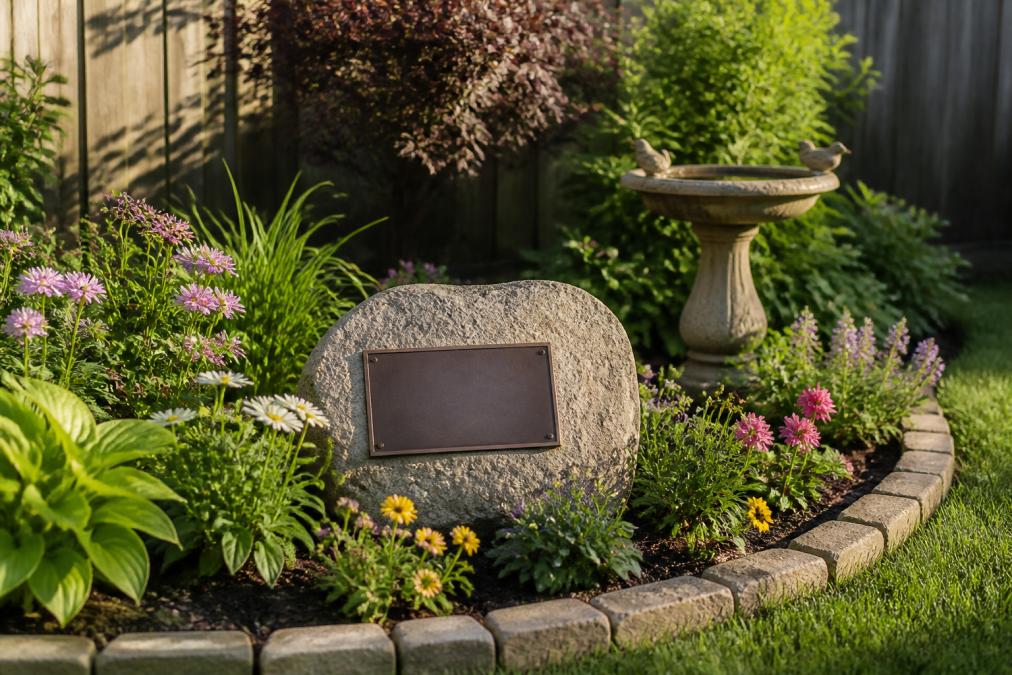
Start by picking a spot you pass daily, near a path or a kitchen window. Place the plaque at eye level on a stone, stake, or low wall, then build outward:
- Ground layer: low groundcover like creeping thyme or sedum
- Mid layer: perennials in your pet's favorite color
- Vertical layer: a small shrub or ornamental grass for height
- Accent: a birdbath, lantern, or bench that invites you to sit
Keep the layout simple. A single well-placed plaque surrounded by three plant types reads calmer than a crowded bed. If space is tight, a container garden on a patio works just as well as a full border.
Caring for Your Pet Memorial Plaque
Most guides stop at the sale. A memorial plaque is meant to outlast the season you bought it in, so here's how aluminum behaves over years outdoors, and what it takes to keep it looking cared-for.
How Each Material Weathers
- Powder-coated aluminum: The most forgiving outdoor choice. The coating is bonded to the metal, so it resists chipping and fading, and the aluminum itself won't rust. Expect the finish to hold color for years in full sun. Clean it and it looks new.
- Granite: Effectively permanent. It won't fade, warp, or corrode, and freeze-thaw cycles don't bother it. Its only real enemies are surface staining from tree sap, bird droppings, or iron-rich soil, and it's heavy enough that repositioning it is a two-person job.
- Slate: Beautiful and stable, but softer than granite. It can flake or delaminate at the edges over many freeze-thaw cycles if water gets into natural seams. Best in mild climates or under partial cover.
- Acrylic: Light and affordable, but the least UV-stable of the group. Direct sun makes acrylic yellow and go brittle over time, and cold makes it more prone to cracking. Fine for a covered porch or a shaded bed; a poor bet for a full-sun spot.
- Wood: Warm and natural, but it moves with moisture, cracks as it dries, and needs re-sealing roughly every year to resist rot and graying. Best under a roof or as an indoor keepsake paired with a durable outdoor marker.
A Simple Care Routine
Twice a year, say, spring and fall, wipe the surface with a soft cloth and mild soap, rinse with water, and dry it to prevent water spots. At the same time, check the mounting hardware and tighten anything loose. Before winter, clear fallen leaves and debris from around a ground-level marker so moisture doesn't sit against it, and confirm stakes are still firm in the soil before the ground freezes.
What to Avoid
Skip abrasive cleaners, steel wool, and pressure washers on engraved surfaces. They dull the finish and can erode lettering over time. Avoid acidic cleaners on granite and slate, which can etch the surface. And don't let lawn fertilizer, weed killer, or de-icer sit on the plaque, rinse it off promptly if overspray or runoff reaches it.
Frequently Asked Questions
What materials are best for outdoor pet memorial plaques?
Aluminum holds up best outdoors. Aluminum resists rust and fading, especially with a UV-resistant coating. Wood can work if sealed, but it needs yearly upkeep. For most gardens, a powder-coated aluminum memorial garden plaque offers the best mix of durability and price.
How do you personalize a pet memorial garden plaque?
Start with your pet's name and dates. Add a short phrase like 'Beloved Companion' or a favorite memory. Custom engraved text and laser-etched images both hold up well outdoors when the plaque is rated for weather.
How long do metal memorial plaques last outdoors?
A quality aluminum plaque with UV-resistant coating can last 10 to 15 years or more outdoors. Longevity depends on sun exposure, moisture, and care. Rinsing the plaque every few months and avoiding harsh chemicals will help it stay readable.
How to install metal signs on brick without damage?
Use a masonry drill bit and plastic anchors for a secure hold. Clean the brick first, mark your holes, and drill slowly. For a no-drill approach, place the plaque on a garden stake or attach it to a wooden post near the brick.