


Table of Contents
- Why Aluminum Signs Don't Rust Outdoors
- Aluminum vs. Other Materials: What's the Best Metal for Outdoor Signs?
- How to Protect Aluminum Signs from Weather and Fading
- How to Install Metal Signs on Brick Without Damage
- Galvanic Corrosion: The Mounting Hardware Mistake to Avoid
- Maintaining Your Aluminum Signs for Long-Term Durability
- Conclusion
- Frequently Asked Questions
Last Updated: September 20, 2026
Why Aluminum Signs Don't Rust Outdoors
No, aluminum signs do not rust outdoors. Aluminum does not contain iron, and rust is what happens when iron meets oxygen and water. Since there's no iron in aluminum, the reaction that eats through steel and wrought iron simply can't start.
The Science Behind Aluminum's Natural Protection
Oxidization is aluminum's built-in defense system. The moment bare aluminum hits air, it forms a thin layer of aluminum oxide on the surface. That layer seals the metal underneath from moisture and oxygen.
Here's the key difference from rust:
- Rust on iron or steel flakes off, exposing fresh metal, and the damage keeps spreading
- Aluminum oxide bonds tight to the surface and stays put, so it stops corrosion in its tracks
Aluminum vs. Other Materials: What's the Best Metal for Outdoor Signs?
Aluminum wins for most outdoor signage, but the reason isn't just that it doesn't rust. It's that aluminum hits a balance no other common substrate matches: light enough to hang on a fence post with two screws, rigid enough to hold a flat face for years, and stable enough that the finish, not the metal, becomes the limiting factor.
| Material | Rust Risk | Typical Thickness | Weight vs. Aluminum | Outdoor Lifespan | Best For |
|---|---|---|---|---|---|
| Aluminum | None | 0.020"-0.080" | Baseline | 7-15+ years with UV print | Long-term outdoor use |
| Steel | High without coating | 0.018"-0.036" | ~2.5x heavier | 2-5 years before rust shows | Industrial, painted finishes |
| PVC | None | 0.040"-0.125" | Similar to lighter aluminum | 3-7 years, yellows in sun | Budget indoor signs |
| Coroplast | None | 4mm-10mm | Lighter | 1-2 seasons | Temporary yard signs |
| Wood | None (rots instead) | 0.25"-1" | Much heavier | 2-6 years untreated | Rustic, short-term décor |
| Acrylic | None | 0.125"-0.25" | Heavier | 5-10 years, can craze | Premium indoor/covered |
A few things that table doesn't show:
- Steel is stronger per unit thickness, but only until the coating fails. One chip in the paint and rust starts creeping under the finish from the edge inward. Aluminum has no equivalent failure mode, a scratch exposes more aluminum, which re-oxidizes and self-seals.
- PVC and Coroplast are cheap because they're soft. They flex in wind, which cracks screen-printed ink over time. Coroplast is a fluted plastic, the hollow channels trap water if the edges aren't sealed.
- Wood's problem isn't rust, it's moisture cycling. Every wet-dry cycle swells and shrinks the grain, which lifts paint and warps the board. A wood sign that looks great in year one often looks tired by year three.
- Acrylic looks premium but scratches easily and can craze (form fine surface cracks) under long UV exposure. It's a great choice for a covered porch, less so for a south-facing fence.
Why Thickness Matters More Than You'd Think
Not all aluminum signs are the same gauge. A 0.020" sheet is fine for a small indoor plaque but will oil-can (flex and ripple) on a windy fence. Most outdoor garden and yard signs use 0.032"-0.040", which stays flat under normal wind load. Larger signs, say, over 18" wide, benefit from 0.063" or a stiffening flange along the edge. If a listing doesn't state the gauge, that's usually a sign the seller is using the thinnest sheet that will survive shipping.
The Sustainability Angle Competitors Skip
Aluminum is one of the most recycled materials on the planet, roughly 75% of all aluminum ever produced is still in use today, according to the Aluminum Association. Scrap aluminum retains nearly all of its value and can be re-melted indefinitely without losing properties. PVC and Coroplast, by contrast, are difficult to recycle in most curbside programs and often end up in landfill.
How to Protect Aluminum Signs from Weather and Fading
Aluminum won't rust, but it can fade, chalk, or discolor if the ink and finish aren't up to the weather. Protection comes down to two things: a UV-protective coating over the artwork and a finish that seals the surface.
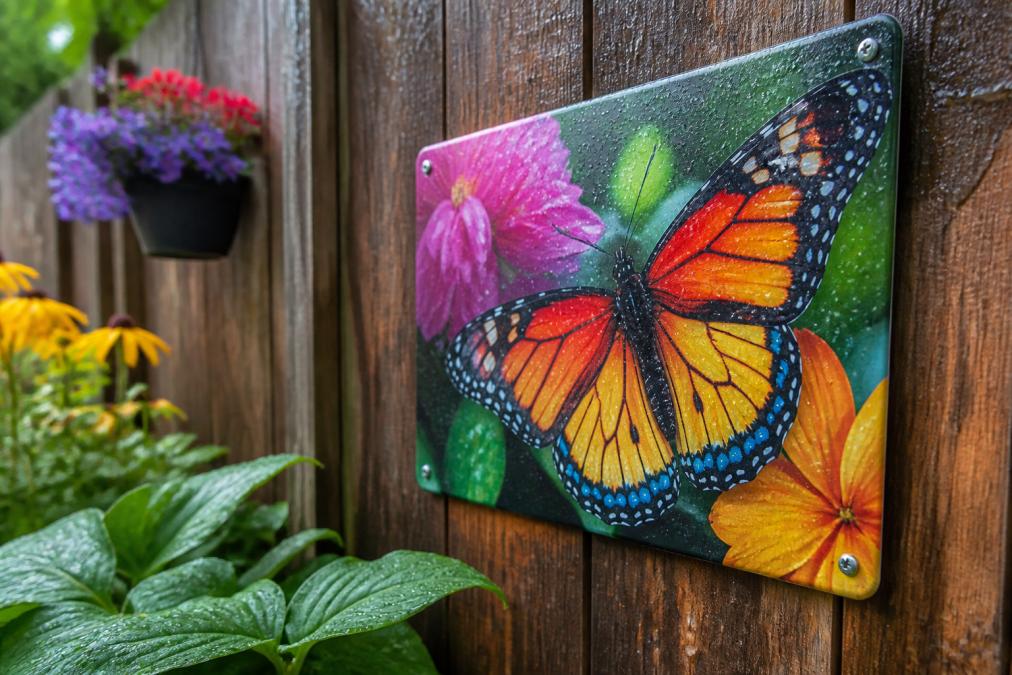
UV Protection and Finish Options
Sunlight is the real enemy of an outdoor sign, not rain. UV rays break down pigments over time, which is why cheap signs go pale and washed out after a season or two.
- Anodized aluminum, an electrochemical finish that thickens the natural oxide layer, adding scratch and corrosion resistance
- Powder-coated, a dry powder baked into a hard, even shell that shrugs off chips and moisture
- Enamel finish, a smooth, glossy coat that's easy to wipe clean
- Acrylic spray, a clear topcoat you can apply yourself for extra UV defense
How to Install Metal Signs on Brick Without Damage
Installing metal signs on brick without damage comes down to one rule: don't drill into the brick if you can avoid it. Brick cracks, mortar crumbles, and renters especially don't want permanent holes.

Here's a simple decision guide:
- Renting or want it removable? Use adhesive-backed hooks rated for outdoor use, or hang from an existing nail, screw, or hook
- Own the wall and want it permanent? Drill into the mortar, not the brick face, and use plastic anchors
- Uneven or rough surface? Add small rubber washers behind the sign so it sits flat and doesn't rattle
- Heavy sign? Use two mounting points at minimum, spaced to match the pre-drilled holes
Galvanic Corrosion: The Mounting Hardware Mistake to Avoid
Galvanic corrosion happens when two different metals touch in the presence of moisture. One metal steals electrons from the other, and the weaker one starts to break down.
The fix is easy:
- Use stainless steel fasteners with aluminum signs
- Add a nylon or rubber washer between the sign and any dissimilar metal
- Avoid mixing bare copper, brass, or galvanized hardware directly against aluminum outdoors
Maintaining Your Aluminum Signs for Long-Term Durability
Aluminum signs need very little upkeep, which is a big part of why they last. But "very little" isn't "none," and the maintenance that actually matters is different from what most guides suggest. You're not protecting the metal, the metal protects itself. You're protecting the ink, the finish, and the hardware, in that order.
A Realistic Maintenance Schedule
- Every 2-3 months: Wipe down with a soft, damp microfiber cloth and a drop of mild dish soap. Rinse with a garden hose. This removes pollen, dust, and bird droppings before they etch the topcoat.
- Twice a year (spring and fall): Inspect the mounting hardware. Look for rust staining around screw heads, loose fasteners, or white powdery residue at the contact points, that residue is aluminum oxide forming where a dissimilar metal is touching the sign, which is the early warning sign of galvanic corrosion.
- Annually: Reapply a clear acrylic spray (UV-grade, not generic craft sealer) on signs in full sun. One light coat, applied in shade, is enough. More is not better, heavy coats yellow over time.
- As needed: Touch up scratches on powder-coated signs with matching touch-up paint. On anodized signs, small scratches usually self-passivate and don't need attention.
What Actually Shortens a Sign's Life
Ranked by how often they cause premature failure:
- Mismatched mounting hardware. Steel or zinc-plated screws against aluminum create a galvanic couple. Every rainstorm is a tiny electrolytic cell. The steel corrodes, the aluminum pits around the hole, and the sign eventually cracks at the mounting point. Stainless steel fasteners or nylon washers eliminate this entirely.
- UV exposure without a UV-rated topcoat. Cheap inks fade to pastel within a single summer in full sun. UV-resistant inks plus a clear topcoat push that to many years.
- Abrasive cleaning. Steel wool, scouring pads, and powdered cleansers scratch through both the oxide layer and the topcoat. Once the topcoat is breached, UV and moisture get direct access to the ink.
- Pressure washing. High pressure forces water behind the finish at edges and around mounting holes. That trapped moisture is exactly what drives corrosion at the hardware contact points. A garden hose and a rag do the job.
- Acidic contaminants left in place. Bird droppings and tree sap are mildly acidic. Left for weeks, they etch clear coats and dull the print. Rinse, don't scrub.
How Long Should You Actually Expect?
With UV-resistant inks and stainless hardware, an aluminum sign can hold up outdoors for many years, often a decade or more. The print fades long before the metal gives out, and even that takes a while with a decent finish. The realistic failure sequence is: ink fades first, then hardware corrodes, then the finish chalks. The aluminum itself is almost never the thing that fails.
Conclusion
The question of whether aluminum signs rust outdoors has a clean answer: they don't, because there's no iron in them to rust. The real risks are fading from UV exposure and corrosion from mismatched mounting hardware, and both are easy to prevent with the right finish and stainless steel fasteners.
Frequently Asked Questions
Will aluminum signs rust outdoors?
No, aluminum signs will not rust outdoors. Rust is iron oxide, which forms only when iron or steel is exposed to moisture and oxygen. Aluminum does not contain iron, so it cannot rust. Instead, aluminum forms a thin, invisible layer of aluminum oxide on its surface when exposed to air. This oxide layer seals the metal and protects it from further corrosion, making aluminum a reliable choice for outdoor signage.
How long do aluminum signs last outdoors?
Aluminum signs can last 10 to 20 years or more outdoors, depending on the finish, climate, and maintenance. The metal itself resists corrosion, but the printed design may fade over time from UV exposure. Signs with UV-protective coating or laminate hold up best. In harsh conditions like coastal areas with salt spray, occasional rinsing with fresh water helps extend the life of the sign and its mounting hardware.
Are aluminum signs waterproof?
Yes, aluminum signs are waterproof. The metal does not absorb water and will not swell, warp, or rot like wood can. Rain, sprinklers, and humidity do not damage the aluminum itself. However, standing water around mounting holes or hardware can lead to other issues, so ensure proper drainage and use stainless steel fasteners. The printed surface should also have a UV-resistant coating to prevent fading from sunlight and moisture.
What is the best way to install metal signs on brick?
To install metal signs on brick, use a masonry drill bit to drill pilot holes into the mortar joints, not the brick itself. Insert plastic anchors or lead shields, then secure the sign with stainless steel screws. Avoid carbon steel screws because they can cause galvanic corrosion when touching aluminum. For a no-drill option, use brick clips or adhesive hooks rated for outdoor use, but check that they can hold the sign's weight.
Ready to make your space stand out? Explore unique, conversation-starting signs at RealCoolSigns.com and find the perfect piece for your home, office, garage, or gift.