


Table of Contents
- What You'll Need Before Starting
- How to Clean Outdoor Aluminum Signs Step by Step
- How to Remove Oxidation from Aluminum Signs
- Best Cleaning Products for Aluminum Signs
- Preventing Rust on Outdoor Metal Decor
- Maintenance Schedule and Seasonal Care
- Common Mistakes to Avoid
- Conclusion
- Frequently Asked Questions
Last Updated: September 3, 2026
What You'll Need Before Starting
Before you tackle cleaning your outdoor aluminum signs, gather the right tools and materials. This preparation step makes the difference between a quick, effective clean and a frustrating battle with stubborn grime.
Here's what to have on hand:
- Soft-bristle brush (not wire or stiff nylon)
- Microfiber cloth or soft cotton cloth
- Two buckets (one for cleaning solution, one for rinsing)
- Mild detergent or car shampoo
- Lukewarm water
- Optional: white vinegar solution for stubborn spots
- Spray bottle or garden hose with low pressure
- Gloves to protect your hands
- Drop cloth or towels to catch runoff
The key is avoiding anything abrasive. Wire brushes, scouring pads, and harsh chemicals damage the protective coating on aluminum and accelerate oxidation. Think gentle agitation, not aggressive scrubbing.
Real Cool Signs aluminum signs are built to last, but they need the right care approach. Using proper tools protects your investment and keeps your sign looking sharp for years.
How to Clean Outdoor Aluminum Signs Step by Step
The process of how to clean outdoor aluminum signs follows a straightforward sequence. Each step builds on the last, and rushing through them reduces effectiveness.
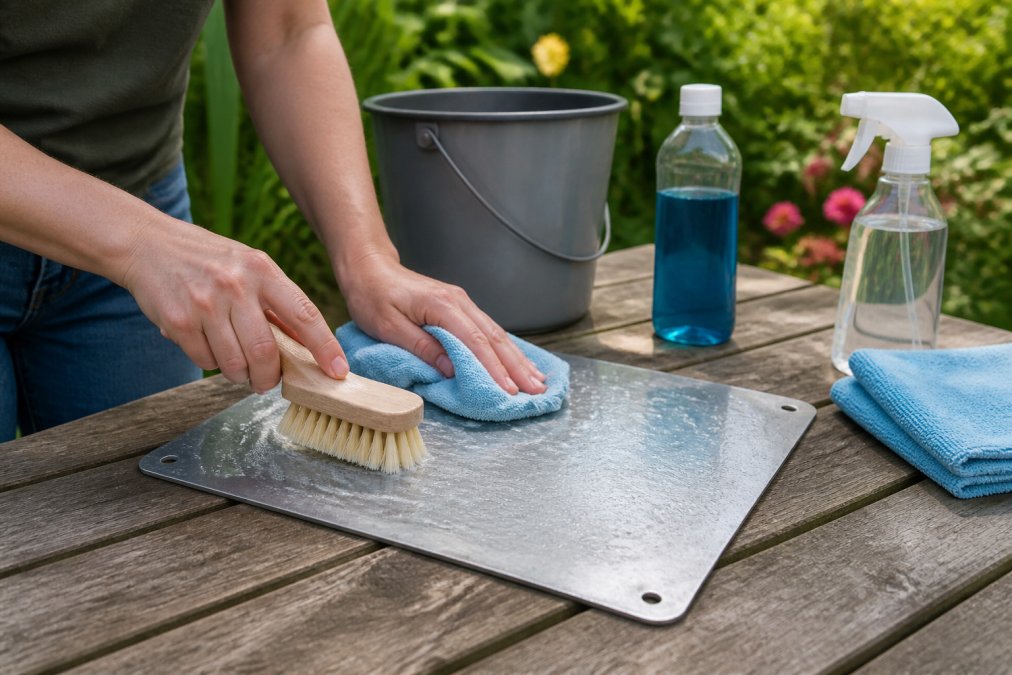
Step 1: Remove Surface Debris
Start by removing loose dirt, dust, and debris from your sign's surface. This prevents you from grinding grit into the aluminum when you wet-clean it.
Use a dry soft-bristle brush or a clean microfiber cloth to wipe away dust and loose particles. For stubborn debris, a gentle stream from your garden hose works well, keep pressure low to avoid forcing particles into crevices.
Pay special attention to the edges and corners where dirt accumulates. These areas trap moisture, which accelerates corrosion if left unaddressed.
Step 2: Prepare Your Cleaning Solution
Mix your cleaning solution in one bucket. Combine lukewarm water with a mild detergent or car shampoo. The ratio is roughly one part detergent to ten parts water, you want suds, not a soapy soup.
Lukewarm water is important because it dissolves grime more effectively than cold water while being gentler than hot water on the aluminum finish. Avoid sodium carbonate-based cleaners or anything labeled "heavy-duty", these can damage the protective coating.
If you're dealing with stubborn spots or light oxidation, prepare a separate vinegar solution in your spray bottle: one part white vinegar to three parts water. This works for localized problem areas without exposing the entire sign to acidic conditions.
Fill your second bucket with clean lukewarm water for rinsing.
Step 3: Scrub Gently and Rinse Thoroughly
Dip your soft-bristle brush into the cleaning solution and apply it to the sign using gentle, circular motions. The goal is to lift dirt and grime without aggressive scrubbing.
Work from top to bottom so dirty water runs downward naturally. Spend extra time on areas with visible discoloration or buildup, but maintain the same gentle pressure throughout.
Rinse thoroughly with your clean water bucket or low-pressure garden hose. This step matters more than people realize, residual soap left on the surface creates streaking and can trap moisture against the aluminum.
For stubborn spots, spray your vinegar solution and let it sit for 2-3 minutes before gently scrubbing. Vinegar cuts through oxidation without the harshness of abrasive cleaners. Rinse immediately after.
Step 4: Dry Your Sign Completely
Water left on aluminum accelerates oxidation and corrosion. Dry your sign thoroughly using a clean microfiber cloth. Microfiber absorbs water faster than cotton and leaves fewer lint particles behind.
Wipe in the direction of any grain or texture on the sign. Pay special attention to edges, seams, and any recessed areas where water pools. These spots are where corrosion starts.
If your sign has a protective coating (most quality aluminum signs do), drying prevents water from sitting under that coating, which causes peeling over time.
How to Remove Oxidation from Aluminum Signs
Oxidation appears as a white, chalky coating or gray discoloration on your aluminum sign. It's the metal's natural response to oxygen exposure, and it accelerates when moisture is present.

Light oxidation can be removed with your regular cleaning routine. For heavier oxidation, you need a more targeted approach.
Mix a solution of equal parts white vinegar and water in a spray bottle. Spray the oxidized areas and let the solution sit for 5-10 minutes. The acidity gently dissolves the oxidation without damaging the underlying aluminum.
Use your soft-bristle brush to gently agitate the area. You'll see the white coating begin to lift. Rinse thoroughly with clean water and dry completely.
For severe oxidation covering large areas, consider using a specialized aluminum cleaner designed for automotive finishes. These products are formulated to remove oxidation while protecting the metal underneath. Always spot-test on an inconspicuous area first.
Never use steel wool, wire brushes, or sandpaper on aluminum. These remove the protective layer that prevents future corrosion, actually accelerating the problem.
Best Cleaning Products for Aluminum Signs
Your choice of cleaning products determines how well your sign resists future damage. The safest options are the simplest ones.
Mild detergent or car shampoo is your foundation. These are formulated to clean without stripping protective coatings. They're gentle enough for regular maintenance cleaning.
White vinegar works exceptionally well for light oxidation and hard water deposits. It's acidic enough to dissolve mineral buildup but not so harsh that it damages aluminum. The smell dissipates quickly once the sign dries.
Specialized aluminum cleaners designed for automotive finishes are worth considering if you're dealing with heavy oxidation or stubborn discoloration. These products target oxidation specifically while protecting the underlying metal.
Avoid anything labeled "heavy-duty," "industrial strength," or containing bleach. These damage the protective powder-coated finish that guards your aluminum sign against corrosion.

Pressure washers might seem convenient, but high-pressure water forces itself into seams and under protective coatings, trapping moisture where it causes the most damage. Stick with low-pressure rinsing from a garden hose.
Real Cool Signs aluminum signs come with durable finishes designed to handle outdoor conditions. Using gentle cleaning products preserves that protection and extends your sign's lifespan significantly.
Preventing Rust on Outdoor Metal Decor
Aluminum doesn't rust the way iron does, but it does corrode through oxidation and can develop surface damage that compromises its durability. Prevention is far simpler than repair.
Regular cleaning is your first line of defense. Monthly cleaning removes moisture and contaminants before they can cause damage. In areas with salt air exposure (coastal regions), increase frequency to every two weeks.
Protective coatings matter. Quality aluminum signs come with powder-coated or anodized finishes that shield the metal from oxidation. Inspect your sign periodically for chips or cracks in this coating. Small damage can be touched up with automotive touch-up paint before moisture reaches the aluminum underneath.
Proper drainage prevents water from pooling on your sign. If your sign is mounted flat against a wall, ensure water runs off rather than collecting in crevices. Slight angle mounting helps significantly.
Weather resistance depends on your sign's finish. Anodized aluminum offers excellent protection in most climates. Powder-coated finishes provide additional UV protection and color retention. Both require regular cleaning to maintain their protective properties.
Salt air exposure accelerates corrosion if left unchecked. If you live near the ocean or in areas where roads are salted in winter, rinse your sign more frequently with fresh water to remove salt deposits before they cause damage.
Maintenance Schedule and Seasonal Care
Consistency beats intensity when it comes to sign maintenance. A regular schedule prevents problems from developing rather than scrambling to fix damage after it occurs.
Monthly cleaning is the baseline for most climates. A quick wipe-down with a soft cloth removes dust and light buildup. This takes 15 minutes and prevents grime from hardening on the surface.
Seasonal deep cleaning happens quarterly, roughly every three months. This is your thorough scrub with mild detergent, soft-bristle brush, and complete drying. Plan these for spring, summer, fall, and winter transitions.
Spring cleaning focuses on removing winter grime and salt residue. Winter weather is harsh on outdoor metal decor, so inspect your sign for any damage to the protective coating.
Summer maintenance emphasizes UV protection. While your sign's finish handles UV exposure, regular cleaning prevents heat damage from accelerated oxidation. Clean more frequently if your sign receives intense direct sun.
Fall preparation means removing debris and ensuring proper drainage before winter. Leaves and organic matter trap moisture against the aluminum surface.
Winter care depends on your climate. In areas with freezing temperatures, ensure water drains completely to prevent ice formation. In coastal areas, increase cleaning frequency to combat salt spray. In mild climates, maintain your regular monthly schedule.
After heavy storms, rain, or snow, inspect your sign for trapped moisture. Dry any wet areas immediately.
Common Mistakes to Avoid
Even well-intentioned cleaning efforts can damage your aluminum sign if you're not careful about technique and product selection.
Using abrasive materials is the most common mistake. Wire brushes, steel wool, scouring pads, and sandpaper all scratch the protective coating. Once that coating is compromised, oxidation accelerates rapidly. Stick exclusively with soft-bristle brushes and microfiber cloths.
Pressure washing seems efficient but forces water into seams and under coatings where it causes corrosion. The high pressure also strips away protective coatings. Use a low-pressure garden hose instead.
Leaving the sign wet creates an environment where oxidation thrives. Water sitting on aluminum surface, especially in warm sunlight, accelerates the chemical process that creates oxidation and corrosion. Always dry thoroughly after cleaning.
Using harsh chemicals damages the finish faster than dirt does. Bleach, heavy-duty degreasers, and industrial cleaners strip protective coatings. Stick with mild detergent and water as your primary cleaning solution.
Ignoring protective coating damage allows corrosion to progress unchecked. Small chips in the powder-coated or anodized finish are entry points for moisture and oxidation. Touch these up promptly with automotive touch-up paint.
Irregular maintenance means problems compound over time. A sign that's cleaned weekly never develops stubborn buildup. A sign that's cleaned yearly has accumulated grime that requires aggressive cleaning to remove, which itself causes damage.
Skipping the rinse leaves soap residue that creates streaking and can trap moisture. Thorough rinsing is non-negotiable.
Real Cool Signs aluminum signs are built tough, but they respond best to gentle, consistent care. Avoid these mistakes and your sign will maintain its appearance and durability for years.
Conclusion
Keeping your outdoor aluminum signs clean and protected is straightforward when you follow a consistent approach. Mild detergent, soft-bristle brushes, lukewarm water, and thorough drying form the foundation of effective maintenance. Regular monthly cleaning prevents buildup, while seasonal deep cleaning handles seasonal challenges. Avoid abrasive materials and harsh chemicals that damage the protective coating, and address any oxidation promptly with gentle vinegar solutions.
The effort pays off in signs that look sharp and resist corrosion for years. Whether you're displaying garden-themed aluminum signs like the Grandma's Garden Aluminum Sign or the Into My Garden I Go Butterfly Aluminum Garden Sign, proper maintenance preserves their appearance and durability.

Ready to make your space stand out? Explore unique, conversation-starting signs at RealCoolSigns.com and find the perfect piece for your home, office, garage, or gift.
Frequently Asked Questions
What should you not use when cleaning outdoor aluminum signs?
Avoid abrasive cleaners, steel wool, scouring pads, and harsh chemicals like bleach or ammonia, these damage the protective coating and accelerate corrosion. Skip pressure washers, which can strip finishes and force water into seams. Steer clear of WD-40 and similar penetrating oils; they leave residue that traps moisture and dirt. Stick to mild detergent, soft-bristle brushes, and microfiber cloths for safe, effective cleaning.
How often should you clean outdoor aluminum signs?
Clean your aluminum signs every 3 to 6 months under normal conditions. In coastal areas with salt air exposure, increase frequency to monthly cleanings to prevent corrosion buildup. After severe weather, storms, or heavy dust events, inspect your sign and clean as needed. Signs in shaded areas prone to mildew may need quarterly attention. Regular maintenance prevents oxidation from building up and extends the sign's lifespan significantly.
Can you use a pressure washer on aluminum signs?
No, pressure washers are too aggressive for aluminum signs. The high-pressure water stream can damage protective coatings, force moisture into seams and crevices, and accelerate corrosion. It may also strip paint or decals from your sign. Stick to gentle hand-washing with a soft-bristle brush, lukewarm water, and mild detergent. Hand-washing gives you control and protects the sign's finish and longevity.
How do you restore an aluminum sign that has lost its shine?
For dull finishes caused by oxidation, a vinegar solution (one part vinegar to three parts water) can restore clarity without damaging the coating, test on a hidden area first. After restoration, applying a UV-protective coating or automotive wax can help maintain shine and prevent future oxidation. Regular cleaning prevents the need for aggressive restoration.
Ready to make your space stand out? Explore unique, conversation-starting signs at RealCoolSigns.com and find the perfect piece for your home, office, garage, or gift.