


Table of Contents
- What Makes Heavy Duty Metal Signs for Outdoors Different
- Aluminum vs Steel Signs for Outdoors: Which Material Wins
- Best Gauge Thickness for Outdoor Metal Signs: Specifications That Matter
- Powder Coating and Finish Protection for Long-Lasting Outdoor Signs
- Weatherproof Metal Sign Mounting Hardware and Installation Methods
- Customization Options and Personalization for Your Heavy Duty Signs
- Real Cool Signs: Durable Aluminum Signs for Every Passion
- Common Questions About Outdoor Metal Sign Durability and Performance
Heavy Duty Metal Signs for Outdoors: A Complete Buyer's Guide
Last Updated: August 3, 2026
When shopping for outdoor signage, the difference between a sign that lasts five years and one that survives a decade comes down to material science, gauge thickness, and finish quality. A poorly chosen sign will fade, rust, or warp within a season or two. A properly specified one becomes a permanent fixture that improves with age. Below, we'll show you exactly how to evaluate heavy duty metal signs for outdoors so you can make a choice you won't regret.
What Makes Heavy Duty Metal Signs for Outdoors Different
Heavy duty metal signs must withstand temperature swings exceeding 100 degrees Fahrenheit, UV radiation, moisture, and wind loads. The difference between a standard sign and a heavy-duty one comes down to three factors: material gauge (thickness), protective coating system, and hardware specification.
A standard aluminum sign might use 0.040-inch aluminum with a basic polyester finish. A heavy-duty version uses 0.080-inch or thicker aluminum with a multi-layer powder coat system that resists fading and corrosion far more effectively. Powder-coated aluminum signs tested in coastal environments maintain their finish integrity for 10+ years when properly specified. Without powder coating, the same sign would show visible rust blooming within 18-24 months.
Quality outdoor signs use edge-folded hems that prevent water seepage, mounting holes sealed with stainless steel fasteners, and attention to every detail that compounds durability.
Aluminum vs Steel Signs for Outdoors: Which Material Wins
Neither material is universally superior; each dominates specific use cases.
Why Aluminum Dominates Residential and Commercial Applications
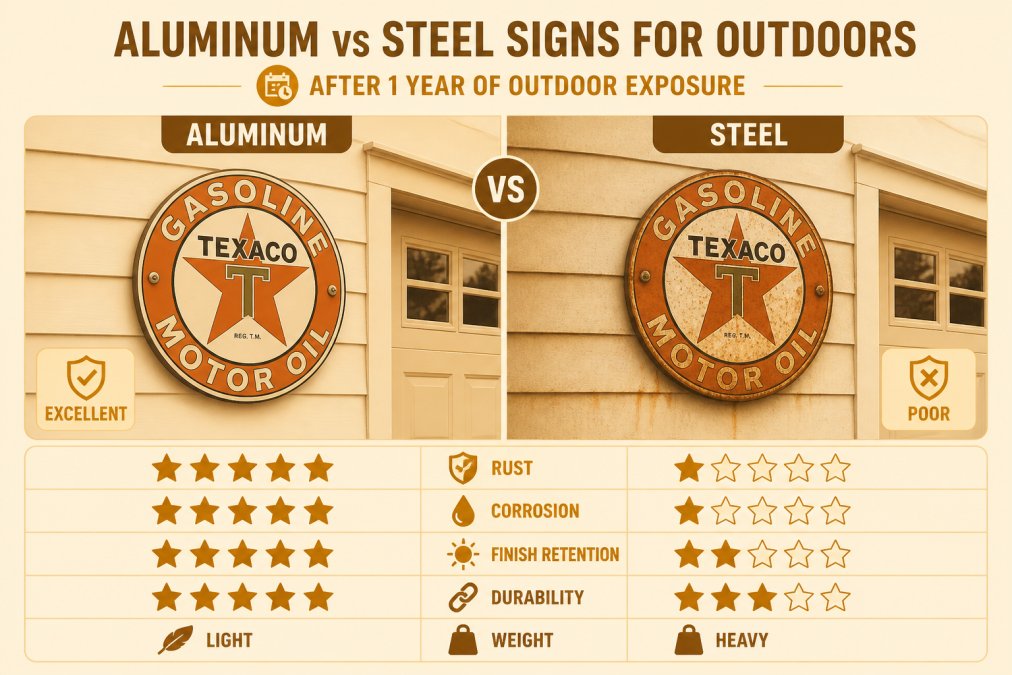
Aluminum wins for most outdoor applications because it's naturally corrosion-resistant. Unlike steel, aluminum doesn't rust in the traditional sense. Instead, it develops a thin aluminum oxide layer that actually protects the underlying metal. This passive protection means aluminum signs can survive decades of exposure with minimal maintenance.
Aluminum is also lighter, which simplifies installation and reduces stress on mounting hardware. A 24-inch by 36-inch aluminum sign weighs roughly 5-7 pounds, compared to 15-20 pounds for steel, requiring stronger wall anchors and potentially professional installation.
For personalized outdoor signage, custom family name signs, business identifiers, or hobby-themed decor, aluminum is the material of choice. It accepts powder coatings beautifully, holds fine detail in custom designs, and won't corrode if the coating is scratched since the aluminum substrate self-protects. Real Cool Signs specializes in aluminum signs because the material aligns perfectly with residential and small-business applications where durability meets aesthetic flexibility.
When Steel Delivers Superior Durability
Steel wins when you need maximum rigidity and impact resistance. A steel sign won't dent from an errant baseball or wind-driven debris. It's the material of choice for industrial applications, parking lot signage, and high-traffic commercial environments where signs face physical abuse.
Steel requires active corrosion protection through a powder-coat finish applied over a properly prepared substrate, typically a two-part epoxy primer followed by polyester topcoat. In coastal environments, steel requires hot-dip galvanizing as a base layer before powder coating.
Steel is heavier and more expensive upfront. For most residential applications, the added cost and installation burden don't justify the marginal durability gain.
Best Gauge Thickness for Outdoor Metal Signs: Specifications That Matter
Gauge thickness determines how much stress a metal sign can withstand before deforming. Thicker gauge means stiffer material and better resistance to wind load and physical damage.
Understanding Gauge Measurements and Outdoor Performance
Gauge measurements work counterintuitively, lower numbers mean thicker material. For outdoor applications:
- 0.040-inch (approximately 22-gauge): Entry-level outdoor signs. Acceptable for small signs under 18 inches in low-wind areas. Prone to oil-canning and flex under wind load.
- 0.063-inch (approximately 18-gauge): The sweet spot for most residential outdoor signs. Provides adequate rigidity for signs up to 36 inches without excessive weight.
- 0.080-inch (approximately 16-gauge): Heavy-duty specification for large signs (36+ inches) or high-wind environments. Significantly stiffer and more resistant to impact damage.
- 0.125-inch (approximately 12-gauge): Industrial-grade thickness for extreme conditions. Rarely necessary for residential applications.
A 24-inch square sign in 0.040-inch aluminum will flex visibly in a 15 mph wind. The same sign in 0.080-inch aluminum will remain rigid.
Matching Thickness to Your Climate and Exposure
Wind load is the primary driver of gauge selection. Sustained winds of 25-31 mph are common in many regions during winter months. A sign inadequately specified for your local wind environment will flex, fatigue fasteners, and eventually fail.
High-wind coastal areas demand heavier gauge. A 36-inch sign in a coastal location should be 0.080-inch minimum. Inland areas with moderate wind loads can use 0.063-inch for the same size.
| Application | Recommended Gauge | Typical Size Range | Wind Resistance |
|---|---|---|---|
| Small residential signs | 0.063-inch | 12-24 inches | Moderate |
| Medium residential signs | 0.080-inch | 24-36 inches | Good |
| Large commercial signs | 0.080-inch | 36-48 inches | Good |
| Industrial/high-wind | 0.125-inch | 24-60+ inches | Excellent |
Powder Coating and Finish Protection for Long-Lasting Outdoor Signs
The coating system determines how long a metal sign resists fading, chalking, and corrosion. A thick, high-quality powder coat can extend the lifespan of an aluminum sign from 5-7 years to 15+ years.
Powder coating is an electrostatically applied, thermally cured process that creates a continuous, uniform protective layer. Unlike liquid paint, powder coat has no solvents and is applied as a dry powder, electrostatically charged to adhere to the metal, then baked in an oven to cure.
A 2-3 mil powder coat (industry standard) provides basic protection. A 4-5 mil coat (premium specification) provides substantially better UV resistance and corrosion protection, especially in harsh environments. The cost difference is modest, roughly 10-15% more, but the durability gain is significant.
UV-resistant topcoats are essential for outdoor applications. Standard polyester powder coats begin fading within 2-3 years of direct sun exposure. Premium acrylic or polyurethane topcoats can maintain color integrity for 10+ years.
Glossy finishes fade faster than matte or satin finishes. For long-term appearance, specify a satin or matte finish with a UV-resistant topcoat.
Weatherproof Metal Sign Mounting Hardware and Installation Methods
A beautiful sign mounted with inadequate hardware is a failure waiting to happen. The fasteners and brackets that hold a sign to your wall are as critical to longevity as the sign material itself.
Hardware Options for Different Surfaces and Conditions
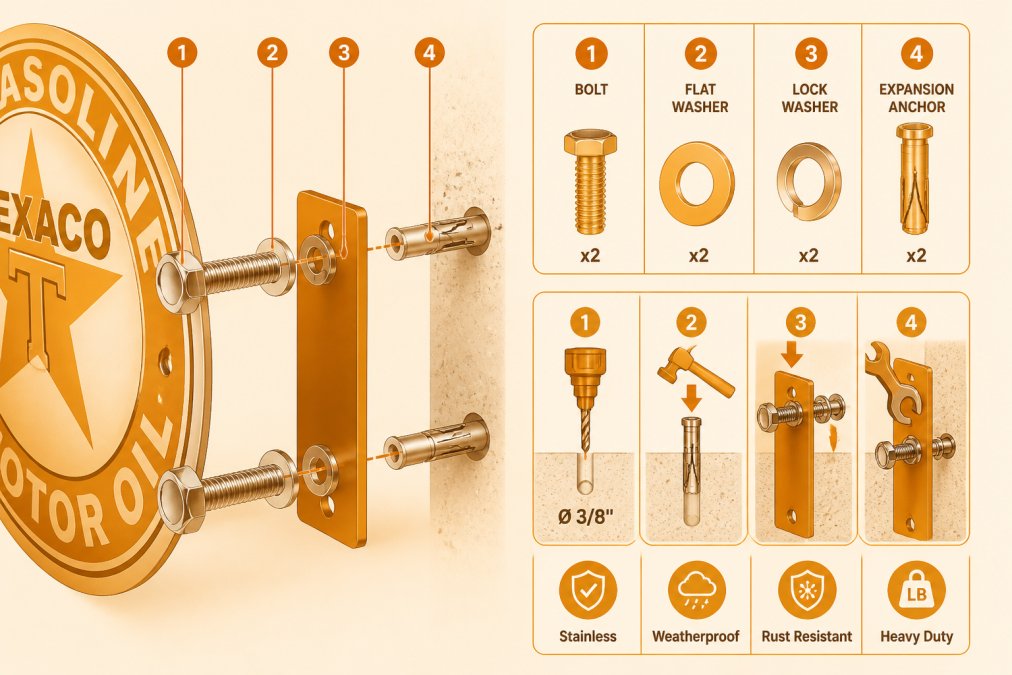
Stainless steel fasteners are non-negotiable for outdoor applications. Standard steel bolts, washers, and anchors rust within months of outdoor exposure. Stainless steel (specifically 304 or 316 grade) resists corrosion across all climate conditions.
For aluminum signs mounted to wood surfaces, stainless steel lag bolts with stainless washers are the standard approach. Spacing fasteners 12-16 inches apart provides adequate load distribution for most residential applications.
Concrete and masonry surfaces require concrete anchors, either expansion anchors (mechanical) or adhesive anchors (chemical). Adhesive anchors create a stronger, more permanent bond and are preferred for high-value or large signs.
Vinyl siding requires special consideration because the siding flexes seasonally. Install mounting brackets that penetrate through the siding into the solid substrate behind it.
Metal surfaces can use self-tapping stainless steel fasteners or bolts with backing plates. Bolts with backing plates distribute load more evenly and are preferred for permanent installations.
Installation Guide for Concrete, Wood, Vinyl, and Metal Surfaces
Wood Surfaces:
- Mark fastener locations with a pencil, spacing them 12-16 inches apart.
- Drill pilot holes slightly smaller than the bolt diameter.
- Install stainless steel lag bolts with stainless washers and lock washers. Tighten firmly without over-torquing.
- For signs larger than 24 inches, use at least four fasteners.
- Check fastener tightness annually.
Concrete and Masonry:
- Mark fastener locations and use a masonry bit to drill holes.
- For expansion anchors: insert the anchor, then drive the bolt to expand the anchor against the concrete.
- For adhesive anchors: clean the hole with compressed air, inject the adhesive, insert the bolt, and allow the adhesive to cure per manufacturer specifications before loading the sign.
Vinyl Siding:
- Locate the solid substrate behind the siding using a stud finder.
- Drill through the siding into the substrate.
- Install stainless steel bolts with large backing plates (minimum 2x2 inches) on both the front and back of the siding.
- Tighten the bolt until snug without over-tightening.
Metal Surfaces:
- Mark fastener locations with a permanent marker or scribe.
- For self-tapping fasteners: drill a pilot hole slightly smaller than the fastener diameter, then drive the fastener using a power drill.
- For bolts: drill through the metal, insert the bolt with stainless washers and lock washers on both sides, and tighten firmly.
Customization Options and Personalization for Your Heavy Duty Signs
Customization transforms a functional sign into a personal statement, whether you're displaying your family name, showcasing a hobby, or marking your business location. Modern metal fabrication allows virtually unlimited customization within the durability constraints of outdoor metal signage.
Cutout designs require careful engineering. Thin sections between cutouts can flex excessively under wind load. High-quality fabricators reinforce cutout designs with strategic bracing or increase gauge thickness to compensate for the removed material.
Welded elements create permanent, durable custom designs. Welded construction is stronger than bolted or riveted alternatives because the weld creates a continuous material bond.
Painted custom designs (logos, artwork, text) offer personalization without structural modification. High-quality outdoor signage uses screen printing or digital printing with UV-resistant inks applied directly to the powder coat.
Real Cool Signs offers a range of customization options that balance personal expression with outdoor durability. From vintage-themed designs like the Sinclair Dino Gasoline 1951 Round Sign to personalized hobby signs, each piece is constructed with heavy-duty aluminum and powder-coated finishes that withstand years of outdoor exposure.

Durability Comparison: Aluminum, Steel, and Composite Materials
When comparing materials for heavy duty metal signs for outdoors, aluminum and steel dominate the market, but aluminum composite materials have emerged as a viable middle ground for specific applications.
Aluminum composite (typically two thin aluminum sheets bonded to a polyethylene or polystyrene core) offers advantages and limitations. The composite is lighter than solid aluminum of equivalent thickness, making installation easier and less expensive upfront. However, the core material can absorb moisture over time, especially at cut edges, which eventually leads to delamination. In wet climates or coastal environments, aluminum composite signs have a shorter lifespan than solid aluminum.
Solid aluminum remains the most durable choice for residential applications. A properly powder-coated aluminum sign in 0.063-inch or thicker gauge will outlast composite alternatives by 5-10 years.
| Material | Lifespan | Corrosion Resistance | Weight | Best For | | --- | --- | --- | --- | | Solid Aluminum | 10-15 years | Excellent | Light | Residential, general outdoor | | Aluminum Composite | 5-8 years | Good | Very light | Budget applications, dry climates | | Powder-Coated Steel | 7-10 years | Good | Heavy | Industrial, high-impact areas | | Galvanized Steel | 10-15 years | Excellent | Heavy | Coastal, extreme environments |
Real Cool Signs: Durable Aluminum Signs for Every Passion
Real Cool Signs specializes in durable aluminum signs designed to showcase your unique interests and personality. Whether you're decorating a man cave, bar, garage, or garden, the collection spans themes from automotive nostalgia to pet-themed signage to personalized hobby displays.
Each sign is constructed from durable aluminum with a powder-coated finish that resists fading and corrosion. Every sign is designed for easy installation with pre-drilled mounting holes.
The [Vintage Valvoline Motor Oil Round Sign](https://www.realcoolsigns.com/products/vintage-valvoline-motor-oil-round-sign-12-inch-garage-decor) exemplifies the brand's approach: a 12-inch aluminum sign with classic automotive branding, powder-coated finish, and mounting hardware ready to go. The same durability standards apply across the entire catalog, from vintage gas station designs to custom personalized options.

Real Cool Signs offers free standard shipping on orders over $99 and an easy 30-day return policy. The combination of durable construction, diverse design options, and hassle-free ordering makes the brand a natural choice for anyone seeking outdoor metal signage that balances aesthetics with real-world durability.
Common Questions About Outdoor Metal Sign Durability and Performance
How do I know if a sign is truly heavy-duty?
Look for three specifications: gauge thickness (0.063-inch minimum for residential applications), powder coat finish (not paint), and stainless steel fasteners. Ask specifically about coating thickness (4-5 mil is premium), UV-resistant topcoat, and edge-sealing methods.
Will aluminum signs rust if I'm putting them outside year-round?
Aluminum doesn't rust in the traditional sense; it develops a protective oxide layer that prevents corrosion. If the powder coat is damaged, the exposed aluminum can oxidize and develop white corrosion (aluminum oxide). This is cosmetic rather than structural, but it indicates the coating system has failed.
What's the difference between a sign that lasts 5 years and one that lasts 15 years?
Gauge thickness, coating system, and fastener quality. A 0.040-inch sign with a single-layer paint finish and standard steel fasteners might last 3-5 years. A 0.080-inch sign with a 4-5 mil powder coat (UV-resistant) and stainless fasteners will last 15+ years.
Is installation difficult for someone without experience?
Installation difficulty depends on surface type and sign size. Small signs (under 18 inches) on wood surfaces are straightforward, drill pilot holes, install stainless bolts, tighten. Larger signs, concrete mounting, or vinyl siding require more care and potentially specialized tools. For signs larger than 36 inches or complex mounting scenarios, professional installation is recommended.
How often do I need to maintain outdoor metal signs?
Minimal maintenance is required for properly specified signs. Check fastener tightness annually. Wash the sign annually with mild soap and water to remove dust and debris. If the powder coat is scratched, touch up with a paint pen rated for outdoor metal to prevent corrosion.
Can I paint over an existing powder coat if I want to change the color?
Painting over powder coat is possible but not ideal. The proper approach is to have the sign professionally re-coated, the original powder coat is stripped, the metal is re-prepared, and a new powder coat is applied. This is only worthwhile for high-value signs or significant design changes.
Outdoor metal signage is a long-term investment in your property's character and functionality. The difference between a sign that disappoints and one that becomes a permanent fixture comes down to material specification, coating quality, and fastener durability. When you get these details right, you're rewarded with years of reliable performance.
Ready to make your space stand out? Explore unique, conversation-starting signs at RealCoolSigns.com and find the perfect piece for your home, office, garage, or gift.
Frequently Asked Questions
Will heavy duty metal signs for outdoors fade or rust if left exposed year-round?
Quality aluminum and steel signs with powder-coat finishes resist both rust and fading. Aluminum doesn't rust naturally, and powder coating adds UV protection that keeps colors vibrant for years. Steel requires proper coating to prevent rust, but when properly finished, both materials withstand harsh weather, moisture, and direct sunlight without deteriorating.
What gauge thickness should outdoor metal signs have for durability?
For residential outdoor use, 0.040-inch to 0.080-inch aluminum thickness works well. Steel signs typically use 16-gauge or heavier for superior strength. Thicker gauges resist wind damage, hail, and physical impact better. Choose thicker material if your area experiences severe weather, high winds, or heavy snow loads.
How do I install heavy duty metal signs on different outdoor surfaces?
For wood surfaces, use stainless steel lag bolts with washers. Concrete requires masonry anchors and corrosion-resistant fasteners. Vinyl siding needs backing plates to distribute weight. Metal surfaces use self-drilling screws or rivets. Always use weatherproof hardware rated for outdoor exposure. Drill pilot holes to prevent cracking, and space fasteners evenly to avoid warping.
What's the difference between aluminum and steel for outdoor metal signs?
Aluminum is lightweight, naturally rust-resistant, and easier to install. Steel is heavier, stronger, and better for high-impact environments. Aluminum works for most residential applications and resists corrosion without special treatment. Steel requires powder coating or paint to prevent rust but offers superior durability in extreme conditions. Choose aluminum for ease and maintenance-free use; choose steel for maximum strength.
How long do heavy duty metal signs last outdoors?
Properly finished aluminum and steel signs last 10-20+ years outdoors with minimal maintenance. Powder-coated finishes provide UV and corrosion protection that extends lifespan significantly. Lifespan depends on climate severity, coating quality, and installation method. Signs in harsh coastal or industrial environments may need occasional touch-ups, but quality heavy-duty signs remain functional and attractive for decades.