


Table of Contents
- Aluminum vs Plastic Signs for Outdoors: The Quick Comparison
- What Makes Durable Outdoor Signage Actually Last?
- Weather-Resistant Signs: How Each Material Holds Up
- Aluminum Composite Material (ACM) Signs Explained
- The Cost of Outdoor Signs: Short-Term vs Long-Term Value
- Installation, Mounting Hardware, and Renter-Friendly Options
- Environmental Impact, Fire Codes, and Recyclability
- Pros, Cons, and Which Aluminum vs Plastic Sign Is Right for You
Last Updated: July 31, 2026
Choosing between aluminum vs plastic signs for outdoors looks simple until weather, lifespan, and installation enter the picture. At Real Cool Signs, we've fielded this question from homeowners and garage decorators enough times to know that the wrong material choice leads to faded, warped, or rusted signs within a single season. Below, we'll break down how each material performs across durability, UV resistance, thermal behavior, and more, so you can pick the right substrate without second-guessing yourself.
Material composition, thickness, and surface finish matter more than the base material alone. Corrugated plastic can outperform aluminum in certain short-term, low-stress environments, while aluminum composite material isn't always ideal if you're mounting in a climate with extreme thermal swings.
Aluminum vs Plastic Signs for Outdoors: The Quick Comparison
Aluminum signs win for long-term outdoor durability, professional finish, and rust resistance. Plastic signs win on upfront cost and lightweight handling for temporary applications.
Side-by-Side Comparison Table
| Feature | Aluminum / ACM Signs | Corrugated Plastic / PVC Signs |
|---|---|---|
| Outdoor Durability | Excellent (multi-year) | Moderate (1-3 seasons) |
| UV / Fade Resistance | High (UV-resistant inks + metal surface) | Moderate (UV inks help, surface degrades faster) |
| Rust / Corrosion | Rust-resistant (anodized or coated) | N/A (no metal, but can yellow/crack) |
| Thermal Expansion | Low to moderate | Higher (warps in heat) |
| Weight | Light to moderate | Very lightweight |
| Professional Finish | High-end, rigid, sleek | Basic to moderate |
| Mounting Hardware | Standard screws, standoffs, grommets | Zip ties, stakes, lightweight hardware |
| Recyclability | Highly recyclable (aluminum) | Limited (mixed materials) |
| Best For | Permanent outdoor decor, garages, patios | Short-term events, temporary wayfinding |
| Signage Longevity | 5-10+ years | 1-3 years outdoors |
For most use cases, if you're decorating a man cave wall, patio fence, or garage exterior and want something that looks great three summers from now, aluminum is the answer.
What Makes Durable Outdoor Signage Actually Last?
The biggest mistake when shopping for outdoor signs is focusing on image quality and ignoring the substrate underneath. A beautiful design on flimsy material will look terrible within one harsh season. Signage longevity starts with material composition and structural integrity.
Material Composition: Solid Aluminum vs Polyethylene Core
Solid aluminum signs are cut from a single sheet of metal, typically .040" to .080" thick. They're rigid, hold their shape under stress, and accept UV-resistant inks cleanly without absorbing moisture.
Aluminum composite material (ACM) sandwiches a solid polyethylene core between two thin aluminum sheets. This construction resists bending and warping far better than single-sheet aluminum of the same weight, making ACM a favorite for permanent building signage and decorative outdoor panels.
Corrugated plastic (fluted polypropylene) is lightweight and inexpensive but structurally weak along the flute axis. It flexes under wind load and becomes brittle in cold temperatures.
PVC signs (Sintra or Komatex) are denser than corrugated plastic and offer better impact resistance, but can't match aluminum for long-term outdoor exposure.
Impact Resistance and Structural Integrity
ACM handles physical impacts better than corrugated plastic because the polyethylene core absorbs energy without cracking. A dented aluminum sign still maintains its surface finish and weather seal, while a cracked plastic sign starts collecting moisture inside the flute channels, accelerating degradation from within.
Weather-Resistant Signs: How Each Material Holds Up
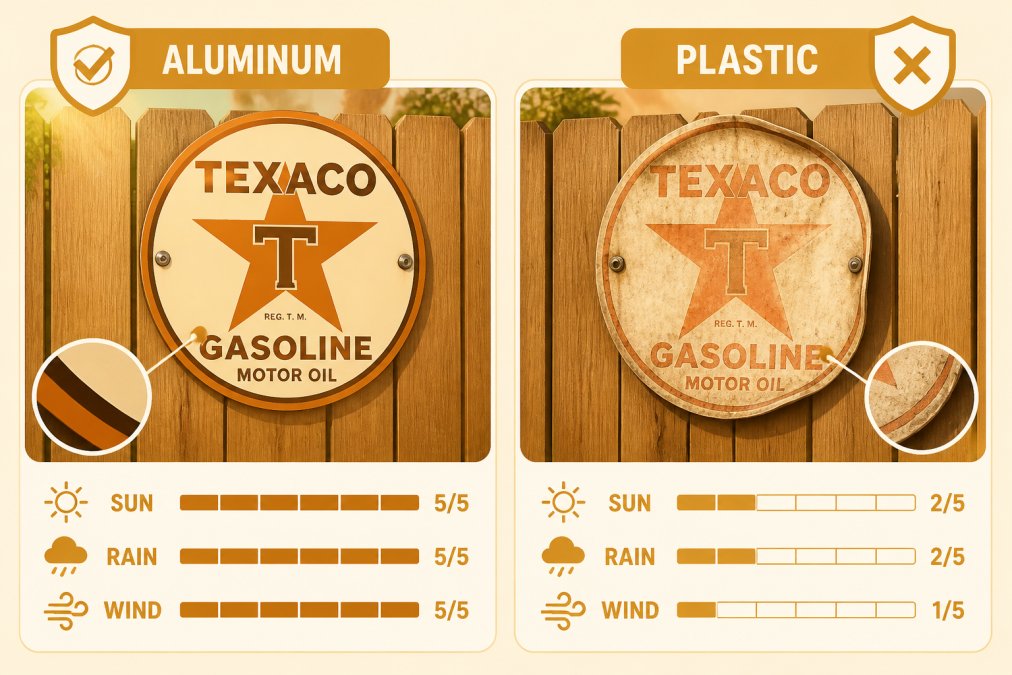
Outdoor exposure is where the gap between aluminum and plastic becomes undeniable. Rain, UV rays, temperature swings, and humidity all attack sign materials differently.
UV Ray Protection and Fading Over Time
UV degradation is the primary killer of outdoor plastic signs. Polymer chains in corrugated polypropylene and PVC break down under sustained UV exposure, causing yellowing, brittleness, and cracking. Even with UV-resistant ink, the substrate itself weakens.
Aluminum doesn't suffer from UV-induced polymer breakdown. The surface finish bears the UV load, and quality UV-resistant inks on aluminum maintain color fidelity far longer than the same inks on plastic. According to the American Sign Museum's material guidance for outdoor signage, aluminum-based substrates consistently outperform plastic in long-term UV exposure testing.
Thermal Expansion, Contraction, and Climate Performance
Corrugated plastic has a high coefficient of thermal expansion, meaning it expands and contracts significantly between summer highs and winter lows. In hot climates like Phoenix, where surface temperatures can exceed 150°F, plastic signs warp and pull away from mounting hardware.
Aluminum expands and contracts at a lower rate with greater structural rigidity to resist deformation. ACM handles thermal cycling particularly well because the polyethylene core buffers between the aluminum faces, reducing stress at mounting points.
For cold climates, corrugated plastic becomes brittle below freezing and can crack if flexed. Aluminum maintains structural integrity through freeze-thaw cycles.
Aluminum Composite Material (ACM) Signs Explained
Aluminum composite material is the professional standard for permanent outdoor signage. Understanding why clarifies when it's worth the investment over cheaper plastic alternatives.
Dimensional Stability and Professional Finish
Aluminum composite material is a sandwich panel: two aluminum face sheets bonded to a solid polyethylene core, typically 3mm (1/8") thick total. This construction gives ACM dimensional stability, aluminum faces resist surface deformation while the core absorbs flex stress. The result is a sign that stays flat and rigid through years of outdoor exposure.
The surface accepts vinyl application, direct UV printing, and laminate overlays cleanly. Graphics stay sharp and edges stay crisp, with no bubbling or peeling from substrate movement. According to the U.S. Sign Council's outdoor signage substrate guidelines, ACM panels maintain dimensional stability across a wider temperature range than plastic alternatives.
Rust, Corrosion Resistance, and Longevity
Pure aluminum doesn't rust. It forms a thin aluminum oxide layer on its surface that acts as a protective barrier. Quality aluminum signs are also typically coated or anodized, adding another corrosion resistance layer.
Signage longevity for quality aluminum and ACM signs in typical US climates runs 5 to 10 years or more with minimal maintenance. Corrugated plastic signs in the same conditions typically need replacement every 1 to 3 years.
The Cost of Outdoor Signs: Short-Term vs Long-Term Value
Plastic signs win on sticker price. Aluminum wins on total cost of ownership. A corrugated plastic sign that costs less upfront but requires replacement every 18 months costs more over five years than an aluminum sign lasting the full five years without replacement.
| Material | Typical Lifespan (Outdoor) | Replacement Frequency (5 Years) |
|---|---|---|
| Corrugated Plastic | 1-2 years | 3-4 times |
| PVC / Sintra | 2-3 years | 1-2 times |
| Solid Aluminum | 5-10 years | 0-1 times |
| ACM (Aluminum Composite) | 7-10+ years | 0 times |
For decorative home signs in garages, garden fences, or outdoor bars, the replacement hassle alone justifies choosing aluminum. Real Cool Signs focuses exclusively on durable aluminum construction. The [Biker Dude Street Sign](https://www.realcoolsigns.com/products/biker-dude-street-sign-funny-motorcycle-garage-sign-green-aluminum-road-sign-biker-gift-for-him-motorcycle-bar-decor) and the Central Park New York Street Sign are built on aluminum substrates that hold up through years of outdoor exposure, no warping, no yellowing, no cracking.


Installation, Mounting Hardware, and Renter-Friendly Options
Installation is where aluminum vs plastic signs for outdoors gets practical, especially for renters who can't make permanent wall modifications.
Aluminum and ACM signs typically mount with standard hardware: screws through pre-drilled holes, standoff mounts for a floating effect, or adhesive strips rated for metal-to-surface bonding. The rigid substrate stays flat against the surface without bowing between mounting points.
Corrugated plastic signs use lighter hardware, zip ties, wire, or lightweight screws, because the material can't support heavy standoffs without deforming around the mounting hole.
For renters, aluminum signs work well with renter-friendly mounting solutions:
- Heavy-duty adhesive strips rated for outdoor use hold aluminum signs securely without wall damage
- Tension rod systems work for lightweight aluminum panels in doorways or between surfaces
- Leaning display on shelves or mantels works for smaller aluminum signs without any wall contact
Environmental Impact, Fire Codes, and Recyclability
Recyclability: Aluminum is one of the most recyclable materials on the planet. According to the Aluminum Association's recycling data, aluminum can be recycled indefinitely without loss of quality, and recycled aluminum requires significantly less energy to process than primary production. An aluminum sign at end of life goes into the recycling stream cleanly.
Corrugated plastic (polypropylene) is technically recyclable but faces practical barriers: many municipal recycling programs don't accept it, and fluted construction makes processing difficult. PVC signs face even more limited recycling infrastructure and often end up in landfill.
Fire code compliance: The International Building Code and many local fire codes restrict certain plastic-core composite panels on building exteriors above specified heights. For residential decorative use, this is rarely a concern, but verify material compliance with your local authority if installing on a commercial building facade.
Pros, Cons, and Which Aluminum vs Plastic Sign Is Right for You
Aluminum Signs: Pros and Cons
Pros:
- Rust-resistant and corrosion-resistant for long-term outdoor exposure
- Maintains dimensional stability through thermal cycles
- Professional surface finish that holds UV-resistant graphics for years
- Highly recyclable at end of life
- Signage longevity of 5-10+ years in typical outdoor conditions
Cons:
- Higher upfront cost than corrugated plastic
- Heavier than plastic (relevant for large-format signs)
- Sharp edges require rounded corners or edge finishing for safety
Plastic Signs: Pros and Cons
Pros:
- Lower upfront cost for short-term applications
- Very lightweight and easy to handle during installation
- Accepts standard printing and vinyl application
Cons:
- UV degradation yellows and brittles the substrate over time
- High thermal expansion causes warping in hot climates
- Becomes brittle in freezing temperatures
- Shorter signage longevity means higher replacement frequency
- Limited recyclability
- Less professional finish compared to aluminum
Use-Case Recommendations
| Use Case | Best Material | Why |
|---|---|---|
| Permanent garage / man cave wall sign | Aluminum or ACM | Long lifespan, professional finish, weather-resistant |
| Outdoor patio or garden decor | Aluminum | Rust-resistant, UV-stable, handles rain and sun |
| Temporary event wayfinding | Corrugated plastic | Low cost, lightweight, short-term exposure |
| Coastal or high-humidity environment | Coated aluminum | Superior corrosion resistance |
| Renter-friendly wall decor | Aluminum (lightweight) | Works with adhesive mounting, no permanent hardware |
| Commercial building exterior | ACM (fire-code compliant) | Dimensional stability, professional appearance, code compliance |
The verdict on aluminum vs plastic signs for outdoors is clear for most decorative home applications: aluminum wins. The cost-per-year math favors it, the aesthetic is sharper, and the material handles everything the American climate throws at it without warping, yellowing, or cracking.
For a gift, a garage statement piece, or a patio conversation starter, aluminum is the only material worth buying. The [Broadway New York Street Sign](https://www.realcoolsigns.com/products/broadway-new-york-street-sign-nyc-broadway-decor-manhattan-wall-art-aluminum-street-sign-theater-district-gift-18x4-metal-sign) and the 42nd Street New York Sign are solid examples of what aluminum outdoor signs look like when construction is done right: flat, vivid, and built to stay that way.


For further reading on outdoor sign material standards, the International Sign Association's technical resources for outdoor signage materials provides detailed guidance on substrate selection, installation best practices, and material performance standards used across the US sign industry.
Ready to make your space stand out? Explore unique, conversation-starting signs at RealCoolSigns.com and find the perfect piece for your home, office, garage, or gift.
Frequently Asked Questions
How long do aluminum signs last outdoors?
Aluminum signs, especially those built on an aluminum composite material (ACM) substrate, are widely regarded as a long-term outdoor signage solution. Their rust-resistant, UV-resistant surface and dimensional stability allow them to hold up through years of outdoor exposure, including rain, heat, and freeze-thaw cycles common across the United States. With minimal sign maintenance, a quality aluminum sign can remain vibrant and structurally sound for many years, making it a strong choice for permanent or semi-permanent outdoor use.
Are aluminum signs better than plastic (PVC or corrugated) for outdoor use?
For most outdoor applications, aluminum signs outperform plastic alternatives in durability, UV resistance, and professional finish. Plastic options like PVC or corrugated plastic are lighter and more affordable upfront, making them suitable for short-term or temporary signage. However, aluminum, particularly ACM signs with a polyethylene core, offer superior weathering resistance, scratch resistance, and longevity. If you want durable outdoor signage that looks great year-round, aluminum is generally the better investment.
What is the most durable material for outdoor signs in extreme US weather?
Aluminum composite material (ACM) is widely considered one of the most durable substrates for outdoor signs facing extreme US weather conditions. Its rigid construction resists warping, its corrosion-resistant surface handles humidity and rain, and UV-resistant coatings protect against the intense sun found in states like Arizona, Florida, and Texas. For areas with heavy snow or freeze-thaw cycles, like the Midwest or Northeast, aluminum's thermal expansion properties and structural integrity give it a clear advantage over corrugated plastic or standard PVC.
Is PVC cheaper than aluminum for outdoor signs?
Generally, yes, plastic signs made from PVC or corrugated plastic have a lower upfront cost than aluminum or ACM signs. However, when you factor in signage longevity and a cost-per-year analysis, aluminum often delivers better value. Plastic signs may need replacing sooner due to UV fading, warping from thermal expansion, or surface damage from weather conditions. For decorative outdoor signs meant to last, like those from Real Cool Signs' aluminum collection, the long-term value typically favors aluminum.
Can I install an aluminum sign outdoors if I'm renting my home?
Yes, aluminum signs are very renter-friendly when paired with the right mounting hardware. Lightweight aluminum signs, including decorative options like street-style signs, can be hung using removable adhesive strips, tension rods, or small removable hooks that leave minimal wall damage. Many aluminum signs come pre-drilled with holes for easy installation. If you're renting and concerned about damage, look for signs under 2 lbs and use removable mounting solutions rated for that weight to keep your security deposit intact.
Picking the wrong sign material for an outdoor installation means replacing it sooner than you planned, spending more over time, and dealing with a faded or warped piece that drags down the look of your space. Aluminum solves all of that with a material that handles UV, moisture, and thermal stress without complaint.
Ready to make your space stand out? Explore unique, conversation-starting signs at RealCoolSigns.com and find the perfect piece for your home, office, garage, or gift.