


Quick Summary
Engraved aluminum plaques are usually worth more when the plaque must last and the lettering is the main feature. Engraving cuts the text into the metal, so it does not peel or flake the way printed ink can. Printed plaques suit full-color art and detailed graphics better.
- Engraving cuts lettering into the metal, so there is no ink film to peel or flake.
- Anodized aluminum engraving exposes lighter metal beneath the oxide layer, giving high-contrast marks without ink.
- Printing handles full-color images, photographs and complex logos more easily than engraving.
- Compare quotes on total cost, including setup, per-unit cost, expected outdoor lifespan and replacement cost.
- Ask the shop to test-cut a sample if your design uses tiny serif type or fine detail.
Table of Contents
- Engraved vs Printed Aluminum Plaques: What Actually Differs
- How Engraving Works on Aluminum
- How Printing Works on Aluminum
- Durability of Engraved Plaques Over Time
- Custom Aluminum Plaque Lettering, Logos and Detail
- Outdoor Plaque Materials and Finishes Compared
- Cost, Order Size and Turnaround Trade-offs
- Choosing the Right Plaque for Your Next Project
- Frequently Asked Questions
Engraved vs Printed Aluminum Plaques: What Actually Differs
Are engraved aluminum plaques worth more than printed ones? For most buyers, the answer depends on how long the plaque must last and where it will hang. Engraving cuts the lettering into the metal itself, while printing puts ink or a graphic on the surface. That single difference drives almost every other trade-off you will weigh.
The short version: engraving favors permanence and a tactile look, while printing favors full color and detailed graphics.
Here is the core difference in practice:
- Engraved: Lettering is cut or etched into the surface, so it reads as part of the metal.
- Printed: Color sits on top of the surface, so it reflects the material beneath it.
Keep this split in mind as you read. The sections ahead test it against durability, outdoor use, lettering options and cost.
The core differences between the two methods come down to how each one treats the surface and what each does best.
| Method | How it works | Best for |
|---|---|---|
| Engraved | Lettering is cut or etched into the surface | Permanence and a tactile look |
| Printed | Color sits on top of the surface | Full color and detailed graphics |
How Engraving Works on Aluminum
Engraving is a subtractive process: material comes off the plaque to create the mark. On aluminum, that means the lettering is either cut into the surface or raised above it, depending on the method and the base material. Because the mark is physical rather than applied, it does not rely on an ink film that can peel or flake.
Engraving on aluminum takes several forms, and they behave differently.
- Rotary engraving. A computer-controlled cutting spindle carves grooves into the metal. It cuts deeper than most other methods, which makes it a strong choice for bold text, simple logos, and plaques that will be handled. Depth is its advantage; very fine detail is its limit.
- Laser engraving. A focused beam vaporizes or ablates a thin layer of the surface. On bare aluminum, laser marks can be low-contrast, so shops often apply a coating or use a fiber laser tuned for metal. Laser excels at small text and intricate line art.
- Anodized aluminum engraving. Anodizing grows a thin, hard oxide layer into the aluminum surface. Laser engraving through that layer exposes the lighter metal underneath, producing high-contrast marks without any ink. This is why anodized plaques are common for awards and recognition pieces: the contrast is built into the material, not added on top.
A common mistake is assuming all engraved text looks the same. Depth, font weight, and fill color change readability a great deal. Ask how the lettering will be finished before you order, because the finish affects how the plaque ages.
How Printing Works on Aluminum
Printing applies ink to the metal surface, usually through UV or screen-printing methods. UV printing cures ink quickly under light, which allows sharp photographic detail and broad color ranges. Screen printing lays down solid colors in layers and works well for simpler, bolder designs.
Because printing sits on top of the metal, its quality depends heavily on the coating. A well-cured print looks crisp on day one, but abrasion can dull it over time. For indoor displays that rarely get touched, that trade-off matters less. For plaques that get handled or cleaned often, it matters more.
Durability of Engraved Plaques Over Time
Engraving has a durability edge because the lettering is part of the plaque itself. There is no ink film to peel, and abrasion removes a little metal rather than a surface layer.
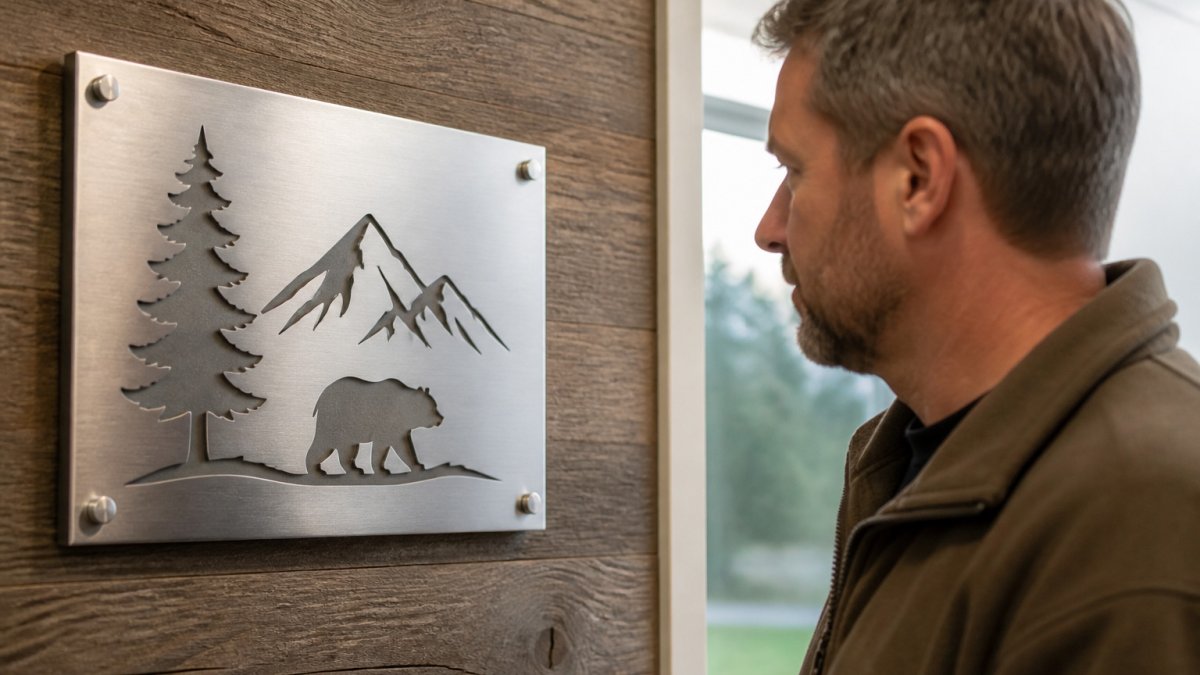
Durability still depends on the environment. Indoor use, direct sun and moisture each affect the finish differently, so the sections below look at each separately.
Indoor Use and Fading
Indoors, both engraved and printed aluminum tend to hold up well. The main concern for printed plaques is slow fading from strong light, particularly sunlight through a window. Engraved lettering does not fade in the same way, since there is no pigment to bleach, though a paint fill in the grooves can still lighten over years of exposure.
Placement matters more than material here. A plaque away from a sunny window will look fresh far longer than one placed in a bright spot.
Outdoor Exposure and Weather
Outdoors, aluminum resists corrosion well, but the finish decides how the plaque ages. You can find out whether aluminum signs rust outdoors in our detailed answer.
Keep in mind that exposure varies widely by climate. A plaque in a shaded covered porch faces very different conditions than one on an open fence. Match the finish to the actual location rather than assuming one type suits all outdoor uses.
Custom Aluminum Plaque Lettering, Logos and Detail
Custom work is where the two methods diverge most. Engraving handles text, simple logos and clean line art very well. Fine serif fonts and tiny lettering can fill in poorly if the grooves are too shallow, so keep text sizes reasonable.
Printing handles full-color images, photographs and complex logos with ease. If your design depends on subtle shading or many colors, printing usually gives you more room to create.
Legibility should guide your choice. High contrast and bold typefaces read well from a distance whichever method you pick. Thin strokes and light colors on light backgrounds are harder to read in either process.
Outdoor Plaque Materials and Finishes Compared
Material and finish decide how long an outdoor plaque looks good. Aluminum is lightweight and resists rust, which makes it a practical choice for patios, gardens and fences.
Cleaning also affects longevity. Mild soap and water usually work, while harsh abrasives can dull printed surfaces. Avoid scrubbing printed plaques with stiff brushes.
Cost, Order Size and Turnaround Trade-offs
Most comparisons treat cost as a single upfront number. A more useful frame is total cost of ownership: setup, per-unit cost, replacement frequency, and maintenance across the life of the plaque. That frame is where engraved and printed aluminum actually diverge.
Setup versus per-unit cost. Engraving usually carries a higher setup burden because the artwork must be converted into a cut path, and a single plaque absorbs that setup on its own. As quantity rises, the setup spreads across more pieces and the per-unit cost falls. Printing can be efficient for multi-color artwork because the design is applied in one pass, but complex artwork still adds prep time.
Replacement frequency. This is the hidden cost. A printed plaque that fades or abrades outdoors may need replacing years before an engraved one does. If you expect to replace a printed plaque once over a decade, the effective cost is higher than the sticker price suggests.
Maintenance. Printed surfaces need gentler cleaning because harsh abrasives can dull the ink. Neither is maintenance-free, but the care burden differs, and that shows up as time and effort over the plaque's life.
Turnaround. Engraving and printing both require proofing, and complex artwork adds time either way.
Ask about order size early. Pricing depends on quantity, design and delivery, so check the Real Cool Signs website or request a quote for your exact order.
Choosing the Right Plaque for Your Next Project
Start with three questions: how long must it last, where will it hang, and how detailed is the design? If the plaque is a memorial, award or heirloom display, engraving is usually the stronger fit. If the design relies on color, photography or intricate graphics, printing may serve you better.
Consider these practical guidelines:
- Choose engraving for permanent text, outdoor exposure and a tactile look.
- Choose printing for full-color art, detailed logos and lower-cost multi-color designs.
- Combine both when you want a durable name with a colorful accent.
Ready to compare options? Browse our All Aluminum Signs collection to see designs in one place.
Some passions and memories deserve a permanent place on the wall. Whether you are honoring a milestone or celebrating a favorite pastime, choose the plaque that will still look right years from now. Real Cool Signs is here to help you show off what you love.
Frequently Asked Questions
What is the difference between engraved and printed aluminum plaques?
Engraved plaques have text or designs cut or etched into the metal surface, so the marking is recessed or raised and cannot peel or flake. Printed plaques place ink or a graphic layer on top of the aluminum, which allows full color and fine image detail but leaves the design sitting on the surface. Engraving suits lettering that must last for years, while printing suits colorful graphics and tighter budgets on simple designs.
Are engraved aluminum plaques more durable than printed plaques?
The right choice depends on where the plaque will hang and how long it needs to look new.
Can aluminum plaques be engraved with text and logos?
Engraving can be used for text and logos, and clear, bold designs usually read best. Ask the provider about minimum line widths and character sizes before finalizing artwork.
Which plaque finish is best for outdoor use?
For outdoor installations, confirm the surface treatment with the provider and check that the finish suits the conditions where the plaque will hang.
