


Table of Contents
- Why Metal Signs Fade Outdoors: The Science Behind UV Damage
- Environmental Factors That Speed Up Metal Sign Fading
- How Long Do Aluminum Signs Last Outdoors?
- Powder Coating vs. Painted Finishes: Which Lasts Longer?
- How to Protect Outdoor Signs From Fading
- Material Selection for Outdoor Durability
- Restoration vs. Replacement: When to Refresh Your Sign
- Conclusion
Last Updated: August 9, 2026
Why Metal Signs Fade Outdoors: The Science Behind UV Damage
Outdoor metal signs fade because ultraviolet radiation breaks down the protective coatings and pigments that keep aluminum or steel signage vibrant. UV radiation systematically breaks apart molecular bonds in paint, powder coatings, and protective sealants. This degradation accelerates when combined with moisture, salt air, temperature swings, and atmospheric pollutants. Understanding this process helps you make smarter choices about materials, coatings, and maintenance routines that extend your sign's lifespan.
How Ultraviolet Radiation Breaks Down Paint and Coatings
UV rays transfer energy to pigment molecules and resin binders, breaking chemical bonds and causing fading. The coating protecting your metal sign is made of long-chain polymer molecules held together by chemical bonds. UV energy acts like a tiny hammer, snapping those bonds apart. Once enough bonds break, the coating becomes brittle, chalky, and loses its ability to shield the underlying metal from moisture and corrosion.
Painted finishes typically show noticeable fading within 2-3 years of outdoor exposure. Powder-coated surfaces hold their color longer because the curing process creates a denser, more UV-resistant topcoat. Clear coats and protective laminates add another layer of defense by absorbing UV radiation before it reaches the pigment underneath.
The process accelerates in regions with intense solar radiation. Areas closer to the equator, higher elevations, and regions with clear skies see faster pigment degradation than cloudier climates.
Environmental Factors That Speed Up Metal Sign Fading
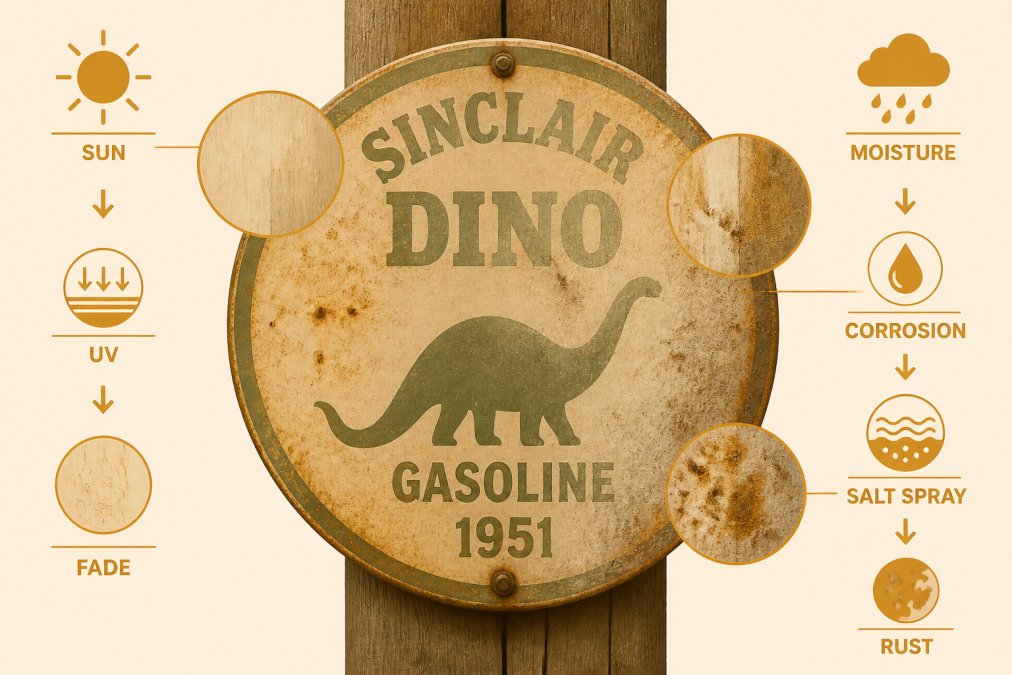
While sunlight alone causes fading, moisture, salt, temperature fluctuations, and atmospheric pollution create a perfect storm that destroys protective coatings far faster than UV radiation alone.
Moisture, Salt Spray, and Coastal Exposure
Moisture is the silent killer of outdoor metal signs. Water penetrates microscopic cracks in coatings, reaching the substrate beneath. Once moisture contacts bare metal, oxidation begins immediately, and degradation accelerates exponentially.
Coastal environments are particularly brutal. Salt spray accelerates the breakdown of the coating itself. Salt particles embed in the paint or powder coating, drawing moisture deeper into the material and creating localized corrosion spots that spread outward.
In humid climates, morning dew, rain, and high humidity create conditions where water sits on the sign surface for hours, finding weak points and penetrating to the substrate.
Thermal Expansion and Weather Cycles
Metal expands and contracts with temperature changes. An aluminum sign in direct sunlight can reach 140°F on a summer afternoon, then cool to 50°F at night. This thermal cycling creates stress on the coating, causing it to crack, peel, and separate from the substrate over time.
The stress is worse at seams, edges, and fastener points where the coating is thinner. Water infiltrates these microfractures, and oxidation accelerates beneath the surface. Freeze-thaw cycles in cold climates add another dimension, water that seeps into cracks freezes, expands, and forces the coating to separate further.
How Long Do Aluminum Signs Last Outdoors?
An aluminum sign with a quality painted finish typically lasts 5-7 years before noticeable fading occurs. Powder-coated aluminum performs better, often retaining acceptable appearance for 8-12 years with minimal maintenance. Anodized aluminum can last 15+ years outdoors if properly maintained.
These timelines assume moderate environmental exposure. A sign in a shaded location with minimal salt exposure will last significantly longer. A sign in direct, intense sunlight in a coastal environment might show serious fading in 2-3 years.
Aluminum naturally resists corrosion better than steel because it forms a protective oxide layer. Real Cool Signs uses durable aluminum construction specifically because it provides superior outdoor longevity. Our garden signs, like the Into My Garden I Go collection, are built to withstand outdoor conditions year-round while maintaining their vibrant appearance.


Powder Coating vs. Painted Finishes: Which Lasts Longer?
Powder coating is the clear winner for outdoor durability. Powder coating is applied as a dry powder, then cured in an oven at high temperature, creating a chemical bond between the coating and the substrate. This results in a finish that's 2-3x thicker and far more durable than liquid paint.
Powder-coated surfaces resist UV fading better because the curing process creates a denser molecular structure. Moisture ingress is slower because the coating has fewer pores and microcracks where water can penetrate.
Painted finishes create a thinner protective layer that sits on top of the substrate rather than bonding chemically to it. Over time, paint peels, flakes, and separates, especially at edges and stress points.
| Finish Type | Typical Outdoor Lifespan | UV Resistance | Moisture Protection | Best For |
|---|---|---|---|---|
| Powder Coating | 8-12 years | Excellent | Very High | High-durability outdoor signs |
| Liquid Paint | 5-7 years | Good | Moderate | Budget-conscious or less-exposed locations |
| Anodized Aluminum | 15+ years | Excellent | Excellent | Maximum longevity, coastal areas |
| Clear Coat Over Paint | 7-10 years | Very Good | High | Added UV protection for painted signs |
Powder coating requires specialized equipment, making it more expensive upfront. For signs intended to stay outdoors long-term, the investment pays for itself through extended lifespan and reduced maintenance.
How to Protect Outdoor Signs From Fading
Protecting outdoor signs from fading starts with smart material choices and continues with proactive maintenance. The best approach combines proper coating selection, professional application, and regular care routines.
Choosing the Best Clear Coat for Outdoor Metal Signs
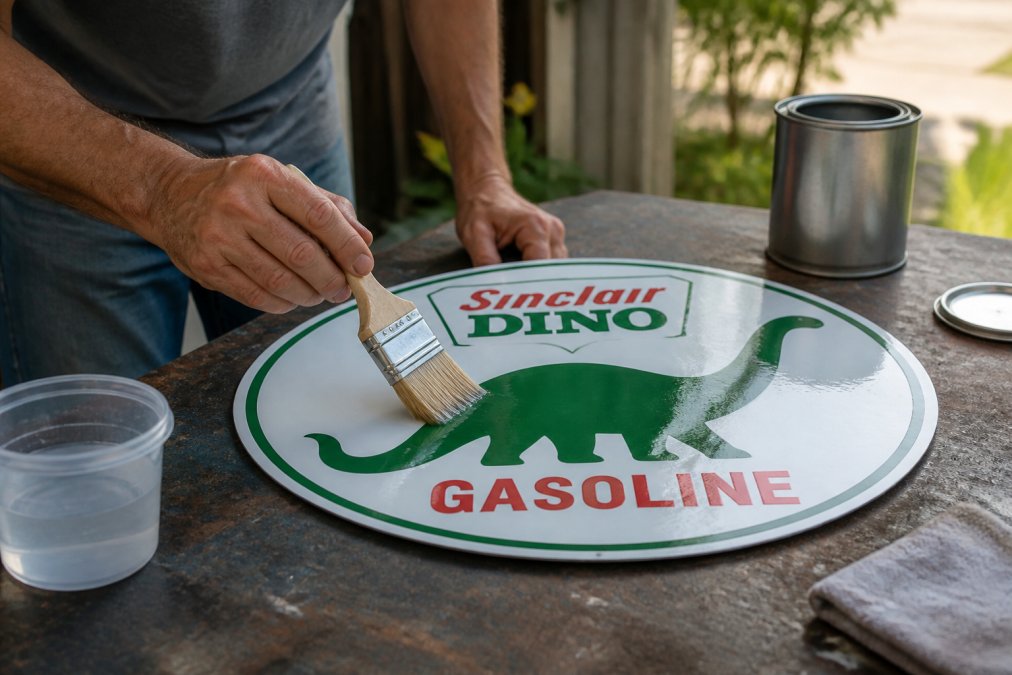
A clear coat acts as a sacrificial layer, absorbing UV radiation before it reaches the pigment underneath. UV-protective clear coats contain additives like UV absorbers and hindered amine light stabilizers (HALS) that neutralize UV energy.
The best clear coats for outdoor metal signs are polyurethane or acrylic-polyurethane blends. These provide excellent UV resistance, moisture protection, and adhesion to metal substrates. Two-part polyurethane systems offer superior durability but require careful mixing and application. Single-part acrylic polyurethanes are easier to apply and still provide excellent protection.
Application matters as much as the product itself. The clear coat must be applied evenly, with proper surface preparation beforehand. Any dust, oxidation, or contamination on the substrate will compromise adhesion.
Surface Preparation and Sealant Application
Surface preparation is where most DIY sign protection efforts fail. Proper preparation includes cleaning the surface thoroughly with a degreaser, light sanding to improve adhesion, removing any existing rust or oxidation, allowing complete drying, and protecting areas you don't want coated with masking tape.
Apply thin, even coats rather than one thick coat. Multiple thin coats provide better coverage and durability. Allow adequate drying time between coats per manufacturer specifications.
For metal signs showing oxidation or early rust, apply a conversion coating (like a rust converter) before the protective sealant to chemically convert rust to a stable compound.
Regular Maintenance Routines That Work
Monthly inspection: Look for signs of peeling, chalking, or rust spots. Early detection prevents problems from spreading.
Quarterly cleaning: Use a soft brush and mild detergent to remove dirt, salt residue, and atmospheric pollutants. Rinse thoroughly and allow to dry completely.
Annual touch-ups: Sand lightly and apply touch-up paint or clear coat to small areas of peeling or damage immediately.
Every 3-5 years: Reapply a clear coat or protective sealant to refresh the UV-protective layer and extend the sign's lifespan.
In coastal areas or regions with harsh winters, increase maintenance frequency. Monthly cleaning might become necessary, and annual clear coat reapplication could be justified.
Material Selection for Outdoor Durability
Aluminum is the superior choice for outdoor signs because of its natural corrosion resistance and lightweight properties. Steel requires more aggressive protection and is heavier, making installation more challenging.
Within aluminum, the alloy matters. 6061 aluminum offers excellent corrosion resistance and is readily available. Marine-grade aluminum (5083 or 6061-T6) provides even better salt-spray resistance for coastal applications.
The finish applied to the aluminum is equally important. Anodizing creates an oxide layer that's part of the metal itself, offering superior protection compared to applied coatings. Powder coating over aluminum provides excellent durability and aesthetic flexibility.
Real Cool Signs prioritizes aluminum construction for all outdoor signage because it delivers the durability customers expect. Consider your specific environment when selecting materials.
Restoration vs. Replacement: When to Refresh Your Sign
Deciding whether to restore a faded sign or replace it depends on the extent of damage, restoration cost, and the sign's value.
Restoration makes sense when the sign's substrate is structurally sound with no significant rust or corrosion, fading is primarily cosmetic, restoration costs less than 50% of a replacement sign's cost, or the sign has sentimental value.
Replacement is the better choice when the substrate shows significant rust, pitting, or structural damage, the sign's structural integrity is compromised, restoration costs approach or exceed replacement costs, you want to upgrade to a more durable material or finish, or the sign has become illegible or unsafe.
For custom or personalized signs, restoration often makes emotional sense even if a new sign would be cheaper. If you're simply looking to update your outdoor decor, replacement with a more durable option might be the smarter long-term investment.
Ready to make your space stand out? Explore unique, conversation-starting signs at RealCoolSigns.com and find the perfect piece for your home, office, garage, or gift.
Frequently Asked Questions
How do I know if my aluminum sign will fade or rust if I put it outside year-round?
Aluminum signs are naturally corrosion-resistant because aluminum forms a protective oxide layer. However, they can still fade when exposed to ultraviolet radiation and environmental factors like salt spray and moisture. Quality aluminum signs with powder coating or clear coat protection fade much more slowly than painted finishes. Most well-maintained aluminum signs last 5-10 years outdoors before noticeable fading occurs, depending on your climate and maintenance routine.
What is the best clear coat for outdoor metal signs?
UV-protective clear coats designed specifically for outdoor metal applications work best. Look for polyurethane or acrylic-based topcoats that include UV inhibitors and are rated for exterior use. These products create a protective sealant layer that shields the underlying paint and substrate from solar intensity and atmospheric pollutants. Apply clear coat over properly prepared surfaces for maximum color fastness and durability. Reapply every 2-3 years depending on your climate and sun exposure.
How long do aluminum signs last outdoors?
Quality aluminum signs with proper protective coatings typically last 5-15 years outdoors, depending on climate, maintenance, and coating quality. In harsh environments with high salt spray or intense solar exposure, lifespan may be shorter. Regular maintenance, including cleaning and reapplying protective sealants, can extend durability significantly. Signs in mild climates with good preventative maintenance can last even longer. Powder-coated aluminum generally outlasts painted finishes by several years due to superior adhesion and weather resistance.
Can I restore a faded metal sign, or do I need to replace it?
Many faded signs can be restored if the substrate integrity remains sound. Surface cleaning, light sanding, and repainting with quality outdoor paint followed by UV-protective clear coat can refresh faded signage effectively. However, if corrosion has penetrated the substrate or the aluminum shows structural damage, replacement may be more cost-effective. Restoration works best for signs showing pigment degradation without deep oxidation. Consider your sign's sentimental value and condition before deciding between restoration and replacement.
Ready to make your space stand out? Explore unique, conversation-starting signs at RealCoolSigns.com and find the perfect piece for your home, office, garage, or gift.