


Table of Contents
- Why Aluminum Dominates Outdoor Signage
- Durability and Weather Resistance That Lasts Years
- Corrosion and Rust Prevention: The Aluminum Advantage
- Aluminum Sign Thickness Guide for Outdoor Use
- Best Practices for Mounting Outdoor Signs Securely
- How to Clean Outdoor Metal Signs and Maintain Their Finish
- Cost-Effectiveness and Long-Term Value
- Aluminum vs. Other Materials for Outdoor Signage
Last Updated: August 12, 2026
Why Aluminum Dominates Outdoor Signage
Aluminum has become the gold standard for outdoor signage, and for good reason. Whether you're installing a sign on your home, business, or garden, understanding why aluminum is best for outdoor signage helps you make a confident choice that'll serve you for years. At Real Cool Signs, we've seen firsthand how durable aluminum construction outperforms other materials in real-world conditions, from coastal salt spray to scorching desert heat to freeze-thaw cycles that crack lesser materials.
The reason is simple: aluminum combines lightweight strength with natural corrosion resistance in a way no other affordable material can match. It won't rust like steel, won't rot like wood, and won't degrade like plastic in UV exposure. But there's more to the story than just "it doesn't rust." The way aluminum handles weather, the finishes available, the thickness options, and the installation methods all matter when you're choosing the right material for your specific environment.
Below, we'll walk you through exactly what makes aluminum the superior choice, how to select the right thickness for your application, and the practical steps to keep your sign looking sharp for years to come.
Durability and Weather Resistance That Lasts Years
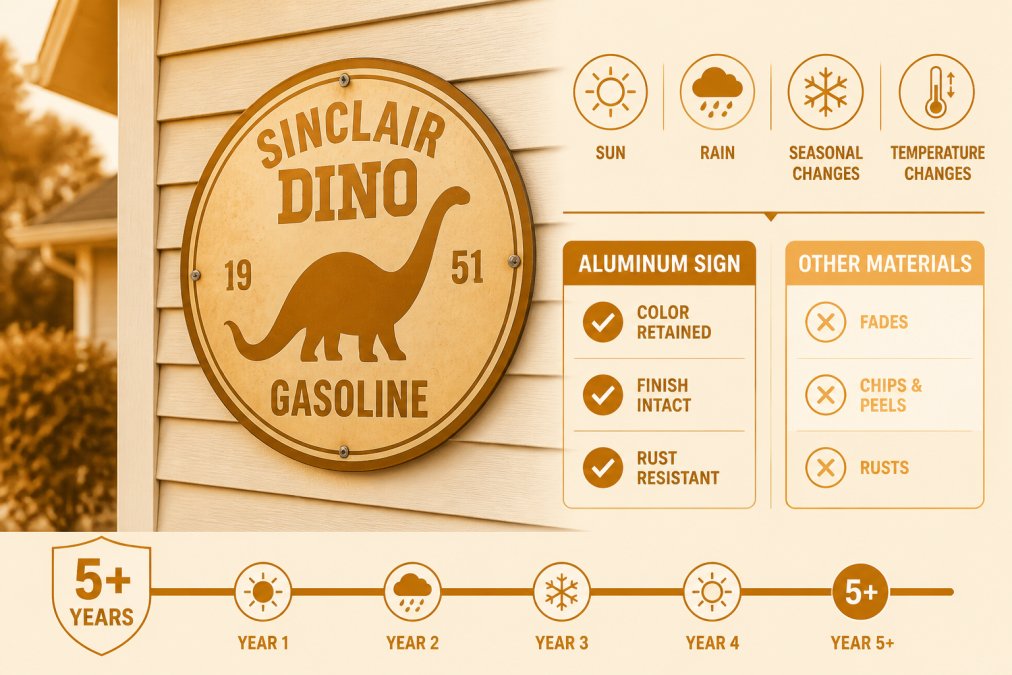
Aluminum's durability comes from a natural oxide layer that forms on its surface the moment it's exposed to air. This self-healing protective barrier is what stops corrosion before it starts, unlike steel, which requires paint or coating to prevent rust. 🛡️
In practice, this means an aluminum sign can sit exposed to rain, humidity, salt air, and UV rays without deteriorating. The material itself is inert. It doesn't break down under UV exposure the way wood fibers separate or plastic yellows and becomes brittle. Homeowners in coastal areas, where salt spray accelerates corrosion of steel, have been choosing aluminum for decades because it simply outlasts the alternatives.
The structural rigidity of aluminum also matters for outdoor durability. Thicker aluminum gauges resist warping from thermal expansion, that movement that happens when metal heats in the sun and contracts at night. A properly selected aluminum sign thickness prevents the "oil canning" effect where flat surfaces develop waves and buckles. This is especially critical in climates with extreme temperature swings.
Weather-resistant finishes amplify aluminum's natural advantages. Powder-coated aluminum adds an extra protective layer that keeps the material looking fresh longer and provides additional UV stability. Anodized finishes chemically thicken the oxide layer, creating an even more durable surface. Both approaches extend the lifespan of your sign and improve color retention in high-sun environments.
Corrosion and Rust Prevention: The Aluminum Advantage
Here's what separates aluminum from steel in the corrosion game: aluminum doesn't rust. Steel oxidizes into iron oxide (rust) when exposed to moisture and oxygen, a process that weakens the material and creates visible, flaking deterioration. Aluminum oxidizes too, but into aluminum oxide, a hard, protective compound that actually shields the underlying metal from further corrosion. 🔒
This distinction matters enormously for outdoor signage. A steel sign requires constant maintenance, regular painting or powder coating to prevent rust from taking hold. Once rust starts, it spreads. An aluminum sign, by contrast, develops a self-sealing oxide layer that stops corrosion at the surface. You're not fighting a losing battle against deterioration.
Coastal environments reveal this difference most dramatically. Salt spray accelerates steel corrosion exponentially. Aluminum resists it because the salt doesn't penetrate that protective oxide barrier. Businesses and homeowners near oceans, large lakes, or areas where road salt is used in winter consistently choose aluminum for signs exposed to these conditions.
The corrosion-resistant nature of aluminum also means you have flexibility in finish options. You can choose mill finish (natural aluminum), anodized (chemically hardened), or powder-coated (painted with baked enamel) based on your aesthetic preferences, not on what's necessary to prevent rust. With steel, you're locked into painted or coated options, bare steel will rust quickly. With aluminum, you have genuine choices.
Aluminum Sign Thickness Guide for Outdoor Use
The thickness of your aluminum sign determines its structural rigidity, wind resistance, and overall durability. Thickness is measured in gauge, a system where lower numbers mean thicker material. Understanding gauge thickness is essential when selecting why aluminum is best for outdoor signage for your specific application. 📏
Common aluminum gauges for outdoor signage:
- .040 inch (approximately 1mm): Suitable for indoor signs or protected outdoor areas with minimal wind exposure. Lightweight and easy to handle, but prone to flexing in strong winds.
- .063 inch (approximately 1.6mm): The sweet spot for most residential outdoor applications. Provides good rigidity without excessive weight. Resists wind flutter and thermal warping effectively.
- .080 inch (approximately 2mm): Heavy-duty thickness for large signs, high-wind areas, or signs requiring maximum structural integrity. Used in industrial and commercial applications.
The right gauge depends on your sign's size, local wind conditions, and mounting method. A small 12×18 sign in a sheltered location can work fine at .040 inch. A large 36×48 sign in a windy area needs at least .080 inch to prevent flexing and vibration that stresses mounting hardware.
Real Cool Signs' aluminum construction uses materials selected for longevity and performance in real outdoor conditions. When you're shopping for any outdoor aluminum sign, ask about the gauge thickness, it's a direct indicator of quality and durability. Thinner isn't always wrong (a small decorative sign doesn't need industrial-grade thickness), but matching thickness to application prevents problems.

Best Practices for Mounting Outdoor Signs Securely
Even the most durable aluminum sign fails if mounted incorrectly. Proper mounting hardware and technique determine whether your sign stays secure through wind, temperature swings, and seasonal weather changes. 🔧
Hardware essentials for outdoor aluminum signs:
- Stainless steel bolts and fasteners: Never use standard steel hardware with aluminum. Galvanic corrosion occurs when dissimilar metals contact in the presence of moisture. Stainless steel won't trigger this reaction.
- Washers and spacers: These distribute load across the sign surface and prevent fasteners from pulling through the material under wind stress.
- Proper hole sizing: Holes should be slightly larger than bolt diameter to allow for thermal expansion. Aluminum expands and contracts with temperature changes, oversized holes prevent stress concentration.
- Mounting brackets rated for load: Brackets must support the sign's weight plus wind load. A rule of thumb: brackets should be rated for at least 3 times the sign's weight.
Installation location matters as much as hardware. Mount signs where they won't flex in wind, avoid cantilevered mounting that creates use stress. If possible, use multiple mounting points rather than a single center point. Distribute the load across the structure.
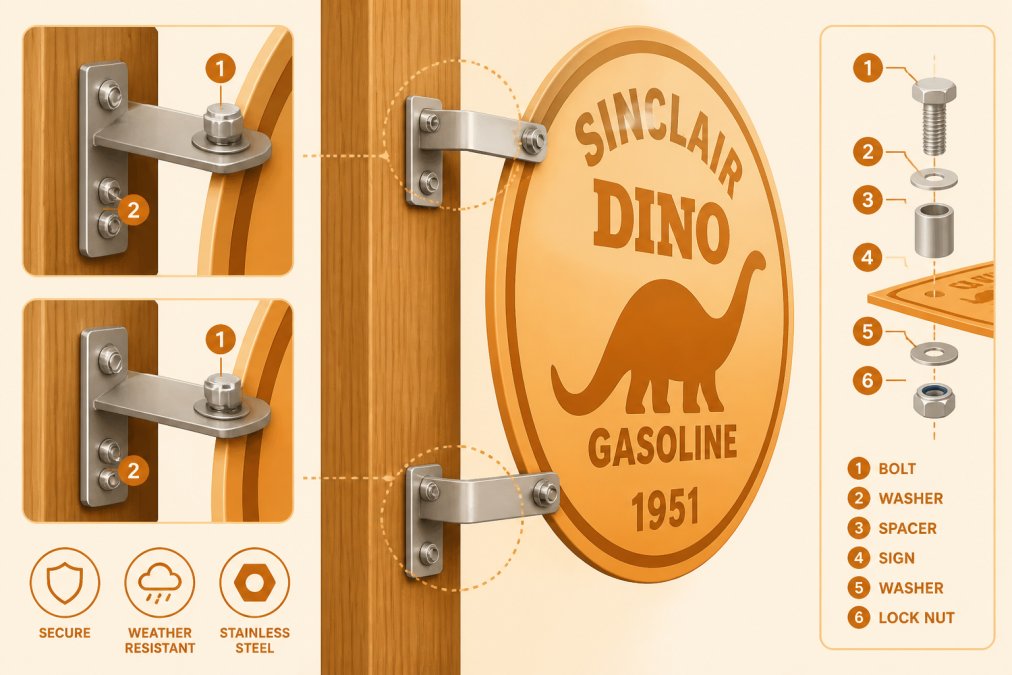
Temperature considerations affect mounting strategy too. In climates with extreme seasonal swings, allow slight movement in mounting hardware to accommodate thermal expansion. Rigid mounting that prevents all movement can cause stress fractures at bolt holes. A small amount of controlled flex is better than fighting physics.
How to Clean Outdoor Metal Signs and Maintain Their Finish
Maintenance is minimal for aluminum signs, but occasional cleaning keeps them looking sharp and preserves the finish. The good news: you don't need special products or professional service. 🧼
Cleaning aluminum outdoor signs:
- Rinse with fresh water every 3-6 months, more frequently in coastal or high-pollution areas. Salt spray and airborne contaminants settle on the surface.
- Use mild soap and soft brush for stubborn dirt. Warm soapy water and a soft-bristle brush work well. Avoid abrasive scrubbers that can scratch powder-coated or anodized finishes.
- Dry thoroughly with a soft cloth to prevent water spots and mineral deposits.
- For powder-coated signs: Avoid harsh chemicals or pressure washers. Mild soap is all you need.
- For anodized finishes: Same approach, mild soap and soft brush. Anodized aluminum is more durable than powder coat but still benefits from gentle handling.
Most outdoor aluminum signs require no additional maintenance beyond occasional rinsing. The material doesn't need sealing, waxing, or protective treatments. This is one of aluminum's biggest advantages over wood (which needs staining or sealing) or steel (which needs repainting).
If your sign develops minor oxidation, a white powdery coating, it's not corrosion. It's the natural oxide layer doing its job. You can wipe it away with a soft cloth or gentle wash. It won't progress to rust like steel oxidation would.
Cost-Effectiveness and Long-Term Value
When comparing materials for outdoor signage, aluminum delivers exceptional value over time. The upfront cost is moderate, but the long-term economics are compelling because maintenance and replacement costs are so low. 💰
Aluminum doesn't require the ongoing maintenance that wood or steel demand. You're not repainting every few years, replacing rotted sections, or treating rust. A single cleaning every few months keeps your sign looking new. Over a 10-year lifespan, the total cost of ownership, purchase plus maintenance, heavily favors aluminum.
Durability translates to longevity. An aluminum sign installed today will likely outlast the structure it's mounted on. Wood signs typically last 5-7 years before weather damage requires replacement. Steel signs need repainting every 3-5 years to prevent rust. Aluminum signs routinely perform for 15-20 years or longer with minimal intervention.
This longevity makes aluminum the smart choice for permanent installations. If you're investing in a custom sign that reflects your personality or brand, aluminum ensures that investment pays dividends for years. Real Cool Signs' aluminum construction means your decorative sign, whether it's a garden sign, bar sign, or personalized piece, becomes a lasting part of your space.

The environmental angle matters too. Aluminum is infinitely recyclable without degradation. At the end of its long life, an aluminum sign can be recycled into new products. This contrasts with plastic or composite materials that eventually end up in landfills.
Aluminum vs. Other Materials for Outdoor Signage
Understanding how aluminum compares to alternatives clarifies why it's the preferred choice for outdoor applications. Each material has trade-offs, but aluminum consistently delivers the best balance of performance, cost, and durability. 📊
| Material | Weather Resistance | Maintenance | Lifespan | Cost | Best For |
|---|---|---|---|---|---|
| Aluminum | Excellent | Minimal | 15-20+ years | Moderate | Most outdoor applications |
| Steel | Fair (requires coating) | High (repainting needed) | 8-12 years | Low to moderate | Industrial/temporary use |
| Wood | Poor | Very high (staining/sealing) | 5-7 years | Low | Rustic aesthetic only |
| Plastic/PVC | Moderate (UV fading) | Low | 5-10 years | Low | Indoor or protected areas |
| Composite (ACM) | Good | Minimal | 10-15 years | Moderate to high | High-end commercial |
Steel offers lower upfront cost but demands regular maintenance. Rust prevention requires repainting every few years. In coastal or humid climates, rust appears quickly. Steel works for temporary signs or industrial applications where aesthetics matter less than cost.
Wood has charm but requires constant care. Staining, sealing, and repairs add up. Weather damage is inevitable. Wood works for rustic aesthetic applications where you're willing to maintain it, but it's not practical for long-term outdoor durability.
Plastic and vinyl are lightweight and inexpensive, but UV exposure causes fading and brittleness. They work fine for indoor or short-term outdoor use, but they degrade noticeably over 5-10 years in direct sunlight.
Aluminum composite panels (ACM), materials like DIBOND or Alupanel, offer excellent flatness and professional appearance. They're heavier than pure aluminum and more expensive, but they provide superior rigidity for large signs. They're ideal for high-end commercial applications where appearance is paramount.
Why aluminum wins for most users: It delivers the durability of composite materials at a lower cost, the low maintenance of plastic without the UV degradation, and the strength of steel without the rust problem. It's the versatile middle ground that performs well across all conditions.
Real Cool Signs uses aluminum construction because it matches what homeowners and decorators need: a sign that looks great, lasts for years, and doesn't demand constant upkeep. Whether you're displaying a garden sign, bar sign, or personalized piece, aluminum ensures your investment holds up through seasons of weather exposure.

Frequently Asked Questions
Is aluminum really rust-proof for outdoor signage?
Aluminum doesn't rust like steel because it doesn't contain iron. Instead, aluminum forms a thin oxide layer that actually protects the underlying metal from corrosion. This natural protection is why aluminum is considered rust-proof for outdoor use. Even in coastal or high-humidity environments, aluminum maintains its integrity far longer than steel or iron alternatives. Anodized or powder-coated aluminum adds an extra protective layer, making it virtually corrosion-resistant indefinitely.
How long do aluminum outdoor signs typically last?
Quality aluminum signs can last 10-20+ years outdoors with minimal maintenance. The lifespan depends on your climate, the aluminum's gauge thickness, and the finish applied. In harsh coastal environments with salt spray, expect 10-15 years. In moderate climates, aluminum signs often outlast 20 years. Proper mounting hardware and regular cleaning extend longevity further. Real Cool Signs aluminum signs are built for long-term exterior use, ensuring your investment holds up season after season.
What aluminum sign thickness should I choose for outdoor use?
For most residential outdoor applications, 0.040-inch to 0.063-inch aluminum thickness works well, balancing durability and weight. High-wind areas or larger signs benefit from 0.080-inch thickness for maximum structural rigidity. Thicker aluminum resists bending, warping, and thermal expansion better than thinner gauges. Consider your sign's size and local weather conditions when selecting thickness. A thickness guide helps you match the right gauge to your specific mounting location and environmental exposure.
Can I use aluminum signs if I'm renting my home or apartment?
Yes, aluminum signs work for renters because they're lightweight and can be mounted with damage-free options like adhesive strips or removable mounting hardware. Many renters choose aluminum signs for patios, balconies, or garage spaces without drilling into walls. When you move, simply remove the sign and mounting hardware, leaving no permanent damage. This flexibility makes aluminum an ideal choice for anyone uncertain about long-term residence. Real Cool Signs' easy 30-day return policy also gives renters confidence in their purchase.
Ready to make your space stand out? Explore unique, conversation-starting signs at RealCoolSigns.com and find the perfect piece for your home, office, garage, or gift. 🎨