


Table of Contents
- Quick Comparison: Outdoor Sign Materials at a Glance
- Key Factors for Choosing a Durable Outdoor Sign Material
- Metal vs. Plastic Substrates: Aluminum, Steel, PVC, and Acrylic
- How to Install Metal Signs on Brick
- How to Prevent Rust on Metal Signs
- Maintenance, Graffiti Resistance, and End-of-Life Disposal
- Conclusion
- Frequently Asked Questions
Last Updated: September 21, 2026
Quick Comparison: Outdoor Sign Materials at a Glance
Choosing a durable outdoor sign material guide starts with one hard truth: the substrate decides everything. Aluminum holds up best for most home and garden signs because it resists rust, handles UV exposure, and stays light enough to mount almost anywhere. At Real Cool Signs, we build our own signs from .32mm aluminum for exactly that reason.
Here is how the common options stack up:
| Material | Weather Resistance | Typical Lifespan | Best For |
|---|---|---|---|
| Aluminum | Excellent, rust-free | 10+ years | Home, porch, garden signs |
| Powder-coated steel | Good if coating intact | 7-10 years | Heavy-duty posts |
| PVC | Moderate | 5-7 years | Short-term banners |
| Acrylic | Good, can yellow | 5-8 years | Indoor-facing displays |
Key Factors for Choosing a Durable Outdoor Sign Material
The right substrate balances four things: weather resistance, UV stability, lifespan, and how much upkeep you will tolerate. Get those wrong and even a well-designed sign looks tired within a couple of seasons.
Weather Resistance and UV Protection
Weather resistance is a material's ability to hold its shape, color, and structure through rain, freeze-thaw cycles, and direct sun without cracking, warping, or fading. Aluminum handles this well because it does not absorb water and its surface oxide layer blocks corrosion.
Lifespan and Long-Term Performance
Lifespan depends on material, coating, and exposure. A rust-free aluminum sign with a UV-coated finish can stay readable for a decade or more in most climates. Steel lasts well only while its powder-coated layer stays intact; chip it and rust starts. PVC and acrylic degrade faster, especially where thermal expansion works joints loose over repeated hot-cold swings.
Metal vs. Plastic Substrates: Aluminum, Steel, PVC, and Acrylic
Most guides hand you a list of materials and leave the hard part, matching the substrate to your actual conditions, to you. The better approach is a decision framework: identify your dominant environmental stressor, then pick the material that handles it without over-engineering the rest.
The Four Substrates, Honestly Compared
- Aluminum: Rust-free by nature thanks to its self-healing oxide layer, lightweight, and holds printed color well when paired with a UV-stable finish. It does not absorb water, so freeze-thaw cycles do not crack it. The main trade-off is that thin gauges can dent under impact, and bare aluminum needs a coating if you want a specific color.
- Powder-coated steel: Heavier and stiffer than aluminum, which makes it a good fit for large panels and posts that need rigidity. The weakness is the coating itself, once it chips, rust starts at the breach and spreads under the finish, often invisibly until it blisters. It is also heavier to mount and harder to handle solo.
- PVC: Light, inexpensive, and easy to cut, which suits short-term banners and temporary wayfinding. It goes brittle in sustained cold, sags or warps in high heat, and yellows under strong UV. Expect a shorter service life than metal in any real outdoor exposure.
- Acrylic: Excellent clarity and a premium look, often used for indoor-facing displays and backlit panels. Outdoors it can yellow and develop hairline cracks under long UV exposure, and it is more brittle than metal under impact.
Match the Material to Your Climate
This is the step most guides skip, and it is where material choice actually gets decided:
- Coastal and salt-air environments: Salt accelerates corrosion on steel and attacks fasteners first. Aluminum's oxide layer holds up far better, but even aluminum benefits from stainless hardware and a quarterly fresh-water rinse to remove salt film. Avoid uncoated steel entirely near the coast.
- Desert and high-UV environments: Intense sun is the dominant stressor. Fading, not rust, kills signs here. Prioritize UV-stable printing and a protective clear coat, and favor aluminum over PVC or acrylic, both of which degrade faster under relentless UV.
- Cold and freeze-thaw climates: Water trapped in seams, mounting holes, and porous surfaces expands when it freezes and pries joints apart over repeated cycles. Aluminum's non-absorbent surface and dimensional stability make it the safer pick; PVC becomes brittle and cracks, and powder-coated steel is vulnerable wherever the coating has failed.
- Humid and rainy regions: Persistent moisture favors non-corroding substrates. Aluminum wins, steel needs vigilant coating maintenance, and PVC can grow surface mildew that stains and is hard to remove.
The Decision Shortcut
For a home, porch, or garden sign, aluminum hits the sweet spot. It will not rust, it holds print quality, and it stays light enough to hang with basic mounting hardware. Our own line, from the Rhodesian Ridgeback Security Sign to the Amazon Parrot Bite Sign, uses .32mm aluminum with a fade-resistant finish for exactly this reason.


How to Install Metal Signs on Brick
Installing a metal sign on brick is straightforward if you avoid drilling into the mortar and use the right anchors. The key is mounting into the brick itself, not the soft mortar joints between them, so the sign stays put for years.
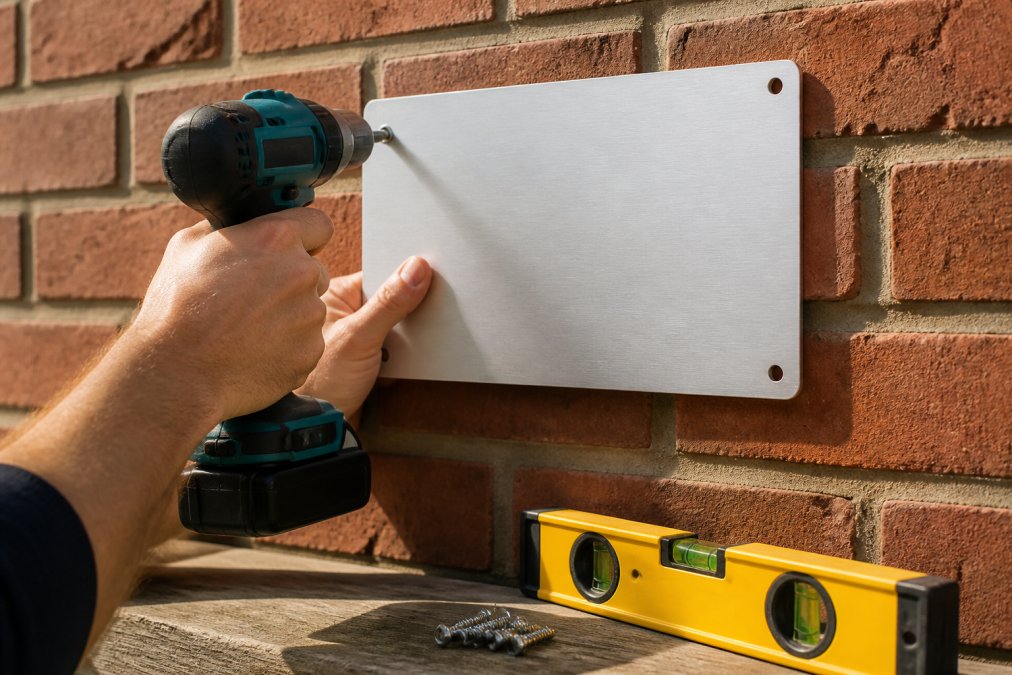
Here is the practical sequence:
- Mark your holes. Hold the sign level against the wall and pencil through the pre-drilled holes.
- Choose the right bit. Use a masonry bit sized to your anchor. Hammer drills make this faster.
- Drill into the brick face. Aim for the center of each brick, staying at least a half-inch from the edges to prevent cracking.
- Insert plastic sleeve anchors. Tap them in flush with the brick surface.
- Drive stainless screws. Stainless resists rust where the screw meets outdoor moisture.
- Seal the anchor. A dab of exterior silicone keeps water out of the hole.
How to Prevent Rust on Metal Signs
Rust prevention comes down to coating, hardware, and airflow. Aluminum signs will not rust at all, which is why they are the low-maintenance choice. Steel signs need their protective layer kept intact.
Maintenance, Graffiti Resistance, and End-of-Life Disposal
A durable sign is not a maintenance-free sign. The difference between a substrate that looks new after eight years and one that looks tired after three usually comes down to a simple cleaning cycle and a few protective habits. Here is how the common materials actually behave, and what each one needs.
Cleaning Protocols by Material
The wrong cleaner does more damage than no cleaner at all. Match the method to the substrate:
- Aluminum (powder-coated or printed): Rinse with lukewarm water and a few drops of mild dish soap, wipe with a soft microfiber cloth, then rinse again. Avoid abrasive pads, bleach, and ammonia-based glass cleaners, which dull the clear coat and open the door to fading. A twice-a-year wash in most climates is enough; coastal installations benefit from a quarterly rinse to remove salt film before it etches the finish.
- Powder-coated steel: Same mild-soap approach, but inspect the coating every season. Any chip or scratch is a rust entry point, so touch it up with matching touch-up paint before the next wet season. Never pressure-wash a powder-coated sign at close range, the force can lift the coating at edges and seams.
- PVC: Wipe with a soft cloth and mild soap. Skip solvents, acetone, and alcohol wipes, which can cloud the surface. PVC also grows brittle with age, so avoid scrubbing near edges and mounting holes where stress cracks start.
- Acrylic: Use a non-ammonia plastic cleaner and a microfiber cloth. Paper towels and dry rags micro-scratch the surface, and those scratches scatter light and make the sign look hazy within a season or two.
Graffiti Resistance and Removal
A smooth, sealed surface is the best graffiti defense. Clear laminate or a UV-cured topcoat gives markers and spray paint far less to grip than a porous, uncoated substrate. If a sign does get tagged:
- Wipe fresh marker with a soft cloth and mild soap before it cures.
- For spray paint on coated metal, a citrus-based adhesive remover or a dedicated graffiti wipe usually lifts it without harming the clear coat. Test on an inconspicuous corner first.
- Never use steel wool, wire brushes, or lacquer thinner on a coated sign, you will trade a tag for a permanent dull patch.
- On bare or uncoated surfaces, graffiti removal often means repainting, which is one more reason a factory finish pays for itself.
End-of-Life and Disposal
When a sign finally retires, the substrate determines where it goes:
- Aluminum is one of the most recycled materials in circulation, and most scrap metal recyclers accept it. A retired aluminum sign can re-enter the recycling stream instead of a landfill, and the material retains most of its value across repeated recycling cycles.
- Powder-coated steel is recyclable as scrap metal, but the coating is typically burned off during processing, which adds cost and emissions compared with clean aluminum.
- PVC is difficult to recycle in most municipal programs and can release harmful compounds if burned. It usually ends up as landfill waste.
- Acrylic is technically recyclable but rarely accepted in curbside programs; most pieces end up as general waste.
Conclusion
Picking the right substrate is the difference between a sign that lasts a decade and one you replace every summer. Aluminum gives you rust-free durability, UV-stable color, and easy recycling, which is why it is our default for outdoor decor. Every Real Cool Signs piece is built on .32mm aluminum with a fade-resistant finish, backed by free standard shipping on orders over $99 and a hassle-free 30-day return policy.
Frequently Asked Questions
What is the best weatherproof sign material for outdoor use?
Aluminum is widely considered the best weatherproof sign material for most outdoor applications. It resists rust, handles UV exposure well when coated, and holds up in rain, snow, and temperature swings. For coastal areas with salt air, aluminum outperforms steel. PVC and acrylic work for shorter-term or decorative use, but aluminum offers the best balance of durability, weight, and cost for long-term outdoor signage.
Is aluminum good for outdoor signs?
Yes. Aluminum is lightweight, naturally rust-resistant, and takes UV-coated finishes well. Signs made from .32mm aluminum, like the ones at Real Cool Signs, are suitable for both indoor and outdoor display. They resist fading and hold up to rain and sun without warping or corroding. For most home and garden signage, aluminum is the go-to substrate.
How long do aluminum signs last?
With proper care, aluminum signs can last 10 to 20 years outdoors. The lifespan depends on the coating quality, UV exposure, and maintenance. Dye-sublimation printing on aluminum, like the process used for many Real Cool Signs products, produces fade-resistant images that hold up for years. Regular cleaning and occasional application of a protective wax can extend that even further.
What type of metal is best for outdoor signs?
Aluminum is generally the best metal for outdoor signs because it does not rust and is lighter than steel. Steel can work if it is powder-coated or galvanized, but any scratch exposes it to rust. Aluminum also handles thermal expansion better. For most residential and commercial outdoor signage, aluminum offers the best combination of durability and low maintenance.
How do you protect outdoor signs from sun fading?
Choose signs with UV-resistant coatings or dye-sublimation printing, which embeds the image into the material rather than laying it on top. Place signs where they get some shade during peak sun hours if possible. Clean them regularly to remove dirt that can trap heat. If a sign does fade, a clear UV-protective spray can add a layer of defense, but prevention starts with the right substrate and print method.
What is the difference between aluminum and PVC for outdoor signage?
Aluminum is more durable and rigid, resists rust, and handles temperature extremes without warping. PVC is lighter and cheaper but can become brittle in cold weather and may yellow or crack after years of UV exposure. For long-term outdoor use, aluminum is the better investment. PVC works for temporary or indoor signs where extreme weather is not a factor.
Ready to make your space stand out? Explore unique, conversation-starting signs at RealCoolSigns.com and find the perfect piece for your home, office, garage, or gift.