


Table of Contents
- Why Aluminum Signs Are Built for Outdoor Patios
- Understanding Material Specifications: Choosing the Right Custom Aluminum Sign Thickness Guide
- Selecting Best Mounting Hardware for Aluminum Signs
- Installation Methods for Outdoor Durability
- Protecting Your Investment: How to Clean Aluminum Patio Signs
- UV Protection and Fade Prevention Strategies
- Integrating Aluminum Signs Into Your Patio Style
- Conclusion
Last Updated: August 14, 2026
Why Aluminum Signs Are Built for Outdoor Patios
Aluminum has become the gold standard for outdoor signage because it won't rust like steel, splinter like wood, or become brittle under UV rays like plastic. It's corrosion-resistant, fade-resistant, and handles seasonal temperature swings without warping. For patios facing direct sun, seasonal rain, and temperature fluctuations, aluminum is simply the smarter choice than materials that require replacement every few years.
Real Cool Signs specializes in weather-resistant aluminum pieces that combine durability with aesthetic appeal, whether you're displaying garden themes, hobby interests, or personalized décor.

Understanding Material Specifications: Choosing the Right Custom Aluminum Sign Thickness Guide
Not all aluminum is created equal, and thickness matters far more than most people realize. When shopping for durable aluminum signs for outdoor patio use, you need to understand gauge thickness and substrate options, these specs determine whether your sign lasts five years or fifteen.
Gauge Thickness and Durability
Gauge thickness refers to the actual depth of the aluminum material, measured in thousandths of an inch. The lower the gauge number, the thicker the material. This distinction is critical because thickness directly impacts durability, wind resistance, and long-term performance.
For outdoor patio signs, the most common options are .040 gauge and .063 gauge aluminum. The .040 gauge provides solid durability for most residential applications, it's lightweight, affordable, and handles typical weather exposure well. If your patio experiences high winds, extreme temperature swings, or particularly exposed locations, .063 gauge aluminum is the upgrade that makes sense. It's noticeably thicker, more rigid, and resists bending or warping far better.
For most patios, .040 gauge delivers excellent performance without unnecessary weight or cost. The real consideration is your specific environment. Coastal areas with salt spray, regions with heavy seasonal storms, or patios in direct wind tunnels benefit from the extra protection of .063 gauge. For sheltered patios or moderate climates, .040 gauge performs admirably.
Real Cool Signs offers aluminum signs engineered with appropriate thickness for outdoor durability, ensuring your investment withstands years of exposure without degradation.
Substrate Options and Weather Resistance
Beyond gauge thickness, the substrate, the backing material, determines how your sign handles moisture and temperature changes. Aluminum composite substrates combine lightweight aluminum with enhanced weather resistance.
A true aluminum composite consists of aluminum sheets bonded to a polyethylene core. This design offers superior flatness, resists warping from temperature fluctuations, and provides excellent moisture resistance. The polyethylene core acts as a barrier against humidity penetration, which is especially valuable in damp climates or patios near water features.
Pure aluminum substrates work exceptionally well too, particularly when paired with protective coatings. Composite materials essentially eliminate expansion and contraction concerns, making them the preferred choice for long-term outdoor stability. If your sign sits near a water feature, receives regular irrigation spray, or experiences high humidity, composite aluminum substrates provide that extra layer of protection.
Selecting Best Mounting Hardware for Aluminum Signs
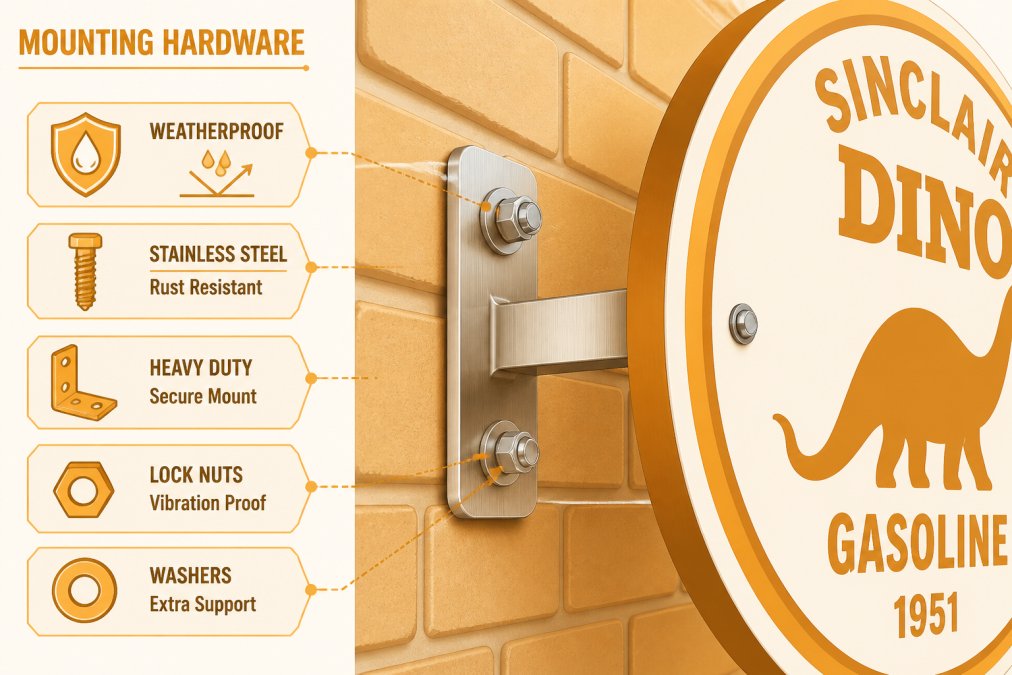
The best mounting hardware for aluminum signs is stainless steel, it won't corrode, won't stain your sign, and won't compromise the durability you've invested in. Pairing aluminum with inferior fasteners undermines that advantage. Stainless steel fasteners, brackets, and hardware ensure your entire installation remains weather-proof for decades.
Most hardware failures happen because people use standard steel fasteners or aluminum bolts with aluminum signs. This creates a galvanic reaction; dissimilar metals in contact with moisture accelerate corrosion. Within months, you'll see rust staining or fastener failure. Stainless steel eliminates this problem entirely.
Patio-Specific Mounting Solutions
Patio mounting presents unique challenges compared to indoor installation. Your sign faces direct weather exposure, temperature swings, and potentially wind pressure.
For masonry patios (brick, stone, or concrete), stainless steel anchors and expansion bolts are the standard. These fasteners grip the material securely and won't loosen over time from vibration or temperature changes. Avoid plastic anchors; they degrade under UV exposure and weaken after a few years.
For wood patios or pergolas, stainless steel lag bolts or wood screws designed for outdoor use provide solid hold. Pre-drilling prevents splitting, and washers distribute load to prevent fastener pull-through.
For vinyl or composite patio structures, specialized fasteners designed for those materials are essential. Standard hardware can crack or damage the material. Wind resistance matters more than people expect. Proper spacing of mounting points and quality hardware distribution prevents stress concentration that could bend or damage your aluminum.
Installation Methods for Outdoor Durability
The installation method you choose directly impacts how long your sign performs outdoors. Start with proper surface preparation, clean the mounting surface thoroughly and remove dirt, algae, or oxidation that could interfere with fastener grip.
Spacing matters. Distribute mounting points evenly across the sign's perimeter to distribute wind load and prevent stress concentration. For signs larger than 24 inches, consider additional support points along the back.
Use washers under every fastener head. Washers distribute load across a larger surface area, prevent fastener pull-through, and protect your sign from stress damage. This simple step dramatically extends installation life.
For aluminum signs on masonry, apply a thin bead of stainless-steel-compatible sealant around fastener holes after installation. This prevents water from entering behind the sign. Use polyurethane or acrylic-based exterior sealant, not silicone, which can trap moisture.
Orientation matters for wind resistance. If your patio experiences prevailing winds from one direction, angle the sign slightly into the wind rather than perpendicular. This reduces pressure and improves stability.
Protecting Your Investment: How to Clean Aluminum Patio Signs
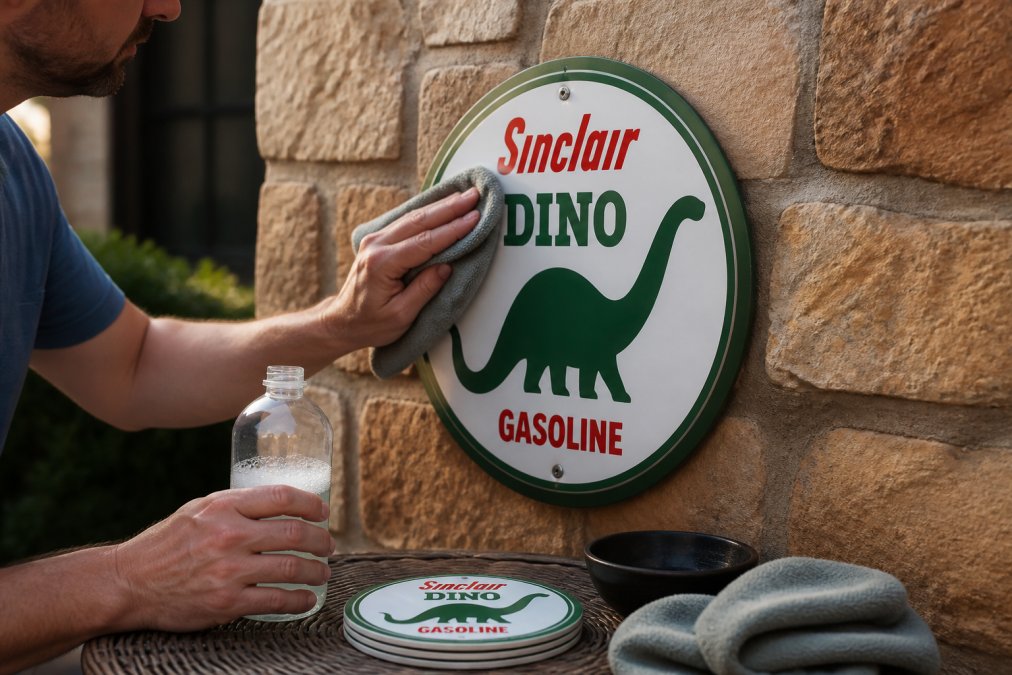
Regular cleaning maintains both the appearance and protective coating of your aluminum patio sign, extending its lifespan and keeping it looking fresh. Start with a soft cloth, microfiber is ideal because it won't scratch the surface. Mix warm water with a small amount of mild dish soap.
Wet the cloth with the soapy solution and wipe the sign gently. For stubborn spots, let the solution sit for a minute before wiping. Rinse with clean water and dry with a soft cloth to prevent water spots.
SHOP OUR REAL COOL COLLECTIONS NOW →
Avoid high-pressure washers, which can damage printed graphics and force water behind the sign. Skip harsh chemicals like bleach or acetone, which can discolor aluminum and degrade protective coatings. Don't use vinegar on anodized aluminum; the acidity can damage the finish.
For coastal areas where salt spray is present, rinse more frequently, ideally monthly during peak seasons. Salt accelerates corrosion and degrades protective coatings faster than inland environments.
Maintenance Schedule for Long-Term Performance
Quarterly cleaning during normal seasons maintains appearance and removes environmental buildup. In coastal areas or regions with heavy industrial air pollution, increase frequency to monthly.
After severe weather, inspect your sign for damage. Check fasteners for looseness and verify the sign hasn't shifted. Once yearly, inspect the protective coating and sealant around fasteners. If the coating shows signs of wear or sealant has cracked, touch up or reseal as needed.
Real Cool Signs designs aluminum signs with finishes that resist fading and degradation, but regular maintenance ensures your sign maintains its appearance through years of outdoor exposure.
UV Protection and Fade Prevention Strategies
Direct sunlight is the primary threat to sign appearance over time. UV rays break down inks and can fade even high-quality printed graphics. Modern aluminum signs use UV-resistant inks and protective laminates specifically designed to withstand extended sun exposure.
A quality protective laminate acts as a shield, blocking much of the UV radiation before it reaches the printed surface. This is why professional-grade signs resist fading far better than consumer-grade alternatives. Real Cool Signs uses protective laminates engineered for outdoor durability, ensuring your custom graphics remain vibrant for years.
Placement strategy contributes to fade prevention too. If possible, position your sign to minimize direct afternoon sun exposure, especially in southern-facing orientations where UV intensity peaks. A patio pergola or partial shade coverage significantly extends the life of printed graphics.
Lighter colors show fading more noticeably than darker shades, even when actual degradation is identical. If fade visibility concerns you, darker color selections mask the effect and maintain appearance longer.
Integrating Aluminum Signs Into Your Patio Style
Your aluminum sign should enhance your patio aesthetic. The good news is that aluminum signs work with virtually any patio style, modern, rustic, traditional, or eclectic.
For modern patios, sleek aluminum signs with minimalist designs and clean lines complement contemporary furnishings. Matte finishes often work better than glossy in modern settings, creating a sophisticated appearance.
Rustic patios benefit from vintage-inspired designs or natural imagery. Garden-themed aluminum signs fit naturally into outdoor spaces focused on plants and nature. Real Cool Signs offers garden sign options like the "Into My Garden I Go" collection with butterfly, hummingbird, tomato, and ladybug designs, each built to withstand years of outdoor exposure.

Traditional patios work well with classic designs, heritage-inspired graphics, or personalized family names. The durability of aluminum means these signs become lasting focal points rather than temporary décor.
Color coordination ties your sign into your overall patio design. Consider the dominant colors in your patio furniture, landscaping, and hardscape. Your sign's color palette should either complement or intentionally contrast with these elements.
Placement strategy matters too. A sign positioned at eye level as you enter the patio creates immediate visual impact. Mounting on a pergola, fence, or accent wall integrates the sign into your patio's architecture. One well-chosen aluminum sign creates more impact than several competing for attention.
Conclusion
Durable aluminum signs for outdoor patio spaces represent a smart investment in long-term décor that actually holds up to real-world exposure. The material itself resists corrosion and fading, proper gauge thickness ensures structural integrity, and quality mounting hardware keeps everything secure through years of weather exposure. Regular maintenance takes minimal effort, just periodic cleaning and occasional fastener checks, yet dramatically extends your sign's lifespan.
When you're ready to add a sign that combines durability with genuine style, Real Cool Signs offers weather-resistant aluminum options designed for outdoor performance. From garden-themed designs to custom creations, each sign is built with the material specifications and protective finishes that keep outdoor aluminum looking fresh and vibrant. With free shipping on orders over $99 and an easy 30-day return policy, there's no risk in finding the perfect piece for your space.
Ready to make your space stand out? Explore unique, conversation-starting signs at RealCoolSigns.com and find the perfect piece for your home, office, garage, or gift.
Frequently Asked Questions
Will aluminum signs rust or fade if left outside year-round?
Quality aluminum signs are rust-proof and corrosion-resistant by nature, unlike steel. The protective laminate coating and UV-fade resistant finishes keep colors vibrant for years. Proper maintenance, gentle cleaning every 3-6 months, extends durability significantly. Real Cool Signs aluminum signs are designed specifically for outdoor conditions and won't degrade from rain, snow, or intense sun exposure.
What's the best mounting hardware for aluminum signs on patios?
Stainless steel or powder-coated mounting brackets prevent corrosion and ensure long-term stability. For patios, consider the surface type: brick requires anchors, wood needs weather-resistant screws, and composite materials need specialized fasteners. Patio-specific hardware accounts for weight distribution and wind resistance. Space mounting points 16-24 inches apart for stability, and always use hardware rated for outdoor conditions.
How do I choose the right thickness for a custom aluminum sign?
Sign thickness is measured in gauge: .040-inch aluminum offers excellent durability for most patios and resists warping. Thicker gauges (.063-inch) suit larger signs or high-wind areas. Consider your sign's size, local weather, and mounting method. Heavier gauges cost more but provide superior longevity and weather resistance. Real Cool Signs recommends .040-inch minimum for residential outdoor use.
How often should I clean my aluminum patio sign?
Clean every 3-6 months or after severe weather. Use mild soap, warm water, and a soft cloth, avoid abrasive cleaners that damage the protective coating. Rinse thoroughly and dry completely to prevent water spots. In coastal or heavily polluted areas, clean quarterly. Regular maintenance prevents buildup, maintains color vibrancy, and extends sign life by years.