


Last Updated: October 27, 2026
Quick Summary
Decorative metal signs for mechanic shop walls suit a working shop because they reflect what the shop cares about and add personality to a room of tools and hard work. Choose a theme that matches the business, plan the wall layout, and pick a material and finish that handle dust, oil, and humidity.
- Plan a single theme or two that match the shop's name, services, and style.
- Use aluminum for damp or high-traffic walls, since it is lighter and naturally rust-resistant.
- Choose smooth, sealed finishes with UV-resistant graphics that wipe clean easily.
- Mount signs into studs, masonry, or framing, and never directly into pegboard.
- Keep signs clear of door swing paths, lift travel, and overhead work areas.
Table of Contents
- Why Decorative Metal Signs Suit a Working Mechanic Shop
- Planning a Cohesive Mechanic Shop Wall Layout
- Choosing Signs for a Commercial Shop Versus a Home Garage
- Vintage Garage Decor Themes That Fit a Shop
- Automotive Wall Art Themes Worth Considering
- Materials, Finishes, and Performance in Shop Conditions
- Sign Sizes, Readability, and Placement
- Installation and Wall Compatibility
- Caring for Metal Signs in a Busy Shop
- Pick the Mechanic Sign That Tells Your Shop's Story
- Frequently Asked Questions
Why Decorative Metal Signs Suit a Working Mechanic Shop
Decorative metal signs for mechanic shop walls do more than fill empty space. They tell customers and crew what the shop cares about, and they add personality to a room full of tools and hard work. Most shop walls are bare concrete, pegboard, or painted block, so a single well-chosen sign can change the whole feel of the room.
At Real Cool Signs, we make aluminum signs built around the things people love, and automotive decor is one of the most popular corners of that collection. A mechanic's bay has its own visual language: old gas and oil graphics, racing artwork, and plain-spoken humor about getting dirty for a living. Metal suits that world well because it reads as tough and lasting.
Shop owners often underestimate how much a wall contributes to the atmosphere. A customer waiting for an oil change looks up from a phone, sees a vintage-style sign, and gets a quick sense of the shop's character. That first impression matters, even in a busy service bay.
Planning a Cohesive Mechanic Shop Wall Layout
Random décor looks like clutter. A planned wall looks like a deliberate choice. Before buying anything, decide on a single theme or two that match the shop's name, services, and style. For guidance on designing and installing custom signs, see Personalized Metal Signs for Home Bars: Design & Install.
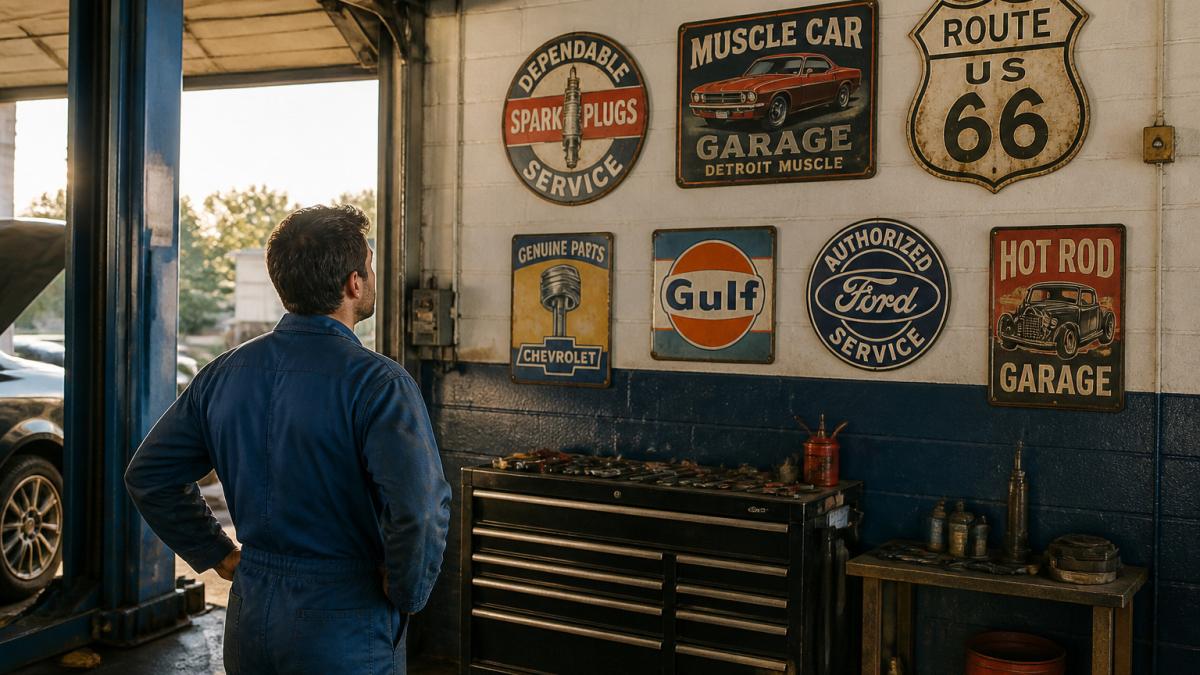
Start by measuring the wall and marking the areas that get the most eye traffic, such as the wall facing the service counter or the one visible from the lift. Group signs in those spots rather than scattering them across every open surface. Leave breathing room between pieces so each one can be read at a glance.
Consider mixing sizes. One larger sign anchors the wall, and two or three smaller pieces balance it. Keep colors compatible with the rest of the shop, whether that means matching the tool chest, the paint on the walls, or the branding on work uniforms.
Choosing Signs for a Commercial Shop Versus a Home Garage
A commercial shop and a home garage have different needs. A shop sees customers, staff, and a steady flow of traffic, so signs should look professional and welcoming. A home garage is usually a personal space, so the choice can lean toward humor, nostalgia, or a favorite car brand.
For a commercial shop, prioritize signs that reflect the business name and service style. Keep wording clean and readable from a distance. A shop sign that makes a customer smile can also reinforce that the team takes pride in its work.
In a home garage, the rules loosen. Many owners pick signs that reflect a personal favorite, such as a particular era of muscle cars or a classic hot rod theme. You can browse the garage-themed sign options to compare styles for a home space. The goal is to create a space that feels like the owner's own.
Vintage Garage Decor Themes That Fit a Shop
Vintage styling is one of the most popular directions for garage and shop walls. Browse more examples of retro garage-themed artwork in our guide to vintage garage looks. Retro gas station graphics, faded oil can illustrations, and old-school racing emblems all suggest a shop with history and experience.
These themes work because they carry a sense of time. A worn-looking sign hints at years of service, which suits many independent repair shops. The look also pairs well with workbenches, pegboards, and vintage hand tools already common in garages.
Keep the palette restrained. Two or three colors, such as cream, red, and black, tend to read as more intentional than a wall covered in mismatched graphics.
Automotive Wall Art Themes Worth Considering
Automotive wall art covers many subjects. Some shops lean into mechanic humor, with signs that poke fun at the trade in a friendly way. Others choose hot rod and street-culture designs that appeal to car enthusiasts. Racing artwork, from checkered flags to classic race car silhouettes, adds energy to a wall.
Our Mechanic Metal Sign, "We Fix Sh*t," is a bold example of the humor-driven approach. It features a mechanic holding crossed wrenches against a diamond plate background, and it is built for auto repair shops, home garages, and man caves alike. It is priced at $27.99 and works well as a centerpiece for a shop wall or as a gift for a technician.

For shops that want a more educational look, our tool identification charts fit well. The Types of Power Tools Vintage Aluminum Sign ($27.99) presents 20 illustrated power tools in an antique reference-chart style. The Types of Hand Tools Vintage Aluminum Sign ($27.99) takes the same approach with hand tools, and the Types of Wrenches Vintage Tool Identification Aluminum Sign ($27.99) covers wrench styles from open-end to torque. Each pairs naturally with a pegboard or tool chest.
Choose themes that reflect the work your shop actually does. A diesel shop, a general repair shop, and a restoration garage will each want different imagery.
Materials, Finishes, and Performance in Shop Conditions
Shop walls are a harsh environment for any decorative object. Airborne dust from brake work and sanding settles on every surface. Oil and solvent splashes are common near benches and parts washers. Humidity swings with the seasons, and summer heat can build up near roll-up doors. The material and finish of a sign determine how well it survives all of that.
Steel is the traditional choice for vintage-style signs. It is rigid, holds fine detail well, and takes enamel or powder coating nicely. The trade-off is weight and rust: bare or poorly coated steel will corrode in a damp shop, and a heavy steel sign needs sturdier fasteners. Aluminum is lighter and naturally resists rust, which makes it a practical choice for walls that see moisture or temperature swings. Printed metal signs use a flat sheet with graphics applied to the surface; the quality of the print and the clear coat over it determine fade resistance and how easily the surface cleans up.
Finishes matter as much as the base metal. Powder coating is durable and resists chipping, but a heavily textured powder coat can trap dust in its profile. Gloss finishes wipe clean easily and keep printed detail crisp, while matte and distressed finishes hide fingerprints and small scratches but may show dust more readily. A distressed vintage look is often printed rather than achieved through actual wear, which means the surface stays smooth and cleanable even though it looks aged.
For a working shop, favor signs with a smooth, sealed surface and UV-resistant graphics. Wipe them with a soft cloth and a mild cleaner rather than solvents or abrasives, which can dull the finish or lift the print. Keep detail-heavy signs away from direct splash zones near parts washers and solvent tanks. A sign that looks great in a catalog photo can still fail in a bay if the finish is not suited to the conditions.
Each material and finish suits different shop conditions, so match the choice to where the sign will hang.
| Material or finish | Best for | Key difference |
|---|---|---|
| Steel | Vintage feel | Heavier and rusts if poorly coated |
| Aluminum | Damp or high-traffic walls | Lighter and naturally rust-resistant |
| Powder coating | Durability | Resists chipping, but textures can trap dust |
| Gloss finish | Frequent cleaning | Wipes clean and keeps print crisp |
| Matte or distressed finish | Hiding fingerprints and scratches | May show dust more readily |
Sign Sizes, Readability, and Placement
Size matters as much as theme. A sign that is too small disappears on a large wall, while one that is too large can overwhelm a small office. Measure the wall and consider the viewing distance. Signs meant to be read from across a bay should use bold wording and simple graphics.
Our Mechanic Metal Sign is a round 11.25-inch design, which works well as a focal point on a narrower section of wall. The tool identification charts carry more detail, so they read best up close, such as beside a workbench or at the entrance to a tool room.
Placement should follow traffic patterns. Put key signs where people naturally look, and keep detail-heavy pieces in spots where someone can stop and study them.
Installation and Wall Compatibility
Hanging a metal sign in a working shop is not the same as hanging one in a living room. Shop walls are often concrete block, painted drywall over furring strips, plywood sheathing, or pegboard, and each surface holds fasteners differently. A sign that falls in a service bay is a hazard, not just a decor problem, so it is worth planning the install before the sign goes up.
Start by identifying the wall material. Drywall over wood studs is the most forgiving: use a stud finder to locate the studs, then drive screws directly into the wood. For drywall without a stud behind the mounting point, toggle bolts or heavy-duty drywall anchors spread the load across a wider area than plain plastic anchors. Concrete block and poured concrete require masonry anchors, typically a sleeve or wedge anchor sized to the sign's weight. Pegboard is the least forgiving surface because it is thin and perforated; mount signs to the framing behind the pegboard rather than to the board itself.
Weight matters more than most people expect. A small stamped sign may weigh a pound or two, while a larger piece with a thick frame can run several pounds. Use fasteners rated well above the sign's weight, and when in doubt, add a third mounting point. Vibration from lifts, compressors, and impact tools can slowly loosen hardware, so check mounting points periodically and consider a thread-locking compound on machine screws.
Placement should follow both sightlines and safety. Keep signs out of the swing path of doors, the travel path of lifts, and the reach of ladders and carts. In a commercial bay, avoid hanging anything directly above a work area where tools or parts are handled overhead. A sign that reads well from the customer waiting area but sits clear of moving equipment is the ideal compromise.
Before drilling, check for wiring, plumbing, and structural supports behind the surface. In rented space, confirm with the property owner before putting holes in the wall. Adhesive mounting strips can work for very light signs on smooth, clean surfaces, but they are a poor choice for heavier metal in a dusty shop where temperature swings can weaken the bond. When in doubt, mechanical fasteners are the safer route.
Caring for Metal Signs in a Busy Shop
A shop is dusty, so routine cleaning keeps signs looking sharp. Wipe down the surface with a soft cloth and a mild cleaner, and avoid harsh abrasives that can dull the finish or scratch the printed graphics. Dust the frame and edges as part of regular shop cleaning.
Check mounting points periodically, especially on walls that take vibration from nearby equipment. Tighten any loose hardware before a sign can shift or fall.
Keep signs out of areas where they might be struck by ladders, carts, or lifted parts. A little planning prevents most damage.
Pick the Mechanic Sign That Tells Your Shop's Story
The best wall decor reflects the people who work and spend time in the space. Whether your shop leans toward humor, history, or hands-on technical pride, choose pieces that feel like they belong.
Start with one or two signs, see how they look over a few weeks, and build from there. A cohesive wall grows naturally when each new piece fits the theme.
Explore the Real Cool Signs workshop and garage collection to find designs that suit your shop, from the Mechanic Metal Sign to the tool identification charts. Some signs say what the work is all about, and the right one can make a shop feel like home.
Frequently Asked Questions
How do you decorate the walls of a mechanic shop?
Choose a theme that reflects the shop's interests and style.
What kind of wall decor works in a garage or workshop?
Metal signs work well because they handle dust, humidity, and occasional bumps better than framed prints. Vintage-style tool charts, gas and oil signs, and personalized shop-name plaques are common choices. Pick designs with bold graphics and high contrast so they stay readable from across the bay. Metal signs are also easy to wipe clean, which matters in a space where grease and dust collect quickly. Avoid anything that could be mistaken for a required safety or operational notice.
How do you arrange metal signs on a garage wall?
Lay the signs out on the floor first, then mark their positions with painter's tape before drilling. Keep a consistent gap of about 2 to 4 inches between pieces so the group reads as one display. Align the tops or centers along a common line, and place the largest sign at eye level near the entry or work area. Pay attention to wall studs and anchor points, since a heavier metal sign needs solid support rather than drywall alone.
What should you consider before hanging decor in a workshop?
Check the wall material and whether it can hold the weight with appropriate anchors. Consider how the sign will be seen from the work area, since readability matters more in a shop than in a living room. Confirm that decor will not interfere with lighting, ventilation, pegboard access, or emergency equipment. For rented or shared spaces, check the lease or building rules before drilling. Finally, consider how often the sign will need cleaning and whether its finish holds up to the shop environment.
