


Table of Contents
- Why Proper Cleaning Matters for Your Aluminum Signs
- How to Clean Aluminum Signs: A Step-by-Step Process
- Safe Cleaners for Aluminum: What Works and What Doesn't
- Aluminum Sign Cleaning Frequency: How Often Should You Clean?
- How to Protect Outdoor Aluminum Signs from Weather and Corrosion
- Troubleshooting Common Stains and Damage
- Maintenance Schedule and Inspection Checklist
- Frequently Asked Questions
Last Updated: October 16, 2026
Why Proper Cleaning Matters for Your Aluminum Signs
At Real Cool Signs, we know your custom aluminum signage represents your personality and style. Cleaning aluminum signs doesn't require special skills or expensive equipment, just the right approach and a little time.
Aluminum resists rust but can oxidize when exposed to moisture and air, creating a dull gray layer. Regular cleaning prevents buildup and catches small issues before they become costly damage.
How to Clean Aluminum Signs: A Step-by-Step Process
Cleaning aluminum signage is straightforward when you follow a simple method.
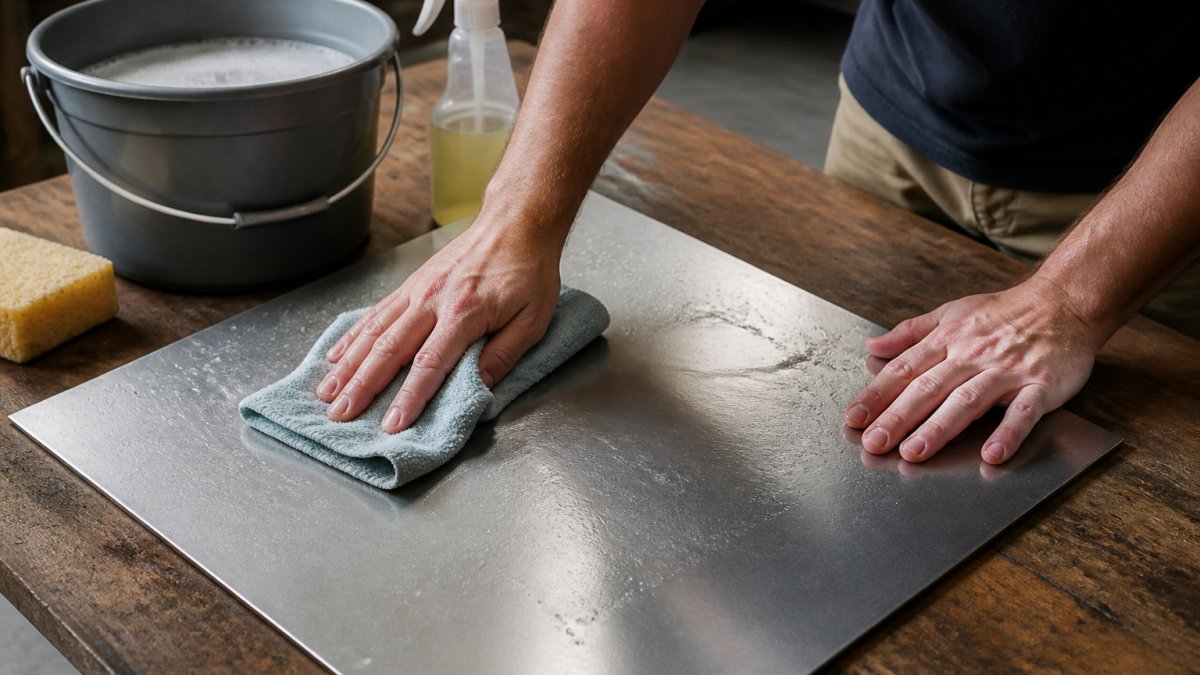
Gather Your Cleaning Supplies
Start by collecting what you need, most items are already in your home.
Essential supplies:
- Soft cloth or sponge (microfiber works great)
- Mild dish soap or mild detergent
- Warm water (not hot)
- Bucket
- Soft-bristled brush (optional, for stubborn spots)
Skip these entirely:
- Harsh chemicals or abrasive cleaners
- Steel wool or scouring pads
- High-pressure washers
- Bleach or ammonia-based products
These harsh materials scratch the aluminum finish and strip protective coatings. Stick with gentle options to avoid damage.
Inspect the Sign Before You Start
Before you wet anything, take a close look at your sign. 🔍 Check for visible cracks or dents, peeling paint or coating, rust spots (rare on aluminum, but possible at edges), and loose mounting hardware. If you spot damage, clean carefully around those areas; for serious damage, consider professional restoration.
Remove Dust and Loose Debris
Start dry. Use a soft cloth or soft-bristled brush to wipe away dust and loose dirt, working gently in one direction to avoid scratching. Pay special attention to corners and edges where debris collects.
Apply Your Cleaning Solution
Mix warm water with a few drops of mild dish soap or mild detergent in your bucket. Dip your soft cloth or sponge into the solution and wipe the entire sign in gentle, circular motions. Let the soapy water sit for a minute or two on stubborn stains. For painted metal or custom finishes, test your solution on a small, hidden area first.
Rinse and Dry Thoroughly
Rinse away all soap residue with clean water from a second bucket or a gentle hose spray, since residual soap can leave streaks. Drying is critical. Water spots form when moisture sits on aluminum, so wipe the entire sign with a clean, dry towel immediately after rinsing.
Safe Cleaners for Aluminum: What Works and What Doesn't
The right cleaner depends less on the metal and more on the finish on top of it. Bare, painted, anodized, and printed or laminated aluminum each react differently, so match the cleaner to the finish. ✅
Match the cleaner to the finish
| Finish type | Safe approach | Avoid |
|---|---|---|
| Bare (mill-finish) aluminum | Mild dish soap and warm water; diluted white vinegar (1 part vinegar to 3 parts water) for oxidation; non-abrasive metal polish for dulling | Chlorinated cleaners, bleach, ammonia, steel wool, scouring pads |
| Painted aluminum | pH-neutral car wash soap or mild dish soap; soft microfiber cloth; rinse and dry immediately | Solvent-based degreasers, acetone, lacquer thinner, abrasive polishes, pressure washing near edges |
| Anodized aluminum | Mild soap and water; a dedicated anodized-aluminum cleaner if film or staining persists; soft cloth only | Acidic cleaners, strong alkaline cleaners, abrasive compounds, ammonia |
| Printed or laminated graphics | Mild soap and water; soft sponge; gentle rinse; dry with microfiber | Solvents, adhesive removers, high-pressure spray, abrasive brushes |
A quick field test: pick a hidden spot, apply the cleaner, wait a few minutes, and check for color shift, cloudiness, or tackiness before cleaning the whole face.
What to keep on hand
- Mild dish soap or pH-neutral car wash soap
- Warm water (not hot)
- Two buckets (one for wash solution, one for rinse water)
- Soft microfiber cloths and a non-abrasive sponge
- Soft-bristled brush for seams and edges
What to leave in the cabinet
- Bleach, ammonia, and chlorinated cleaners, they attack protective coatings and can pit aluminum
- Abrasive powders, steel wool, scouring pads, and wire brushes, they scratch and remove anodize
- Solvent degreasers, acetone, and lacquer thinner, they soften paint and lift printed graphics
- Acidic wheel or concrete cleaners, they etch bare and anodized surfaces
- High-pressure washers, they drive water past seals, lift edges of graphics, and strip wax
Specialty products worth knowing
- Non-abrasive aluminum polish: use only on bare aluminum; skip on anodized and painted surfaces unless the label explicitly says it is safe for them.
- Anodized-aluminum cleaner: formulated to remove film and light staining without attacking the anodic layer.
- pH-neutral car wash soap: a safe default for painted and anodized signs because it lifts road film without stripping wax.
- Isopropyl alcohol (diluted): useful for spot-treating adhesive residue on bare or painted aluminum; test first and rinse thoroughly.
Aluminum Sign Cleaning Frequency: How Often Should You Clean?
How often you clean depends on exposure, finish, and access. Use the schedule below as a starting point, then tighten it if you see dulling, film, or spotting. 📅
Environment-based cleaning schedule
| Environment | Wash frequency | Inspection frequency | Notes |
|---|---|---|---|
| Indoor, climate-controlled (garage, bar, home) | Every 3-6 months | Monthly | Dust is the main issue; dry-wipe between washes |
| Outdoor, sheltered (under an overhang or awning) | Every 2-3 months | Monthly | Less rain and sun exposure; watch for dust film |
| Outdoor, full exposure | Monthly | Monthly | Rinse and dry fully to prevent water spots |
| Coastal or salt-air exposure | Every 2-3 weeks | Every 2 weeks | Rinse salt film promptly; inspect fasteners for corrosion |
| High-pollution or dusty environments | Every 2-4 weeks | Monthly | Road film and particulate settle quickly |
| Humid or shaded areas prone to mildew | Every 2-4 weeks | Monthly | Treat mildew promptly; do not let it colonize seams |
A simple rule: if the sign looks dull, chalky, or dusty, clean it. Regular light cleaning is easier and safer than occasional deep cleaning.
Monthly inspection checklist
- Face is free of visible dust, film, and water spots
- Finish looks uniform, no chalky, dull, or blotchy patches
- No white powdery oxidation or green corrosion at edges and seams
- Fasteners, bolts, and brackets are secure and free of rust
- No new cracks, dents, or paint chips
- Printed or laminated graphics are adhered, no lifting edges or bubbles
Quarterly deep-clean checklist
- Wash with mild soap and warm water using a soft cloth
- Rinse thoroughly with clean water
- Dry completely with a clean microfiber towel
- Clean edges, corners, and seams with a soft-bristled brush
- Reapply protective coating if the finish no longer beads water
- Tighten loose hardware; replace corroded fasteners with stainless steel or galvanized
When cleaning is not enough
Some conditions call for repair or professional service rather than another wash:
- Persistent white or green corrosion that returns within weeks of cleaning
- Pitting, blistering, or flaking of paint or anodize
- Lifting, bubbling, or peeling printed or laminated graphics
- Rust staining that originates from fasteners or mounting hardware
- Structural movement, loose anchors, or damaged frames
- Signs mounted at height, over walkways, or near electrical components
Seasonal adjustments
- Spring: remove winter grime and pollen film; inspect for freeze damage and loose fasteners.
- Summer: rinse more often if the sign faces full sun; dry quickly to prevent water spots.
- Fall: clear leaf debris and check drainage before heavy rain.
- Winter: rinse road salt promptly in coastal and snow-belt areas; avoid washing in freezing temperatures.
Stick to this schedule and your aluminum signage will stay bright and structurally sound for years.
Ready to make your space stand out? Explore unique, conversation-starting signs at RealCoolSigns.com and find the perfect piece for your home, office, garage, or gift.
How to Protect Outdoor Aluminum Signs from Weather and Corrosion
Outdoor aluminum signage faces constant weather challenges. Protecting it extends its life and keeps it looking great. 🌞
Preventive steps:
Apply a protective coating after cleaning.
Position your sign wisely.
Inspect mounting hardware regularly.
In coastal areas, salt air accelerates corrosion. Consider a marine-grade protective sealant, which creates a thicker barrier than car wax.
Ensure proper drainage. Trapped moisture speeds oxidation, so tilt or reposition the sign slightly so water runs off.
Troubleshooting Common Stains and Damage
Sometimes standard cleaning isn't enough. Here's how to handle specific problems. 🛠️
White powdery coating (oxidation): This is aluminum oxide, a natural reaction to air and moisture.
Green or white corrosion spots: These indicate more advanced oxidation.
Paint chips or peeling: Small chips are cosmetic.
Scratches: Minor scratches don't compromise the aluminum's integrity. Deep scratches that expose bare metal should be sealed with clear protective coating to prevent oxidation.
Maintenance Schedule and Inspection Checklist
A simple schedule keeps your aluminum signs in top condition. ✓
| Task | Frequency | Notes |
|---|---|---|
| Visual inspection | Monthly | Look for dust, discoloration, damage |
| Dust and debris removal | Monthly | Dry cloth, gentle wiping |
| Full cleaning (soap and water) | Every 3-6 months (indoor), Monthly (outdoor) | Use mild soap, soft cloth, rinse and dry |
| Protective coating reapplication | Annually | Car wax or marine sealant for outdoor signs |
| Hardware inspection | Every 6 months | Check bolts, brackets for rust |
| Damage assessment | Every 3 months | Look for chips, corrosion, oxidation |
Monthly inspection checklist:
- Sign is free of visible dust and debris
- Finish looks bright and uniform (no dull patches)
- No visible corrosion or white/green spots
- Mounting hardware is secure and rust-free
- No new cracks, dents, or paint damage
- Water drains properly (if outdoor)
Quarterly deep-clean checklist:
- Sign has been cleaned with mild soap and water
- All residue and soap has been rinsed away
- Sign is completely dry
- Protective coating applied (if recommended)
- All edges and corners cleaned thoroughly
- Hardware tightened if needed
Stick to this schedule and your aluminum signage will look fresh for years.
Frequently Asked Questions
Can you use vinegar to clean aluminum signage?
White vinegar can work on aluminum signs, but it's not the best choice for regular cleaning. Vinegar is acidic and may etch or dull the aluminum finish over time. For routine cleaning, stick with mild soap and warm water. Reserve vinegar only for stubborn mineral deposits or hard water stains, and test it on a small, hidden area first. Always rinse thoroughly and dry immediately after using vinegar.
How often should outdoor aluminum signs be cleaned?
Outdoor aluminum signs should be inspected monthly and cleaned every 2-3 months under normal conditions. In harsh environments, coastal areas with salt spray, high-pollution zones, or regions with heavy rainfall, clean them every 4-6 weeks. Increase frequency if you notice visible dirt, grime, or discoloration. Regular cleaning prevents buildup that can lead to corrosion and extends your sign's lifespan and appearance.
What should you avoid when cleaning aluminum signs?
Never use abrasive materials like steel wool, scouring pads, or harsh chemical cleaners on aluminum signs. Avoid bleach, ammonia, and pressure washers, which can damage the paint finish and protective coatings. Don't use hot water or scrub aggressively, as these can scratch the surface. Skip rough cloths and opt for soft sponges or microfiber cloths instead. Always test any new cleaning solution on a small, inconspicuous area before applying it to the entire sign.
How do you protect an outdoor aluminum sign from rust and corrosion?
Aluminum doesn't rust like steel, but it can oxidize and corrode, especially in coastal or humid environments. Protect your sign by applying a clear protective coating or car wax annually, this creates a barrier against moisture and salt exposure. Keep the sign clean and dry; water left on the surface accelerates corrosion. Inspect regularly for white powdery oxidation or discoloration, and address it promptly with mild soap and water. Position signs to minimize standing water and ensure good air circulation.
Ready to make your space stand out? Explore unique, conversation-starting signs at RealCoolSigns.com and find the perfect piece for your home, office, garage, or gift. From custom aluminum signs that showcase your passions to durable themed pieces built to last, our collection is designed with quality and style in mind. Plus, enjoy free shipping on orders over $99 and shop with confidence thanks to our easy 30-day return policy.