


Table of Contents
- Quick Comparison: Top Garden Welcome Signs for 2026
- How to Choose the Best Garden Welcome Signs for Your Space
- Custom Aluminum Garden Signs: Personalization That Lasts
- Weatherproof Outdoor Garden Signs: What Actually Survives the Elements
- How to Install Metal Signs on Brick (and Other Surfaces)
- Funny, Vintage, and Family Name Picks: Matching Signs to Your Garden's Personality
- Frequently Asked Questions
Last Updated: October 3, 2026
Quick Comparison: Top Garden Welcome Signs for 2026
A garden welcome sign does two jobs at once: it greets visitors and it tells them something about the person who tends the beds. At Real Cool Signs, we build ours from aluminum with UV-protected graphics, which is why they hold up season after season instead of fading by August.
The short answer on what are the best garden welcome signs: aluminum wins on durability, wood wins on rustic character, and resin wins on price. For most yards, a powder-coated or sublimated aluminum sign in the 8" x 12" to 12" x 18" range is the pick that lasts.
Here is the quick rundown before we get into the details:
| Pick | Sign | Best For | Size Options |
|---|---|---|---|
| Best funny pick | Gardeners Know All The Dirt | Front yard curb appeal | 12" x 8", 18" x 12" |
| Best gift pick | Grandma's Garden / Mom's Garden | Mother's Day, housewarmings | 8" x 12", 12" x 18" |
| Best novelty pick | Gardener Parking Sign | Sheds, garages, gag gifts | 8" x 12", 12" x 18" |
| Best nature pick | Into My Garden I Go series | Porches, greenhouses, patios | 8" x 12", 12" x 18" |
Below, we break down sizing, materials, installation, and how to match a sign to your garden's personality.

How to Choose the Best Garden Welcome Signs for Your Space
Picking a welcome sign comes down to three decisions: how big it needs to be, where it will hang, and what style fits the yard. Get those right and the rest is easy.
Size, Readability, and Placement
Readability beats size every time. A 12" x 18" sign on a fence reads from the driveway. That same sign tucked behind a shrub reads as a blank rectangle.
A few placement rules we've picked up:
- Mount at eye level, roughly 1.2 to 1.5 meters from the ground, so visitors read it without stooping
- Keep 15 to 20 centimeters of clearance from foliage that will grow over the sign by midsummer
- Choose high-contrast lettering. Dark text on a light background reads from further away than the reverse
- Put entryway markers at the garden path entrance, not buried mid-bed
For a narrow gate or a potting bench, the 8" x 12" size fits better. For a fence or porch wall, go 12" x 18".
Style Match: Rustic, Whimsical, or Minimalist
Style is where most people overthink it. Match the sign to what's already there.
Rustic suits cedar fences, stone walls, and cottage gardens. Weathered-wood backgrounds and sepia tones fit here.
Whimsical works for butterfly gardens, vegetable patches, and anything with a sense of humor. Bright color, playful phrasing, no apologies.
Minimalist fits modern landscapes, gravel paths, and clean-lined planters. Fewer words, simple type, muted color.
Custom Aluminum Garden Signs: Personalization That Lasts
Custom aluminum garden signs are the best format for personalization because the graphic is baked into the surface rather than painted on top of it. Our signs use dye sublimation and UV-protected inks, so the artwork sits under a smooth finish instead of sitting exposed to sun and rain.
That matters more than it sounds. Painted lettering on outdoor decor tends to chalk, crack, and peel within a couple of seasons. Sublimated graphics on aluminum resist that.
What you can personalize:
- Family names and garden names
- A short phrase or inside joke
- A themed illustration, from hummingbirds to tomatoes to blue jays
- Size, so one design fits both a shed door and a fence panel
If you're renting and worried about permanence, a single screw hole is easy to patch. The sign itself isn't the commitment. The landlord conversation is.
Weatherproof Outdoor Garden Signs: What Actually Survives the Elements
Weatherproof outdoor garden signs survive because of the material and the ink, not the marketing. Sun, freeze-thaw cycles, and standing moisture kill signs in that order, and each one attacks a different part of the product.
UV is the quiet killer. It doesn't crack a sign, it bleaches it. A sign that still reads clearly in year three is almost always one with UV-resistant inks or a UV-protective coating.
Moisture is the loud one. Water gets into wood grain, swells it, and splits the finish. Metal doesn't absorb water, so it doesn't have that failure mode.
Freeze-thaw is the one people forget. Water seeps into a porous material, freezes, expands, and pushes the surface apart from the inside.
Material Showdown: Aluminum vs. Wood vs. Resin
Here's how the three common materials actually compare in the yard:
Gardeners Know All The Dirt Sign Sign →
| Material | Weather Resistance | Weight | Upkeep | Best For |
|---|---|---|---|---|
| Aluminum | High, rust-proof, UV-protected | Light | Wipe with damp cloth | Year-round outdoor use |
| Wood | Moderate, needs sealing | Heavy | Re-seal annually | Covered porches, rustic look |
| Resin | Low to moderate | Light | Replace sooner | Budget seasonal decor |
Aluminum's advantage is that it doesn't need a maintenance calendar. Our signs are built from rust-free aluminum with pre-drilled holes and a smooth finish, so there's nothing to sand, stain, or seal.
Wood earns its place if you want genuine grain and you're willing to re-seal it. That's a real tradeoff, not a flaw. Resin is fine for a season or two, and then it usually goes chalky.
How to Install Metal Signs on Brick (and Other Surfaces)
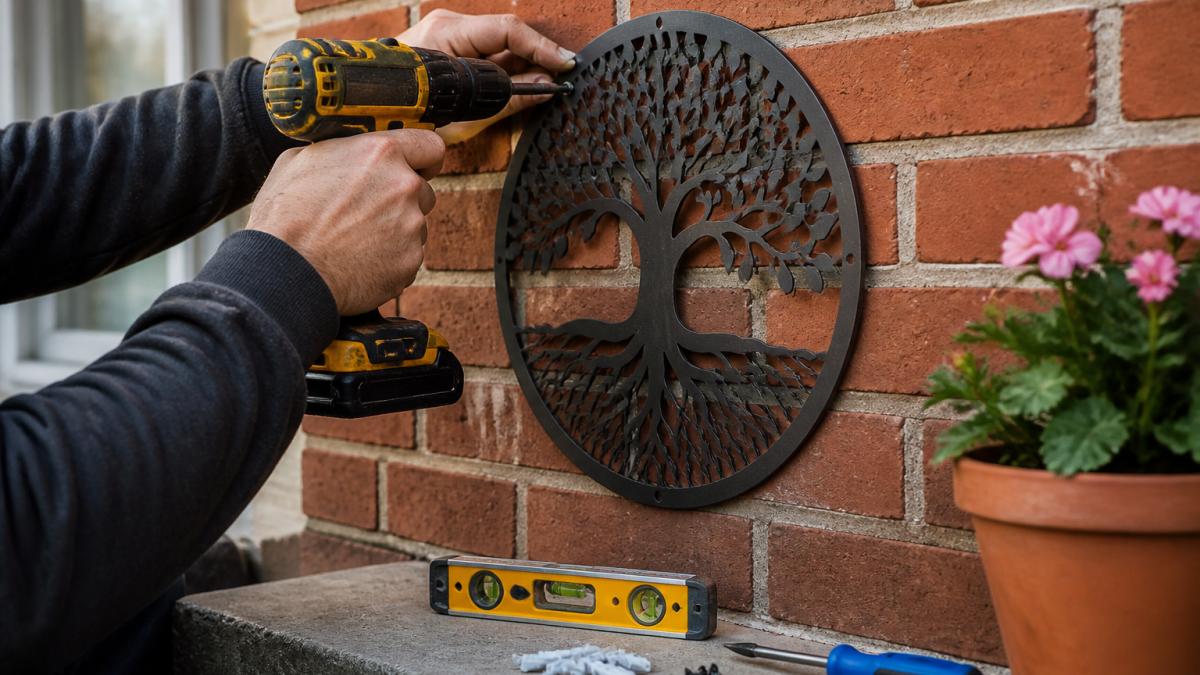
Installing a metal sign on brick takes about 15 minutes with the right bit and anchors, and the whole job hinges on one thing: never drill into the brick face itself. Drill into the mortar joint, or use an anchor designed for masonry.
Tools You'll Need
- Drill with a masonry bit for brick, or a standard bit for wood
- Plastic masonry anchors and screws
- Small spirit level
- Pencil for marking hole positions
- Painter's tape to prevent surface scratches
- Soft cloth for cleanup
Step-by-Step: Brick, Wood, and Vinyl Siding
Brick: Mark your hole positions using the sign's pre-drilled holes as a template. Drill into the mortar joint where possible, since mortar is softer than brick and easier to repair later. Insert plastic anchors, then drive screws through the sign's mounting holes.
Wood: The simplest surface. Mark, drill pilot holes slightly narrower than your screws, and drive them in. On a fence, use the top and bottom mounting holes for stability so the sign doesn't swing.
Vinyl siding: Don't overtighten. Vinyl expands and contracts with temperature, and a screw driven tight will crack the panel. Leave a small gap, or use a siding hook rated for the sign's weight.
One more thing: our signs ship with pre-drilled holes but not hardware. That's deliberate, since brick, wood, and vinyl each need a different anchor. If you're mounting on brick, pick up masonry anchors before you start.
Funny, Vintage, and Family Name Picks: Matching Signs to Your Garden's Personality
The best garden welcome sign is the one that sounds like you. A sign that makes you laugh every time you walk past is doing more work than a generic "Welcome" plaque ever will. The trick is matching the sign to the person, the space, and the season.
Here's how we'd match the pick to the person:
For the gardener with a sense of humor: The Gardeners Know All The Dirt sign does exactly what a funny garden sign should. It's available in 12" x 8" and 18" x 12", made from aluminum, and finished with a smooth sublimated graphic and extra UV protection for outdoor use. The Gardener Parking Sign is the same idea for the shed or garage, with a high-contrast green-and-black design that reads from the driveway.
For vintage-inspired gifting: The Grandma's Garden and Mom's Garden signs use warm sepia tones, sunflowers, daisies, and butterflies. Both come in 8" x 12" for cozy spots and 12" x 18" for fences and gates. Both are weatherproof and ready to hang.


For the nature lover: The Into My Garden I Go series runs the same heartfelt phrase across several designs, including butterfly, hummingbird, ladybug, tomato, red pepper, and blue jay. Each one carries a weathered-wood-inspired background, so you get the rustic look without the upkeep of actual wood.
All of these signs ship in cardboard boxes so they arrive unbent.
Matching the Sign to the Space, Not Just the Person
A sign that fits the person can still fight the space. Three quick pairings that work:
- Front yard or curb appeal: a funny or family-name sign in the 12" x 18" size, mounted at eye level on a fence or porch post where it reads from the driveway.
- Shed, garage, or potting bench: a novelty sign in 8" x 12", where the viewing distance is short and the joke lands up close.
- Greenhouse, porch, or patio: a nature or vintage sign, where the sign is part of the decor rather than the first thing a visitor sees.
Seasonal Rotation: One Anchor, One Swap
Many gardeners keep one sign up year-round and swap a second one for the season. A vegetable-themed sign in summer, a vintage floral in spring, a harvest or leaf motif in fall. It's a cheap way to keep the entryway feeling fresh without redoing the whole bed. The anchor sign carries the personality; the seasonal sign carries the calendar.
Frequently Asked Questions
What makes a good garden welcome sign?
A good garden welcome sign balances durability, readability, and personal style. Look for UV-protected materials like aluminum that resist fading and rust, pre-drilled holes for easy mounting, and a size that fits your space without overwhelming it. The best garden welcome signs also reflect your personality, whether that means a funny saying, a family name, or a nature-inspired design.
What is the best weatherproof sign material for outdoor use?
Aluminum is the top choice for weatherproof outdoor garden signs. It resists rust, handles temperature swings, and holds UV-protected printed graphics without fading. Wood looks charming but needs sealing and repainting. Resin can crack in freezing temperatures. Aluminum signs from Real Cool Signs use dye sublimation printing, which bonds color into the surface for long-lasting vibrancy.
How do you mount a garden sign on brick?
To install metal signs on brick, use a masonry drill bit to create pilot holes, then insert plastic anchors before driving screws. If you rent or want a damage-free option, heavy-duty outdoor adhesive hooks work for lighter signs. Always use a level to keep the sign straight and check that mounting holes align before drilling.
How do you protect outdoor metal signs from rust?
Choose signs made from rust-proof aluminum rather than steel or iron. Aluminum naturally resists corrosion, and UV-protected finishes add another layer of defense. Avoid mounting signs where water pools or sprinklers hit them directly.
What are some cute sayings for garden signs?
Popular garden sign sayings include 'Gardeners Know All the Dirt,' 'Into My Garden I Go to Lose My Mind and Find My Soul,' and 'Grandma's Garden.' Funny options like 'Gardener Parking Only: Others Will Be Weeded Out' add humor. Personalized signs with family names or established dates also make meaningful choices for entryway markers.