


Table of Contents
- What Is a Traffic Sign and Why It Matters
- Types of Road Signs and Their Meanings
- MUTCD Sign Standards and Compliance
- Sign Shape, Color, and Symbol Recognition
- How to Mount Metal Signs on Brick and Other Surfaces
- Legal Liability and Sign Maintenance Responsibilities
- Signage Accessibility and ADA Compliance
- Frequently Asked Questions
Last Updated: August 30, 2026
What Is a Traffic Sign and Why It Matters
A traffic sign is a standardized device designed to communicate information, warnings, and instructions to road users through symbols, colors, and text. These signs are essential infrastructure for roadway safety, directing drivers, cyclists, and pedestrians while reducing confusion at intersections, construction zones, and hazardous areas. Whether mounted on poles, walls, or posts, traffic signs work alongside traffic signals and road markings to create a unified system of traffic control devices that keep everyone moving safely.
The importance of traffic signs extends beyond simple navigation. They establish legal expectations, speed limits carry the force of law, yield signs dictate right-of-way, and warning signs alert drivers to hazards ahead. A single well-placed traffic sign can prevent collisions, reduce emergency room visits, and save lives. That's why standards exist to ensure consistency: every stop sign looks the same whether you're driving in Maine or California, every yield sign uses the same shape and color, and every construction warning follows the same visual logic.
Real Cool Signs understands that durable, visible signage matters in every environment, from residential properties to commercial spaces. Whether you're installing a custom aluminum sign in your garage, a directional sign on your property, or decorative signage for your business, the principles of visibility, durability, and proper installation remain constant.
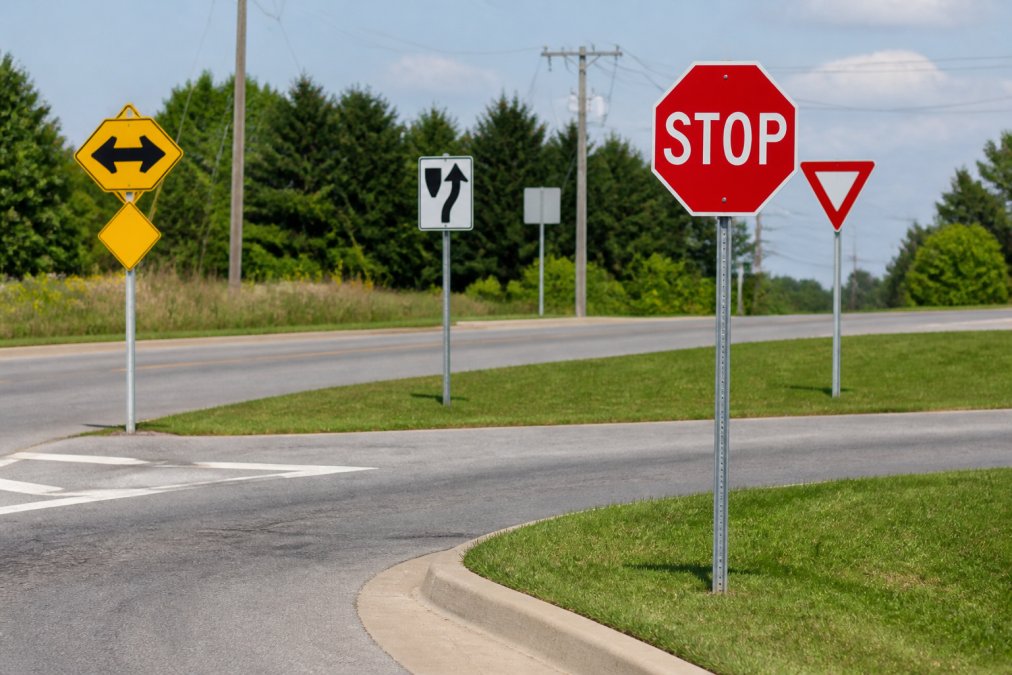
Types of Road Signs and Their Meanings
Road signs fall into three primary categories, each with distinct purposes, shapes, and color schemes. Understanding these categories helps you recognize what a sign is communicating before you even read the text.
Regulatory Traffic Signs
Regulatory signs enforce rules that have the force of law. These signs communicate speed limits, parking restrictions, right-of-way rules, and prohibitions. The most recognizable regulatory sign is the stop sign, an octagon shape in red and white that requires drivers to come to a complete halt. Yield signs, shaped as inverted triangles in red and white, require drivers to slow and yield right-of-way to other traffic.
Speed limit signs are rectangular, typically white with black text, and communicate the maximum legal speed for a roadway. Do Not Enter signs use a white horizontal bar on a red background. Parking signs, No Parking, Reserved Parking, Handicap Parking, communicate parking restrictions and are usually rectangular with specific color coding. One-way signs, directional arrows, and turn restriction signs (No Left Turn, No Right Turn) all fall under the regulatory category.
The key characteristic of regulatory signs is legal enforceability: violating what they communicate can result in traffic citations and fines. This is why consistency and visibility are non-negotiable. A faded or obscured speed limit sign creates liability for the property owner or municipality responsible for maintaining it.
Warning Signs and Hazards
Warning signs alert drivers to potential hazards ahead and give them time to adjust speed and position. These signs are typically diamond-shaped and use yellow and black coloring, making them highly visible even at distance. Common warning signs include Curve Ahead, Slippery Road, Pedestrian Crossing, School Zone, and Deer Crossing.
Construction and work zone signage falls into the warning category. These signs use orange and black or orange and white color schemes and communicate temporary hazards: lane closures, reduced speed zones, detours, and construction equipment ahead. Work zone safety depends on these signs being visible, properly spaced, and maintained, faded or damaged warning signs defeat their purpose.
Hazard identification through warning signs is especially critical in areas with high pedestrian traffic, near schools, in rural areas with wildlife crossings, and in construction zones. A driver who sees a warning sign has seconds to react, which is why these signs use high-contrast colors and simple, universally recognized symbols. The retroreflectivity of warning signs, their ability to reflect light back toward the source, is essential for nighttime visibility.
Guide and Information Signs
Guide and information signs provide directional assistance, distance information, and location details. These signs are typically rectangular and use green and white (directional), brown and white (recreational/historical), or blue and white (service information) color schemes. Exit signs, destination signs, mileage signs, and street name signs all fall into this category.
Information signs also communicate rules that are less urgent than regulatory signs, for example, "Keep Right" or "No Through Traffic" signs guide traffic flow without carrying the same legal penalty as a stop sign violation. These signs help drivers navigate unfamiliar areas and plan their routes.
MUTCD Sign Standards and Compliance
The Manual on Uniform Traffic Control Devices (MUTCD) is the federal standard that governs traffic sign design, placement, and maintenance across the United States. Developed by the Federal Highway Administration, the MUTCD ensures that every traffic sign, regardless of where it's installed, follows consistent specifications for shape, color, size, reflectivity, and symbol design.
Understanding MUTCD Requirements
MUTCD compliance is not optional for public roadways, and many private property owners follow these standards to maintain consistency and legal protection. The standards specify exact dimensions for different sign types, the precise Pantone colors to use, the minimum retroreflectivity levels required, and the proper spacing and mounting height for visibility.
For example, a stop sign must be 30 inches by 30 inches on most roadways (smaller versions exist for low-speed areas), use specific red and white Pantone colors, and be mounted at a specific height to ensure visibility from a safe distance. Deviation from these standards can create liability: a stop sign that's too small, too faded, or mounted too high may not provide adequate notice to drivers, potentially exposing the property owner to negligence claims if a collision occurs.
Private property owners installing traffic signs on residential or commercial property should understand that while they're not bound by MUTCD for purely decorative or informational signage, using MUTCD-compliant designs provides legal protection and ensures clarity. Real Cool Signs offers durable aluminum signs that can be suitable for various applications.
Retroreflectivity and Visibility Standards
Retroreflectivity is the ability of a sign surface to reflect light back toward its source, critical for nighttime visibility. MUTCD standards specify minimum retroreflectivity levels measured in candelas per lux per square meter (cd/lux/m²). These levels vary by sign type and application.
High-intensity prismatic materials and diamond grade retroreflective sheeting represent the current standard for traffic signs. Diamond grade materials provide superior nighttime visibility compared to older reflective technologies and maintain their reflectivity longer. ASTM standards (specifically ASTM D4956) define the performance requirements for retroreflective materials used on traffic signs.
The durability of retroreflective coatings depends on material quality and environmental exposure. Aluminum substrate signs with proper retroreflective sheeting can maintain visibility for 7-10 years in typical conditions, though harsh weather, UV exposure, and physical wear can reduce this lifespan. Regular inspection and maintenance, cleaning and, if necessary, replacing worn sheeting, extends sign life and ensures continued compliance with visibility standards.
Sign Shape, Color, and Symbol Recognition
The shape and color of a traffic sign communicate its message before a driver reads any text. This symbolic language is intentional and standardized, allowing drivers to recognize sign meaning instantly.
Octagon shapes are reserved exclusively for stop signs. Diamond shapes communicate warnings. Rectangles serve multiple purposes: regulatory, informational, and directional. Inverted triangles indicate yield. Pentagons mark school zones. Pentagon shapes are used only for school-related warnings, while circular signs (rare in the United States) typically indicate railroad crossings.
Color coding follows a logic: red conveys prohibition or mandatory action (stop, yield, do not enter), yellow warns of hazards, green directs traffic or provides information, blue provides service information, brown marks recreational or historical sites, and orange alerts to temporary conditions or construction.
This symbolic system works because it's consistent. A driver from any state instantly recognizes a stop sign's octagon shape, a yield sign's inverted triangle, and a warning sign's diamond. Symbols, arrows, pedestrians, bicycles, deer, reinforce meaning without requiring language literacy. This universality is why MUTCD standards exist and why deviations create confusion and liability.
How to Mount Metal Signs on Brick and Other Surfaces
Installing a metal sign properly ensures it stays secure, visible, and protected from environmental damage. The installation method depends on your substrate: brick, wood, metal, or vinyl siding each require different approaches.
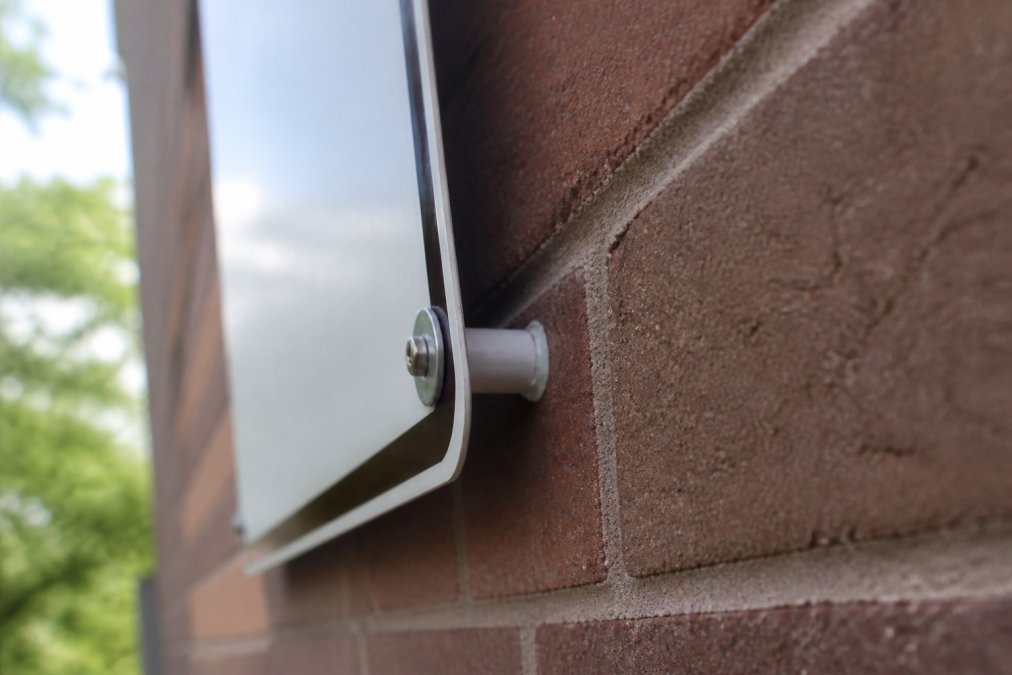
Mounting Hardware and Installation Best Practices
For brick surfaces, use concrete anchors or masonry fasteners rated for outdoor use. Start by marking mounting points with a pencil, ensuring they're level and properly spaced, typically at least 12-16 inches apart for signs under 24 inches wide. Drill pilot holes using a masonry bit, then insert anchors before fastening. Stainless steel or galvanized hardware resists rust and corrosion, protecting your sign from weather damage.
For wood surfaces, use exterior-grade screws or bolts with washers to distribute load and prevent the fastener from pulling through. Pre-drill holes to prevent splitting, especially near edges. For metal surfaces, use self-tapping screws or bolts with lock washers.
Proper spacing and alignment matter. A sign that's tilted or crooked appears unprofessional and may shed water poorly, accelerating corrosion. Use a level during installation and double-check measurements before fastening permanently. For larger signs, consider professional installation to ensure structural integrity.
The aluminum substrate used in quality outdoor signs provides excellent durability and corrosion resistance compared to steel. Aluminum doesn't rust, though it can oxidize over time. A clear protective coating or anodized finish extends the life of aluminum signs and maintains their appearance.
Sign Maintenance for Long-Term Durability
Outdoor signs require regular maintenance to remain visible and functional. Quarterly inspections catch problems early: check for loose fasteners, cracks, fading, or corrosion. Clean your sign twice yearly with mild soap and water, using a soft brush to remove dirt and debris without scratching the surface.
For aluminum signs, avoid abrasive cleaners that can damage protective coatings. If retroreflective sheeting begins to fade, plan for replacement, this typically occurs after 7-10 years depending on climate and UV exposure. Damaged or missing sections of retroreflective material significantly reduce nighttime visibility and should be repaired promptly.
Check mounting hardware for corrosion or loosening, especially after severe weather. Tighten fasteners as needed and replace any corroded hardware with stainless steel or galvanized alternatives. In coastal areas with salt spray, more frequent inspection and maintenance is necessary.
Proper maintenance extends sign life by years and ensures continued compliance with visibility and safety standards. A well-maintained sign is an investment in safety and property appearance.
Legal Liability and Sign Maintenance Responsibilities
Property owners have a legal duty to maintain signs in safe, visible condition. This duty applies to regulatory signs (stop signs, speed limit signs, parking restrictions), warning signs, and any signage that communicates hazards or restrictions.
If a sign is faded, damaged, or missing, the property owner may face liability if someone is injured due to lack of notice. For example, a faded stop sign that a driver couldn't clearly see might contribute to a collision. While the driver bears some responsibility, the property owner's failure to maintain the sign could expose them to a negligence claim.
This liability extends to construction and work zone signs. Contractors and property owners must maintain warning signs, ensure proper spacing and visibility, and replace damaged signs immediately. MUTCD standards exist partly to establish a baseline of reasonable care, following these standards demonstrates that you've taken appropriate steps to provide notice and prevent harm.
Documentation matters. Keep records of sign installation dates, maintenance activities, and inspections. This documentation demonstrates reasonable care and can protect you if a dispute arises.
Signage Accessibility and ADA Compliance
The Americans with Disabilities Act (ADA) requires that signage be accessible to people with disabilities. For visual signage, this means using high-contrast colors, clear fonts, and appropriate sizing. For directional and informational signs, ADA standards often require tactile elements (raised lettering or Braille) and audible signals in certain contexts.
Sign height is regulated for accessibility: permanent signs should be mounted between 48 and 60 inches from the ground to the center of the sign, allowing wheelchair users and people of short stature to read them. Mounting too high or too low creates accessibility barriers.
For parking signs and reserved parking areas, ADA compliance includes proper signage, accessible parking spaces, and access aisles. Violating ADA signage requirements can result in complaints, fines, and required remediation.
Real Cool Signs offers durable aluminum signs that can be designed for various applications, including those where accessibility is a consideration.
Ready to make your space stand out? Explore unique, conversation-starting signs at RealCoolSigns.com and find the perfect piece for your home, office, garage, or gift.
Frequently Asked Questions
What is the primary purpose of a traffic sign?
A traffic sign communicates critical information to drivers and pedestrians to maintain roadway safety and order. Traffic control devices regulate movement, warn of hazards, and provide directional guidance. They use standardized shapes, colors, and symbols so drivers can quickly recognize and respond to messages, reducing accidents and improving traffic flow.
How do MUTCD sign standards ensure safety and compliance?
The Manual on Uniform Traffic Control Devices (MUTCD) is the federal standard that governs traffic sign design, placement, and maintenance. It specifies dimensions, colors, retroreflectivity levels, and symbol meanings to ensure consistency across roads. MUTCD compliance requires signs to meet ASTM standards for high-intensity prismatic materials and proper mounting, guaranteeing visibility and durability in all weather conditions.
What are the three basic types of traffic signs?
Traffic signs fall into three main categories: regulatory signs (stop, yield, speed limits) that enforce laws; warning signs that alert drivers to hazards ahead; and guide/information signs that provide directions and location details. Each category uses distinct shapes and colors, red for stop/yield, yellow for warnings, and blue or green for guidance, allowing drivers to quickly interpret messages at a glance.
How do I maintain aluminum traffic signs for long-term durability?
Keep signs clean by washing with mild soap and water to prevent dirt buildup that reduces visibility. Inspect mounting hardware regularly for rust or looseness and tighten as needed. Check retroreflectivity annually, especially in harsh climates, and replace signs showing fading or damage. Proper post installation and secure mounting prevent wind damage and ensure signs remain visible and compliant with safety standards.
Ready to make your space stand out? Explore unique, conversation-starting signs at RealCoolSigns.com and find the perfect piece for your home, office, garage, or gift.